Key takeaways
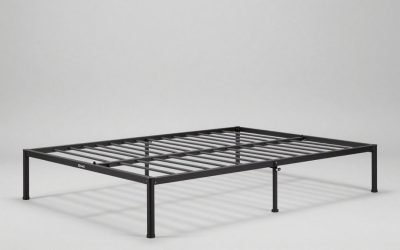
- Metal grid / wire mesh platform: Common on metal and upholstered king frames. Offers very even support and high weight capacity, usually 800-1,200 lbs total. No spacing worries, but check for sharp welds that can abrade a mattress cover.
- Metal slats or steel beams: Strongest option, never warp, and ideal for heavy latex kings or couples over 500 lbs combined weight. Can be noisy if not fitted with end caps.
- Solid platform / bunkie board: A single sheet of plywood or MDF. Provides the firmest feel but blocks airflow completely. Only recommended for innerspring mattresses and requires drilling ventilation holes or it will trap humidity.
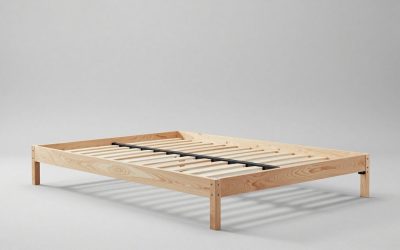
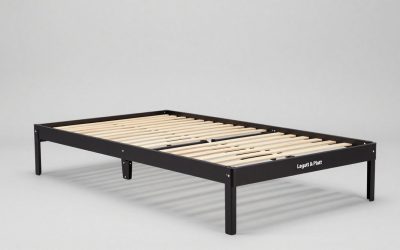
Wooden slats for king bed platforms should be solid pine or poplar, 3 to 4 inches wide, spaced 2.5 to 3 inches apart, with at least 14 to 16 slats and a center support leg to properly support a king mattress without sagging or voiding the warranty.
Choosing the right slat type and spacing matters more for a king size than any other bed size. At 76 x 80 inches, a king mattress spans a wide, unsupported area and carries 2 sleepers plus the mattress weight. The wrong slats will flex, bow, crack, or create pressure points that shorten mattress life.
Our top picks


As an Amazon Associate we earn from qualifying purchases at no extra cost to you.
Solid Pine vs. Poplar vs. Plywood Slats: Head-to-Head
Not all wooden slats are equal. The species and construction determine strength, flexibility, and how long they stay flat under load.
1. Solid Pine Slats
The most common option included with affordable to mid-range king beds, including many white wooden king size bed models. Pine is a softwood that is lightweight, inexpensive, and easy to replace. Standard pine slats are usually 0.75 inches thick and offer moderate flex, which can feel more forgiving under a hybrid or innerspring mattress. The downside is that pine is more prone to warping, cracking along knots, and bowing under heavy, continuous weight than hardwood.
2. Solid Poplar Slats
Poplar is a hardwood that is significantly stronger and more stable than pine while still being affordable. It is denser, resists warping better in humid environments, and holds screws and fasteners more securely. Poplar slats are the standard upgrade on better-quality wooden king size bed frames and are preferred if you have a heavy latex or dense memory foam mattress. They flex less than pine, so they provide a firmer, more uniform surface.
3. Plywood / Layered Engineered Slats
These are made from multiple thin veneers glued and pressed together, often with a curved or bowed profile. Curved plywood slats are designed to act like springs and are common on European-style frames. Flat plywood slats, typically found on very low-cost beds, are the weakest option. They delaminate over time, especially with moisture and weight, and can sag permanently in the center. Avoid flat, thin plywood slats (less than 0.7 inches thick) for any king mattress over 70 lbs.
| Feature | Solid Pine | Solid Poplar | Plywood (Flat) | Plywood (Curved / Sprung) |
|---|---|---|---|---|
| Material Type | Softwood, solid | Hardwood, solid | Engineered wood | Engineered wood |
| Typical Thickness | 0.70 – 0.80 in | 0.75 – 0.85 in | 0.50 – 0.75 in | 0.40 – 0.60 in with arch |
| Flex / Firmness | Medium flex, medium firm | Low flex, firm and stable | High flex, prone to sag | High spring, bouncy feel |
| Weight Capacity (per slat set, with center support) | 600 – 800 lbs total | 800 – 1,000 lbs total | 400 – 600 lbs total | 500 – 700 lbs total |
| Warp / Crack Resistance | Moderate | High | Low (delamination risk) | Moderate |
| Best For | Budget frames, innerspring | Memory foam, latex, heavy sleepers | Temporary / light use only | Light sleepers who want bounce |
| General Market Range (14-16 slats, king) | usually $40 – $80 | usually $70 – $130 | usually $30 – $60 | usually $80 – $150 |
Optimal Spacing: Why 3 Inches Is the Rule for King Beds
Spacing determines whether your mattress is supported or slowly sinking between the gaps. Most mattress warranties require slats to be no more than 3 inches apart. Any wider and foam will dip, coils will lose alignment, and you will feel troughs.
| Mattress Type (King) | Ideal Gap Between Slats | Minimum Slat Count | Why It Matters |
|---|---|---|---|
| Memory Foam (10-14 in thick) | 2 – 2.75 inches | 16 slats | Foam is heaviest and will conform and sag into wide gaps; close spacing prevents body impressions. |
| Latex Foam | 2 – 2.5 inches | 16 – 18 slats | Latex is dense and flexible; needs the tightest spacing to avoid stretching and premature softening. |
| Hybrid (foam + coils) | 2.5 – 3 inches | 14 – 16 slats | Coils need even pushback; wider than 3 in causes uneven coil compression. |
| Traditional Innerspring | 3 – 4 inches (with 4 in max) | 14 slats | More rigid structure tolerates slightly wider spacing, but still benefits from closer support. |
For a standard king bed frame that is 76 inches wide, you can calculate spacing quickly: with 14 slats that are 3.5 inches wide, you have 49 inches of wood and 27 inches of total gap, which averages to about 2.9 inches between slats. If your frame came with only 10 to 12 wide-spaced slats, you are almost certainly outside warranty spec.
A king also requires a center support system. This is not optional. A single center rail running head-to-foot with at least one adjustable support leg to the floor, or two legs for heavier loads, prevents the slats from bowing and the side rails from splaying outward. Without it, even strong poplar slats will fail in the middle within a year.
Special Cases: Storage and Finish
White Wooden King Size Bed Considerations
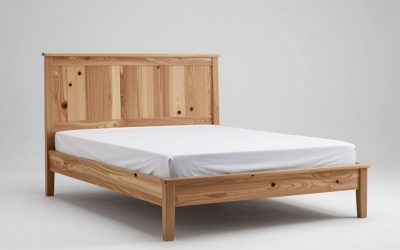
A white wooden king size bed is typically made from pine or rubberwood with a painted lacquer finish. The finish does not change slat function, but painted frames often use tulip poplar or pine slats underneath. Check that the slats themselves are unfinished solid wood, not painted engineered wood. Paint can hide knots and glue lines that indicate lower-grade plywood. Also ensure the center rail hardware is metal-to-metal, as painted wood-on-wood joints can slip under the lateral stress of a king.
Wooden King Size Bed With Drawers
A wooden king size bed with drawers adds weight and reduces under-bed ventilation. These frames usually sit lower, around 12 to 14 inches from floor to slat surface, and the drawer boxes eliminate the option for a center support leg that goes straight to the floor in the middle. Instead, they use a recessed center rail supported by the drawer dividers. You need to verify two things: 1) the slats are not resting on drawer tops, and 2) there is still at least 2 inches of vertical clearance between slats and drawer tops for airflow. Without airflow, moisture from body heat gets trapped and can warp pine slats and promote mildew on the mattress underside.
Bed Frame Without Wooden Slats: When It Makes Sense
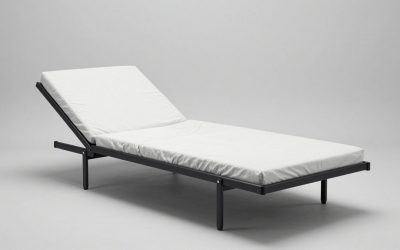
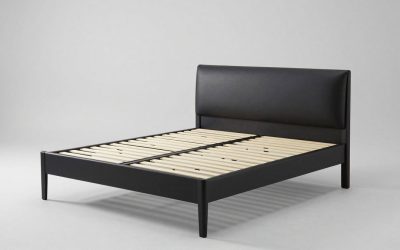
A bed frame without wooden slats is not necessarily a bad king frame. It simply uses a different support system:
- Metal grid / wire mesh platform: Common on metal and upholstered king frames. Offers very even support and high weight capacity, usually 800-1,200 lbs total. No spacing worries, but check for sharp welds that can abrade a mattress cover.
- Metal slats or steel beams: Strongest option, never warp, and ideal for heavy latex kings or couples over 500 lbs combined weight. Can be noisy if not fitted with end caps.
- Solid platform / bunkie board: A single sheet of plywood or MDF. Provides the firmest feel but blocks airflow completely. Only recommended for innerspring mattresses and requires drilling ventilation holes or it will trap humidity.
If you are converting a frame without slats to use a foam mattress, the best retrofit is to add a solid bunkie board over a metal grid to create a flat, ventilated surface, or add closely spaced poplar slats over the existing metal structure.
How to Tell You Need to Replace or Reinforce Slats
King slats wear out faster because the span is longer and the load is higher. Inspect them every 6 months.
- Visible bowing: Remove the mattress and look down the length of each slat. Any slat that bows more than 0.5 inches under its own weight is fatigued.
- Cracks, splits, or popped knots: Especially around screw holes. A cracked slat can break suddenly and tear mattress fabric.
- Squeaking and shifting: Slats that slide out of their notches or rub against the center rail indicate the frame has racked. This is common if the side rails are not bolted tightly.
- Mattress sag lines: If you see parallel depressions on the bottom of your mattress that match the slat gaps, your spacing is too wide.
- You can feel the gaps: When lying down, if you feel hills and valleys, the support is already insufficient.
Reinforcement is cheaper than full replacement. You can add 2 to 4 extra slats from a home improvement store, cut to 75.5 inches for an inside-king frame, to tighten spacing to under 3 inches. Use 1×4 poplar boards, sanded and eased at the edges. Secure each slat with small L-brackets or Velcro strips to the side rails and center rail so they do not wander. For a quick firmness boost, lay a 0.75-inch bunkie board over the existing slats.
Which Slats Should You Choose?
| Your Situation | Recommended Slat Choice | Spacing Setup |
|---|---|---|
| Memory foam or latex king, or combined sleeper weight over 400 lbs | Solid poplar, 0.75 in thick | 16-18 slats, 2 – 2.5 in gaps, with center leg |
| Kids and pets on the bed, need durability and easy cleaning | Solid poplar or steel-reinforced pine | 16 slats, 2.75 in gaps, add slat caps to prevent shifting |
| Renter, may move within 1-2 years, 10×12 ft bedroom | Solid pine, standard 14-slat set | 14 slats, 3 in gaps; choose frame that disassembles with wing nuts, total box weight usually 90-130 lbs for king |
| White painted frame in humid climate | Solid poplar (resists warp) | 16 slats, keep 30 in clearance on one side for drawers to open, 36 in at foot for walking |
| Heavy storage use (wooden king with drawers) and limited airflow | Solid poplar with center rail on dividers | 14-16 slats, ensure 2 in air gap above drawers, use slatted not solid platform |
| Back pain, need firm, flat support | Solid poplar plus bunkie board | 16 slats, 2.5 in gaps, add 0.75 in bunkie for zero-flex surface |
For doorway and assembly planning, a king slat pack ships as a bundle about 77 x 5 x 5 inches and weighs 25 to 40 lbs. Standard interior doorways are 30 to 32 inches wide, so the bundle will need to be carried lengthwise around corners. Most king frames need 80 x 90 inches of floor space to assemble, plus 36 inches of clearance on at least one side to slide slats in. What wears first is almost always the center support leg threads and the plastic slat holders, not the wood itself. Keep spare holders and tighten the center leg every 3 months.