Key takeaways
- Wall-hugging design: As the head rises, the base slides you back toward the wall so the nightstand stays within reach. Without it, you drift 8–12 in away from the headboard when raised.
- Head tilt (pillow tilt): A separate small section that angles the head forward for reading. Helpful if you watch TV upright.
- Lumbar support: A section that pushes into the lower back. Available mainly on higher-end bases.
- Massage: Vibration motors in the head and foot. Pleasant but mild, and it adds noise.
- Remote and app: Backlit wireless remotes are easier at night than app-only control. Memory presets are the feature you use most.
- Battery backup: Lets the base return to flat during a power outage. Usually a 9V battery pack.
- Under-bed lighting and USB ports: Nice extras, not essentials.
An adjustable bed frame with zero gravity is a motorized base with a one-touch preset that raises your head slightly and your knees and legs to roughly heart level, spreading body weight so the lower back carries less pressure. It is worth paying for if you read or watch TV in bed, deal with lower-back stiffness, snoring or reflux, or have swollen legs at night. It is less useful if you only ever sleep flat, and you need to check mattress type, room clearance and weight capacity before buying.
Our top picks


As an Amazon Associate we earn from qualifying purchases at no extra cost to you.
What “zero gravity” actually means on a bed
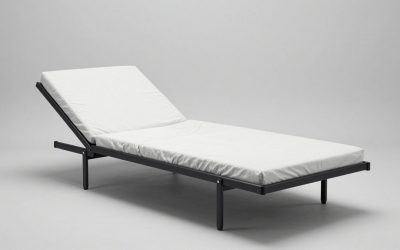
The term borrows from the neutral body posture described in NASA research, the relaxed position the body takes in weightlessness, with hips and knees bent and the torso slightly reclined. On a bed base, the zero gravity button is simply a stored preset for the head and foot motors. Each brand picks its own angles, but most fall in a similar range:
| Position | Head section angle | Foot / knee section angle | Typical use |
|---|---|---|---|
| Flat | 0° | 0° | Sleeping on stomach or side |
| Zero gravity | about 10–25° | about 25–45° | Pressure relief, relaxing, back sleeping |
| Anti-snore | about 7–15° | 0° | Opens airway slightly |
| TV / lounge | about 40–60° | about 10–25° | Reading, watching TV |
| Maximum incline | up to about 60–70° | up to about 40–45° | Sitting up, getting out of bed |
Because the preset is just motor positions, most bases let you fine-tune it with the arrows and save your own version to a memory button. That matters, because a slight change in leg height can make the difference between comfortable and pressure behind the knees.
Who benefits most
| Situation | How zero gravity helps | Feature to prioritize |
|---|---|---|
| Lower-back stiffness | Bent knees reduce the arch and tension in the lumbar spine | Lumbar support adjustment or a contoured knee break |
| Snoring | Head elevation reduces airway collapse for some sleepers | Anti-snore preset, quiet motors |
| Acid reflux | Head and torso above stomach level | Head incline you can hold all night at about 6–8 in of rise |
| Leg swelling or circulation concerns | Legs raised toward heart level | Strong foot motor, good foot angle range |
| Reading or TV in bed | Supported recline without pillow stacks | Head tilt or pillow tilt feature, USB ports |
| Partners with different needs | Each side set separately | Split king or split Cal king |
For a health condition, check with your doctor about the incline that suits you. A base is a comfort tool, not a treatment, though many people find it makes nightly symptoms easier to live with.
Features that separate a basic base from a good one
- Wall-hugging design: As the head rises, the base slides you back toward the wall so the nightstand stays within reach. Without it, you drift 8–12 in away from the headboard when raised.
- Head tilt (pillow tilt): A separate small section that angles the head forward for reading. Helpful if you watch TV upright.
- Lumbar support: A section that pushes into the lower back. Available mainly on higher-end bases.
- Massage: Vibration motors in the head and foot. Pleasant but mild, and it adds noise.
- Remote and app: Backlit wireless remotes are easier at night than app-only control. Memory presets are the feature you use most.
- Battery backup: Lets the base return to flat during a power outage. Usually a 9V battery pack.
- Under-bed lighting and USB ports: Nice extras, not essentials.
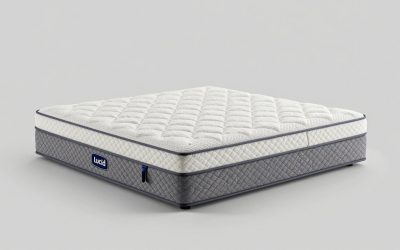
Mattress makers such as Tempur-Pedic, Sleep Number and Lucid sell their own adjustable bases with zero gravity presets, and there are many mid-range bases in the usual retail channels. Typical price ranges: a basic queen base with head and foot motors and a zero gravity preset usually runs $500–$1,000; a premium base with wall-hugging, lumbar, head tilt and massage usually $1,200–$2,500; a split king roughly doubles those figures since it is two Twin XL bases.
Mattress compatibility
| Mattress type | Works with zero gravity? | Notes |
|---|---|---|
| All-foam (memory foam, poly foam) | Yes, best | Bends easily; 8–14 in thickness is ideal |
| Latex | Yes | Heavy; check weight capacity |
| Hybrid with pocketed coils | Usually | Confirm with the mattress maker; very thick hybrids bend less |
| Traditional innerspring with connected coils | No | Coils resist bending and can be damaged |
| Air bed / adjustable firmness | Usually, with matching base | Use brand-approved base |
Mattresses thicker than about 14–15 in can bunch at the bend points and fight the motors. A mattress retainer bar at the foot keeps the mattress from sliding when the head is raised.
Room fit and clearance
- Wall clearance: Non-wall-hugging bases need a few inches behind the head section so it can rise without striking the wall or headboard. Wall-hugging bases still need a small gap; leave about 2–4 in.
- Height: Most bases sit 9–16 in tall depending on leg choice. Add a 12 in mattress and the sleeping surface lands at about 21–28 in, which suits most adults getting in and out.
- Under-bed space: Motors and frames hang below the deck, so under-bed storage is mostly lost. Robot vacuums need at least 3.5–4 in of clearance; check the leg height.
- Existing frame: Many bases sit inside an existing bed frame (a “drop-in”), if the frame has no center support beam in the way and the inside dimensions match. A king-size drop-in needs inside rails of roughly 76 x 80 in.
- Headboard: Bases usually include brackets for a standard headboard. With a wall-hugging base, the headboard is often mounted to the base so it moves with you.
Weight capacity, assembly and durability
Most queen bases list 500–850 lb, which includes the mattress. A 120 lb latex or hybrid mattress plus two adults can approach the lower ratings, so check the number if you are combining heavier sleepers and a heavy mattress. Split king ratings apply to each half.
Bases ship in one or two boxes of roughly 90–150 lb each for a queen. Setup is mostly attaching legs and plugging in, usually under an hour with two people, but the box is heavy and awkward on stairs. Over years, the parts most likely to fail are the remote, the control box and the motors, so a warranty that covers motors for at least a few years is worth more than an extra massage mode.
Is a zero gravity bed worth it?
If you spend time awake in bed or wake with a stiff lower back, the zero gravity preset is often the setting people use most once they have it. If you sleep on your stomach and only use your bed for sleep, a good mattress on a solid platform gives more value for the money. Most people who are unsure can get a feel for it by using a zero gravity recliner or lounge chair, since the body position is the same.