Key takeaways
- Storage-maximizers in studios and small bedrooms. A true 36-inch platform gives you roughly 33 inches of open clearance — enough for a garment rack, a folded bike, a large dog crate, or a small chest of drawers underneath. In a room that can’t fit a dresser, that’s the entire value proposition.
- Caregivers and anyone who works at the bed. Waist-height surfaces (30–38 inches) dramatically reduce bending when changing sheets or assisting someone. A 36-inch total height hits this zone comfortably.
- Very tall sleepers. Someone 6’4″ and up often finds a 36–38-inch mattress top easier to slide into and rise from than the standard 25 inches.
A true 36-inch-tall bed frame — a platform sitting a full three feet off the floor — is a specialty, loft-adjacent product, while most people searching for a 36 inch tall bed frame actually want a 36-inch total bed height once the mattress is on. That distinction changes what you should buy, because a 36-inch platform plus a 12-inch mattress puts the sleeping surface at roughly 48 inches — kitchen-counter height — while a 24-inch frame plus the same mattress lands at the classic “extra high” 36 inches total.
Below is the math for both interpretations, the clearance you’d actually gain, and the stability and weight-capacity trade-offs that come with longer legs.
Our top picks

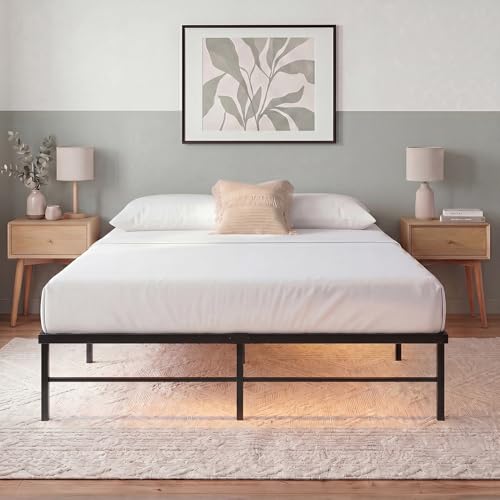
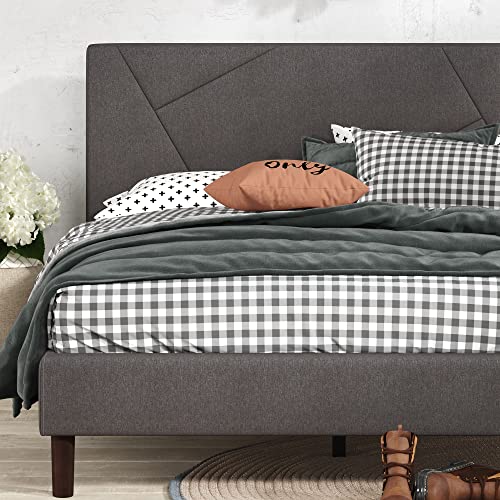
![Zinus Queen Shalini Upholstered Platform Bed Frame with Headboard [New WonderBox(TM) Version], Wooden Slat Support, No Box Spring Needed, Easy Assembly, Eco Friendly Packaging, Dark Grey](https://m.media-amazon.com/images/I/51vpY8B6O6L._SL500_.jpg)
As an Amazon Associate we earn from qualifying purchases at no extra cost to you.
Frame height vs. total bed height: the math that matters
Mattresses run 8–14 inches thick, and the frame’s side rails eat 2–4 inches of the space underneath. Add those up before you shop:
| Frame height | Total with 10″ mattress | Total with 12″ | Total with 14″ | Usable clearance below | Best for |
|---|---|---|---|---|---|
| 14″ (standard platform) | 24″ | 26″ | 28″ | ~11–12″ | Average adults; standard under-bed bins |
| 18″ | 28″ | 30″ | 32″ | ~15″ | Taller adults; easier sit-to-stand |
| 20″ | 30″ | 32″ | 34″ | ~17″ | Tall bins, luggage laid flat |
| 24″ | 34″ | 36″ | 38″ | ~21″ | The classic “high bed” feel; upright carry-ons |
| 30″ | 40″ | 42″ | 44″ | ~27″ | Rolling drawer towers, upright suitcases |
| 36″ (low-loft territory) | 46″ | 48″ | 50″ | ~33″ | Dresser-height storage; needs a step or short ladder |
For reference, ergonomists generally recommend a mattress top somewhere between the back of your knee and a few inches above it — about 20–25 inches for most adults and up to 27–30 inches for people over six feet. That means a 20 inch tall bed frame with an average mattress already hits the comfortable ceiling for many sleepers, and a 24 inch tall bed frame in queen — the most commonly searched tall size — overshoots it unless you’re tall or prioritizing storage.
Who a 36-inch-tall frame is actually for
- Storage-maximizers in studios and small bedrooms. A true 36-inch platform gives you roughly 33 inches of open clearance — enough for a garment rack, a folded bike, a large dog crate, or a small chest of drawers underneath. In a room that can’t fit a dresser, that’s the entire value proposition.
- Caregivers and anyone who works at the bed. Waist-height surfaces (30–38 inches) dramatically reduce bending when changing sheets or assisting someone. A 36-inch total height hits this zone comfortably.
- Very tall sleepers. Someone 6’4″ and up often finds a 36–38-inch mattress top easier to slide into and rise from than the standard 25 inches.
Who it is not for: wheelchair users, since adult manual chairs sit around 19–20 inches and transfers work best when the mattress top is within an inch or two of seat height — a 10–12-inch platform is the right answer there, not a tall one. It’s also a poor fit for kids, restless sleepers, and anyone with fall risk, because at a true 36-inch platform you’re climbing in rather than sitting down, and a step stool becomes mandatory for anyone under about 5’8″. Stepping up 36 inches is roughly three stair risers at once; plan for a 10–14-inch step, ideally with a grab point.
What actually fits underneath at each height
- ~17″ clearance (20-inch frame): tall under-bed bins up to 14″, suitcases laid flat, shoe organizers.
- ~21″ clearance (24-inch frame): upright carry-on luggage (22″ bags need a half-inch of wiggle — measure the bag), stacked bins, vacuum storage bags of off-season bedding.
- ~27″ clearance (30-inch frame): upright checked suitcases, 24–26″ rolling drawer units, folded furniture like camp chairs.
- ~33″ clearance (36-inch frame): a short dresser, a pet crate, a clothing rack, sports gear — effectively a second closet.
Room-fit note: a queen frame is 60 × 80 inches. Centered in a 10 × 12 ft room, it leaves about 30 inches of walkway on each side — tight but workable, and open under-bed space keeps the room visually lighter than a solid storage bed.
Weight limits and stability on longer legs
Tall frames amplify everything: the same sideways push at mattress level produces roughly twice the joint stress on a 36-inch frame as on a 14-inch one. That’s why stability specs matter more here than anywhere else in the category.
- Weight ratings: ordinary steel platforms in the 14–18-inch range are commonly rated 500–750 lbs; heavy-duty steel frames advertise 1,500–3,000 lbs static (Big Fig’s heavy-duty system and Zinus’s heavy-duty SmartBase line are the reference points). Solid-wood loft and captain’s-style frames typically rate 400–600 lbs. Ratings assume evenly distributed, static load — sitting on one edge or kneeling concentrates far more force. Buy rated at least 1.3× your combined sleeper plus mattress weight (a queen mattress alone runs 60–150 lbs).
- Leg and rail count: a queen at 24″+ should have at least 6–9 support legs including center supports, and a center rail running head-to-foot.
- Joinery: bolt-through corner brackets resist racking far better than cam-lock or hook-in fittings at this height. Cross-bracing on the long sides is the single biggest wobble-killer.
- Anchoring: at 30″ and especially 36″, a wall-anchoring strap or headboard bracket is close to mandatory — both for wobble and tip-over safety during the climb in.
- Slats: gaps under 3 inches if you use memory foam or latex, or the mattress warranty may be void regardless of frame quality.
Best ways to get there, by situation
| Your situation | Best build | Typical cost | Watch out for |
|---|---|---|---|
| Max storage, small studio | True 30–36″ steel or wood low-loft/storage frame (IKEA’s loft range and dorm-furniture brands cover this) | $500–$1,500 | Ceiling ≥8 ft; wall anchor; needs a step |
| Tall sleeper, easier mornings | 24″ frame + 12–14″ mattress ≈ 36–38″ total | $300–$800 | Measure your knee height before assuming you need it |
| Caregiver access, bad back | 24″ frame + firm 10–12″ mattress for a ~34–36″ working height | $400–$900 | Add a bed rail or floor-mounted grab handle |
| Heavy sleepers | Heavy-duty steel rated ≥1,500 lbs, or a Big Fig-style foundation system; verify rating on any riser/leg extension | $400–$1,000 | Point loads; slat spacing under 3″ |
| Traditional high-bed look | 14″ rail frame + 9″ box spring + 13″ mattress ≈ 36″ total | $400–$900 | Foundation adds flex; check overall wobble, not just frame |
| Guest room, kids, older adults self-transferring | Skip 36″ — a 14–18″ frame lands the mattress at 24–30″ | $150–$500 | Anything above knee height makes sit-to-stand harder, not easier |
One honest note on adjustable bases: even with stackable leg extensions (Tempur-Pedic and Leggett & Platt offer them), most top out around 15–18 inches of frame height, so they cannot realistically produce a 36-inch total with a normal mattress.
Assembly, moving, and what wears first
Tall frames ship flat-packed, and the boxes are heavy: expect 60–90 lbs total for steel and 150–250 lbs across three to five boxes for solid-wood storage or loft designs. Individual cartons clear a standard 30–32-inch doorway, but assembled side rails won’t turn a stairwell — always build in the room. Budget 60–120 minutes and two people, because holding a 6-foot rail while threading bolts solo is how frames end up racked from day one.
What wears first on any tall frame is hardware, not material: slat screws and leg bolts loosen under lateral load. Re-tighten everything after the first month, then once or twice a year. On hardwood, rubber pads under the feet stop the gradual “walk” that loosens joints; on carpet, glides prevent the frame from settling unevenly.
Frequently asked questions
Is a 36-inch bed too high for seniors?
It depends who is doing the work. For self-transferring seniors, the mattress top should sit near knee height — usually 20–25 inches — so a true 36-inch frame is too tall. For a caregiver-assisted senior, a 30–36-inch working height is genuinely easier on the helper’s back.
Can I just stack bed risers to reach 36 inches?
Not safely. A single set of risers adds 3–8 inches, but stacking sets multiplies lateral play and voids most weight ratings. If you need more than 8 inches of lift, buy a frame built for the height.
Do tall bed frames squeak more?
Height doesn’t create noise, but it amplifies any looseness at the joints. Bolted steel with nylon washers and wood frames with bolt-through (not cam-lock) hardware stay quiet longest — provided you re-tighten periodically.
Will I hit my head under an 8-foot ceiling?
With a 36-inch frame and 12-inch mattress, your head sits roughly 80–85 inches off the floor when upright — a few inches of clearance under an 8-ft ceiling. Sitting up is fine; raising your arms overhead is not. Check ceiling fans specifically.