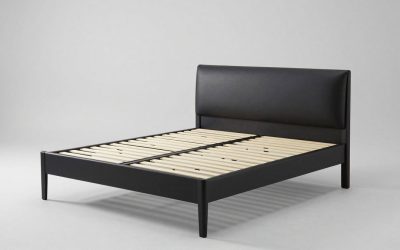
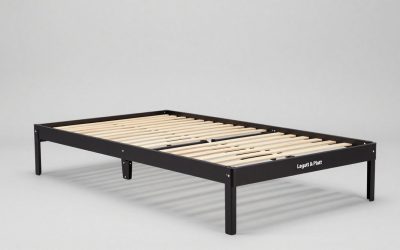
Key takeaways
- Bolted joints loosening. Almost every frame creaks in the first month as bolts settle. Retorque all hardware at one month and again at six months; adding nylon or rubber washers at each joint cuts noise dramatically.
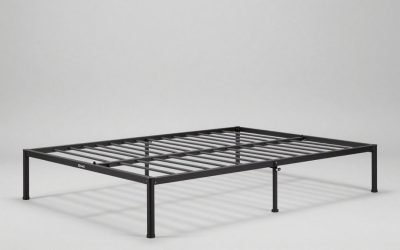
- Slat-to-rail contact. Slats sitting directly in metal channels rattle. Frames with rubber slat caps or velcro-retained slats avoid this entirely.
- Center support legs on hard floors. These skate and click. Felt pads under every leg fix it for a few dollars.
A metal bed frame with headboard and footboard is the right buy when you want a slim footprint, a weight capacity most wooden frames can’t match, and a finished look without a box spring — as long as you check the steel gauge, the slat spacing, and whether the footboard height works in your room before you click order. Here’s how to evaluate each of those, with the numbers most product listings leave out.
Our top picks


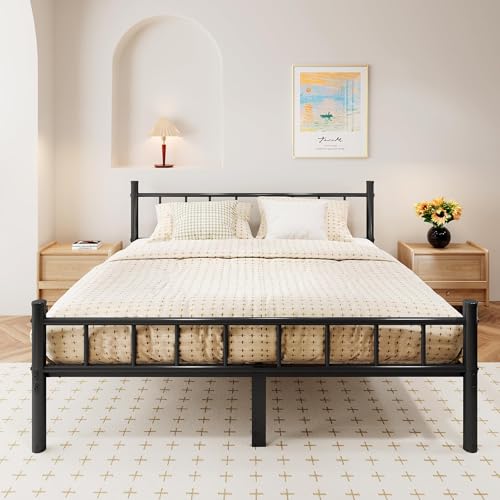

As an Amazon Associate we earn from qualifying purchases at no extra cost to you.
Steel gauge, slats and finish: the specs that decide lifespan
Two frames can look identical in photos and be built from very different steel. Gauge is the first thing to check — remember that lower numbers mean thicker metal.
| Spec | Budget tier | Mid-range | Heavy-duty |
|---|---|---|---|
| Steel tube thickness | 18-gauge (~1.2 mm) | 16-gauge (~1.5 mm) | 14-gauge (~1.9 mm) |
| Rated capacity (queen) | 350–500 lb | 500–800 lb | 1,000 lb+ |
| Slat spacing | 5–8 in | 3–4 in | Under 3 in |
| Finish | Thin powder coat | Textured powder coat | Powder coat over sealed welds |
| Typical price (queen, with headboard and footboard) | $120–$250 | $250–$500 | $500–$900 |
Two rules of thumb from that table: slat spacing under 3 inches is what most memory foam and hybrid mattress warranties require, and the stated weight capacity includes the mattress — a queen foam mattress already weighs 60–120 lb before anyone lies down.
On finish, powder coating is standard and matte black is the most forgiving option: a black metal bed frame with headboard in a flat or textured finish hides fingerprints and scuffs far better than gloss black, chrome, or white, all of which show every chip. Antique bronze and brushed finishes sit in between. Whatever the color, check listing photos for whether welds are continuous or spot-welded — continuous welds at the headboard joints are the single best predictor of a frame that stays quiet.
Noise and wobble: where it actually comes from
Metal frames squeak for three reasons, and only one is a quality problem:
- Bolted joints loosening. Almost every frame creaks in the first month as bolts settle. Retorque all hardware at one month and again at six months; adding nylon or rubber washers at each joint cuts noise dramatically.
- Slat-to-rail contact. Slats sitting directly in metal channels rattle. Frames with rubber slat caps or velcro-retained slats avoid this entirely.
- Center support legs on hard floors. These skate and click. Felt pads under every leg fix it for a few dollars.
If a frame is noisy out of the box even when fully tightened, the welds or the gauge are the problem — no amount of felt padding fixes flexing 18-gauge rails.
Headboard and footboard heights: measure before you buy
Listings rarely show the dimension that matters: height above the mattress, not height from the floor. On a standard metal frame, the mattress surface sits 14–18 inches off the floor (higher with a thick mattress). A queen headboard top rail typically reaches 40–50 inches from the floor, leaving only 12–18 inches of visible headboard above the mattress once pillows are in place. If you sit up to read, look for at least 24 inches of panel above the mattress surface so your head rests on the frame, not the wall.
Footboards run 15–20 inches on low-profile designs and 28–34 inches on Victorian-style wrought-iron looks. The tall versions do three things worth knowing: they visually shorten small rooms, they block sightlines to a TV at the foot of the bed, and they effectively shorten usable length for sleepers over about 6’2″ who sleep stretched out — a queen is only 80 inches long. If you’re tall or the room is tight, a metal bed frame with no footboard, or a bolt-on footboard you can leave off, is the smarter buy.
Will it fit the room? Do the math first
Frames add roughly 2–3 inches to mattress dimensions, so a queen frame with head- and footboard occupies about 63 × 84 inches of floor. Plan for a minimum of 24 inches of walkway on each side and 30–36 inches at the foot if a dresser or door swing sits opposite.
Concrete example: in a 10 × 12 ft bedroom, a queen frame centered on the 10-ft wall leaves about 28 inches per side — fine — and about 4 feet of open floor at the foot if the bed runs along the 12-ft axis. Drop to a full-size frame or a footboard-free design in anything smaller. A wooden bed frame with headboard and footboard typically adds another 2–4 inches in each direction over a metal equivalent, which is why metal dominates small-space recommendations.
Metal vs. wood: an honest trade-off
| Factor | Metal frame w/ headboard & footboard | Wood frame w/ headboard & footboard |
|---|---|---|
| Boxed weight (queen) | 55–90 lb | 90–160 lb |
| Weight capacity | Higher for the price | Depends heavily on joinery |
| Noise profile | Creaks until bolts are retorqued | Quieter initially, joints can loosen over years |
| What wears first | Finish chips at joints, slat caps | Veneer edges, slat cracks |
| Aesthetic | Slim rails, airy footprint | Warmer, visually heavier |
| Best fit | Apartments, movers, high loads | Primary bedrooms, kids’ rooms (a wooden twin bed frame with headboard and footboard remains the classic choice for rounded corners and warmth) |
Match the frame to your situation
| Your situation | Best choice | Why |
|---|---|---|
| Renter who moves every 1–2 years | Bolt-together metal, no footboard or detachable footboard | Breaks down flat, fits a 30-in doorway, under 75 lb boxed |
| Foam or hybrid mattress | Slat spacing under 3 in | Protects the mattress warranty |
| Sleeper over 6’2″ | Headboard-only platform | Keeps all 80 in of length usable |
| Couples / light sleepers | 16-gauge+, welded joints, center rail | Less sway and fewer noise points |
| Kids’ room | Rounded-rail metal or wood | No sharp corner posts at head height |
| Small room under ~100 sq ft | Metal, no footboard | Saves 3–4 in of length and opens sightlines |
The headboard-only category is where platform designs like the Zinus Mia metal platform bed frame with headboard sit — a steel slat base with an integrated headboard panel and open foot, usually in the $150–$300 range. If you like the look of a queen metal headboard and footboard set but the room argues against it, this style is the usual compromise.
Attaching a headboard to a frame you already own
You don’t need to buy a matched set. Most universal metal frames accept bolt-on headboards through adapter brackets:
- Measure the distance between the mounting holes on the headboard legs (commonly a fixed vertical spacing) and confirm the frame’s end flanges or bracket slots align.
- Buy a universal headboard bracket kit — they’re inexpensive and adjust for width differences.
- Bolt the brackets to the frame first, hang the headboard legs second, and tighten with lock washers. Snug, then retighten after a week.
- If bolt patterns won’t cooperate, a freestanding headboard wedged between wall and frame works — just add felt pads where it contacts the wall.
Going the other direction, a headboard cover for a metal bed frame is a real product category: padded slipcovers sized to the headboard width (about 60–62 inches for a queen) slip over iron rails. They’re worth it to soften head contact in kids’ rooms, stop wall scuffing behind a pushed-against-the-wall bed, or warm up a frame that reads too industrial.
Assembly, moving and what wears first
Expect a flat box of 55–90 lb for a queen — one strong person can manage it, two make it easy. Assembly runs 30–60 minutes with the included hex key, and every component fits through a standard 28–30 inch doorway, which is metal’s biggest advantage over a solid wooden bed frame with headboard and footboard. Over the years, the first things to go are the plastic slat end caps (cheap to replace), then finish chips where the footboard corners brush walls and vacuum cleaners, and finally loosened bolts — which is maintenance, not failure. Rust is only a concern if the powder coat chips in a humid room; a dab of matching enamel paint seals it.
FAQ
Do I need a box spring with a metal bed frame with headboard and footboard?
No — these are platform designs by default. If slat spacing is under 3–4 inches, the mattress sits directly on the slats. Wider spacing may need a bunkie board.
Will a queen headboard fit a full-size metal frame?
Not directly — the widths differ by about 6 inches. Adapter plates exist, but a too-wide headboard overhanging a full frame looks off; buy the matched size.
Can I remove the footboard later?
On bolt-on designs, yes, in minutes. On frames where the footboard shares structural welds with the side rails, no — check before buying if flexibility matters.