Key takeaways
- 6 to 8 inch platform + 6 to 8 inch mattress (low-profile foam or latex): Total height 12 to 16 inches. Very modern and firm, but difficult to get in and out of for most adults and too low for a standard 18-inch nightstand.
- 9 to 12 inch platform + 10 to 12 inch mattress (the sweet spot for most buyers): Total height 19 to 24 inches. Aligns with the seat height of most sofas and chairs (17 to 19 inches), making it easy to sit on the edge to put on shoes. Pairs perfectly with a 20 to 24 inch nightstand so your nightstand top sits 2 to 4 inches above the mattress top.
- 9 to 12 inch platform + 14 to 16 inch hybrid/pillow-top: Total height 23 to 28 inches. You lose the low-profile benefit and may need a step stool if you are under 5’4″. Only choose this if you already own a thick mattress and want the visual of a low frame without the low sit.
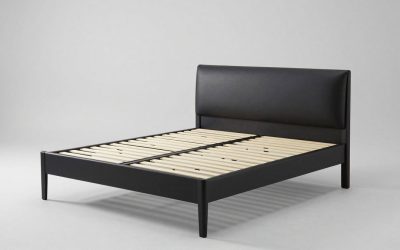
A low profile king bed frame with headboard typically sits 6 to 12 inches off the floor at the platform, putting your total sleep height at 16 to 26 inches once you add a standard mattress, which makes it ideal for modern, low-ceilinged bedrooms but less ideal if you need under-bed storage or have mobility limitations.
Our top picks


As an Amazon Associate we earn from qualifying purchases at no extra cost to you.
What Counts as Low Profile? Platform and Headboard Heights
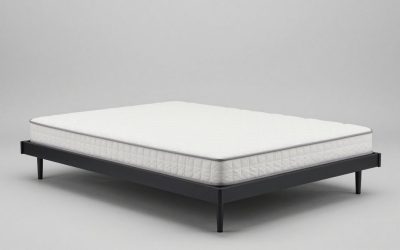
Unlike a high profile king bed frame with headboard that places the platform 16 to 20 inches high, a low profile model is intentionally close to the ground. The category is not regulated, but manufacturers consistently use these ranges:
| Configuration | Platform Height (Floor to Slats) | Headboard Height (Floor to Top) | Total Sleep Height with 10″ Mattress | Under-Bed Clearance |
|---|---|---|---|---|
| Ultra-Low Platform | 6 – 8 inches | 28 – 34 inches | 16 – 18 inches | 0 – 2 inches (floor-sitting) |
| Standard Low Profile | 9 – 12 inches | 34 – 42 inches | 19 – 22 inches | 4 – 6 inches |
| High Profile (for comparison) | 16 – 20 inches | 44 – 58 inches | 26 – 30 inches | 12 – 14 inches |
A king bed frame low to ground at 6 to 8 inches creates a minimalist, Japanese-inspired look and visually expands a small bedroom, but it leaves almost no usable space underneath. At 10 to 12 inches you still get the low visual weight while gaining a few inches for low-profile storage bins or a robot vacuum to pass through. Anything above 14 inches is no longer considered low profile.
Headboard proportions matter just as much. Low profile platform beds with headboards usually have shorter, wider headboards (32 to 42 inches tall) to stay in scale with the low platform. A tall 50+ inch headboard designed for a high profile frame will look top-heavy on a 9-inch platform.
Mattress Thickness Pairing: Getting the Height Right
Your total sitting and sleeping height is platform + mattress. Pairing the wrong mattress defeats the purpose of going low.
- 6 to 8 inch platform + 6 to 8 inch mattress (low-profile foam or latex): Total height 12 to 16 inches. Very modern and firm, but difficult to get in and out of for most adults and too low for a standard 18-inch nightstand.
- 9 to 12 inch platform + 10 to 12 inch mattress (the sweet spot for most buyers): Total height 19 to 24 inches. Aligns with the seat height of most sofas and chairs (17 to 19 inches), making it easy to sit on the edge to put on shoes. Pairs perfectly with a 20 to 24 inch nightstand so your nightstand top sits 2 to 4 inches above the mattress top.
- 9 to 12 inch platform + 14 to 16 inch hybrid/pillow-top: Total height 23 to 28 inches. You lose the low-profile benefit and may need a step stool if you are under 5’4″. Only choose this if you already own a thick mattress and want the visual of a low frame without the low sit.
If you are buying new, a 10-inch memory foam or hybrid mattress is the most versatile partner for a low profile king. It keeps the top of the mattress around 20 to 22 inches high, which is accessible for most adults and keeps the headboard functional for sitting up in bed.
Room Fit and Clearance: Will a Low King Dominate Your Bedroom?
A standard king is 76 x 80 inches and a low profile california king bed frame is 72 x 84 inches. The California king is 4 inches narrower but 4 inches longer, which affects traffic flow more than you think. A low profile cal king bed frame or california king bed frame no headboard will still need the same floor footprint, the headboard just saves 2 to 3 inches of depth.
Use these clearances when planning:
- Leave at least 30 inches on one side for the main walkway and 24 inches on the other side and at the foot of the bed. In a 10×12 foot room, a king with a headboard leaves about 32 inches on each side if centered on the 10-foot wall, which is tight but workable. In a 10×10 room, consider whether a low profile platform bed frame queen (60 x 80 inches) would give you better circulation.
- Measure doorways and hallways. Low profile frames often ship in three to four boxes, the longest typically 80 to 82 inches for a king. You need a 30-inch wide doorway with a straight approach; L-shaped hallways may require unboxing in the hallway.
- For visual balance, the headboard should be at least 78 to 80 inches wide for a king and centered with 6 to 12 inches of wall visible on each side. In rooms with 8-foot ceilings, a 34 to 40 inch headboard keeps the wall from feeling crowded. With 9-foot+ ceilings, you can go taller without losing the low-profile effect.
Pros and Cons for Everyday Living
Pros:
- Makes ceilings feel higher and rooms feel larger because the horizontal line sits well below eye level. Especially effective in apartments, basements, and bedrooms under 120 square feet.
- Greater stability. A lower center of gravity means less wobble and less stress on joints, even with a lighter wood or metal frame.
- Safer for kids and pets. A fall from 20 inches is very different from a fall from 28 inches, and small dogs can often hop up without stairs.
- Works well with modern and minimalist decor where a bulky high profile king bed frame with headboard would feel heavy.
Cons:
- Very limited under-bed storage. A true king bed frame low to ground with 0 to 2 inches of clearance offers none. Even a 12-inch platform only gives you 4 to 6 inches of usable height, enough for flat bins but not for large 7-inch plastic totes.
- Harder on knees and back. Getting up from 18 inches requires more leg strength than getting up from 25 inches. Not ideal for those with knee, hip, or lower-back issues or for older adults.
- Cooler and dustier near the floor. You will feel drafts more and need to vacuum under and around the frame more often.
- Nightstand mismatch. Standard 28-inch nightstands will tower over a low bed. You may need to replace nightstands with 20 to 22 inch models for proper ergonomics.
What About a Low Profile King Bed Frame With Storage?
If you need storage, look specifically for a low profile king bed frame with storage that builds drawers into the sides rather than relying on under-bed clearance. These models keep the 10 to 12 inch platform height but add two to four drawers (usually 15 to 18 inches deep) on glides. Expect the frame weight to increase from 80 to 120 pounds for a standard low platform to 150 to 220 pounds for a storage version, and assembly time to double. A low profile platform bed with headboard that includes drawers will also require an extra 4 to 6 inches of side clearance to fully extend the drawers.
Material and Construction Trade-Offs
| Frame Material | Typical Price Range | Weight Capacity | Durability Notes | Best For |
|---|---|---|---|---|
| Solid Wood (pine, rubberwood, oak, walnut) | usually $500–$1200 for king | 600–1000 lbs total | Quietest, easiest to repair and refinish; can dent with softwoods like pine; heaviest to move (90–140 lbs) | Long-term use, renters who want to keep the bed for 8+ years |
| Engineered Wood (MDF/plywood with veneer) | usually $300–$700 for king | 400–700 lbs total | Clean, modern look at lower cost; vulnerable to moisture and chipping at edges; cannot be sanded | Budget-conscious, low-humidity bedrooms |
| Metal Platform | usually $250–$600 for king | 500–900 lbs total | Lightest (55–85 lbs), most airflow; can squeak if bolts loosen; feels colder visually | Small apartments, frequent movers, hot sleepers who need ventilation |
| Upholstered (wood frame + foam + fabric/linen/velvet) | usually $400–$1000 for king | 500–800 lbs total | Soft headboard for reading; fabric traps dust/pet hair; velvet shows wear faster than woven linen | Comfort-focused headboard leaners, bedrooms where acoustics matter |
For slat systems, look for slats no more than 3 inches apart if you use a foam or latex mattress without a box spring. Solid wood slats 2.5 to 3 inches wide with center support legs are more durable than widely spaced thin slats, which can cause a mattress to sag between gaps.
Which Setup Should You Choose? A Decision Matrix
| Your Situation | Recommended Pick | Why |
|---|---|---|
| Small apartment or 10×12 ft bedroom, 8 ft ceilings | Low profile king bed frame with headboard at 9–10 inch platform, or california king bed frame no headboard if room is long and narrow | Preserves visual space; no-headboard cal king saves depth in a narrow room |
| Kids and pets sharing the bed | King bed frame low to ground at 6–9 inches with padded upholstered headboard | Lowest fall height; soft headboard prevents bumps |
| Renter who moves every 1–2 years | Metal low profile platform or engineered wood without storage | Lightest boxes, fastest assembly, easiest to carry through 28–30 inch doorways |
| Back or knee pain, age 60+ | High profile king bed frame with headboard (16+ inch platform) instead | Sitting height of 25–28 inches reduces strain to stand up |
| Need maximum storage in a studio | Low profile king bed frame with storage drawers OR switch to low profile platform bed frame queen with drawers to reclaim floor space | Queen saves 16 inches of width versus king, which often matters more than the extra 4 inches of drawer space |
| Hot sleeper, no box spring | Solid wood or metal slatted low profile platform bed with headboard, 12-slat+ system | Maximum airflow under mattress prevents heat and moisture buildup |
Assembly, Moving and What Wears First
Expect 45 to 90 minutes for two people to assemble a standard low profile king, and 90 to 150 minutes for a storage model with drawers. Most frames use Allen bolts and wooden dowels; the center support beam with 2 to 3 legs is critical — without it, the slats will bow under a king mattress plus two adults (typically 400 to 550 pounds of combined static load).
Box weight is often underestimated. A solid wood king ships at 100 to 140 pounds across two boxes, engineered wood at 90 to 130 pounds, and metal at 60 to 85 pounds. If you live in a walk-up, metal is significantly easier to handle.
What wears first: On wood frames, it is the slats and center leg hardware that loosens and squeaks. On upholstered frames, it is fabric pilling at the headboard edge where pillows rub. On storage frames, it is drawer glides that collect dust and become sticky if the floor is not perfectly level. Tighten all bolts after the first two weeks of use and again every six months, and use felt pads under legs to prevent floor scratches since low frames concentrate weight on a small footprint.
Frequently Asked Questions
Is a California king the same height as a standard king in low profile?
Yes. A low profile california king bed frame and a standard low profile king both use the same 6 to 12 inch platform range. The only difference is the mattress footprint: 72 x 84 inches for California king versus 76 x 80 inches for standard king. Height, clearance, and headboard scale are identical if the model is the same.
Do I need a box spring with a low profile platform bed?
No. Almost all low profile platforms are designed to hold the mattress directly on slats. Adding a 7 to 9 inch box spring would raise your total height to 26 to 30 inches, turning it into a high profile setup and often making the headboard too short to be useful.
Can I use my existing nightstands with a low bed?
Only if they are 20 to 24 inches tall. Standard 28 to 30 inch nightstands will sit 6 to 10 inches above the mattress top on a low profile bed, forcing you to reach up. If you want to keep tall nightstands, choose a 12-inch platform plus a 12-inch mattress to bring the sleep surface closer to 24 inches.