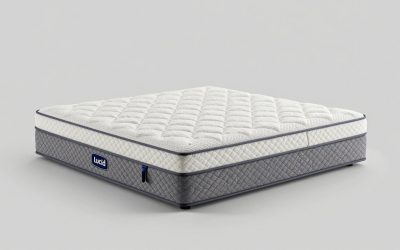
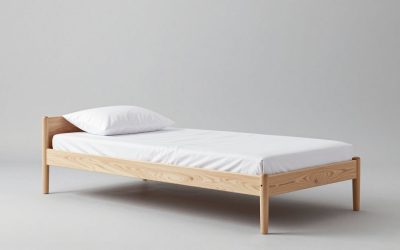
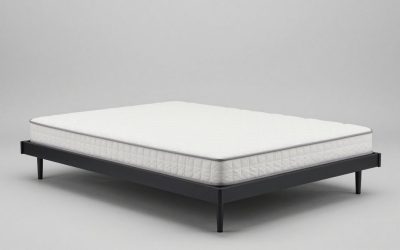
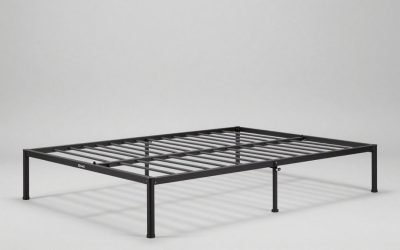
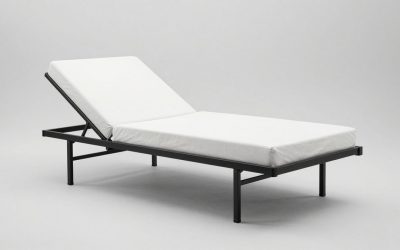
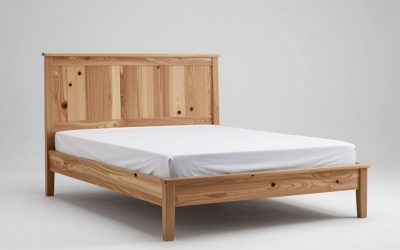
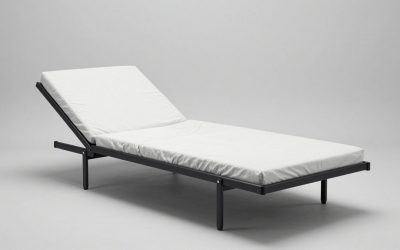
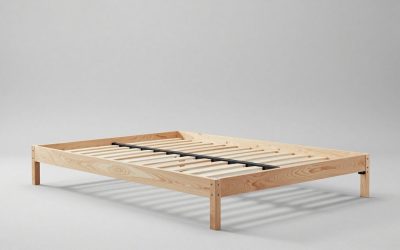
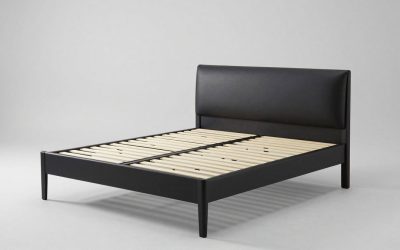
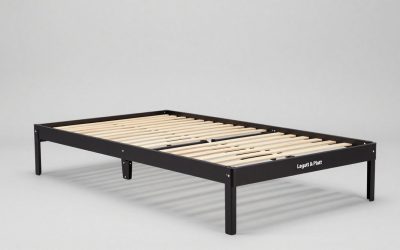
A bed frame that sits on the floor is a low platform whose support deck rests within about 0–4 inches of the ground — no tall legs, no usable clearance underneath — which puts the top of a typical 9–10-inch mattress at roughly 11–14 inches, about half the 22–26-inch sleeping height of a standard frame-and-foundation setup. Choose one for a minimalist or Japandi-style room, a toddler leaving the crib, or a quieter, more planted feel in a small space; skip it if you need under-bed storage, struggle to stand from a low seat, or sleep in a damp room.
Our top picks
 YUSENHEEI 4 Inch Queen Bed Frame
- Queen Size Bed Frame Dimension:79.5" L x 59.5"…
- Low Profile Design: The 4 inch bed frames…
- Easy Assembly: Queen bed frames comes with clear…
| Product | Key specs | |
|---|---|---|
| YUSENHEEI 4 Inch Queen Bed Frame | Queen Size Bed Frame Dimension:79.5" L x 59.5"… Low Profile Design: The 4 inch bed frames… Easy Assembly: Queen bed frames comes with clear… | Check price |
 Nailsong 4 Inch Bed Frame Queen Size Nailsong 4 Inch Bed Frame Queen Size | Check price | |
 Upcanso 7 Inch Queen Bed Frame Upcanso 7 Inch Queen Bed Frame | Check price | |
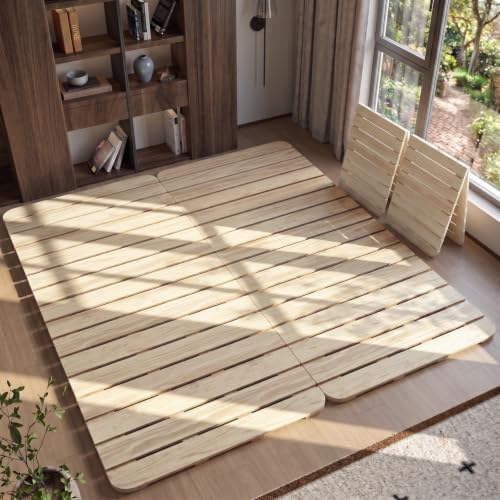 RUNSUNSPRI Queen Foldable Floor Bed Frame Tatami RUNSUNSPRI Queen Foldable Floor Bed Frame Tatami | Tips: If used as a bed board on… Upgraded Thick Pine Wood: Made of 0.8 inch… Breathable & Stable Support: The raised structure of… | Check price |
As an Amazon Associate we earn from qualifying purchases at no extra cost to you.
What “sits on the floor” means in construction terms
Despite the name, few floor frames lie truly flat. Most fall into four builds: a solid deck (one or two plywood panels on a shallow plinth), a slatted deck on a low enclosed base, an open low-beam frame raised 3–6 inches on short legs in the Japanese/tatami style, and railed floor frames that add a raised perimeter lip or full guardrails around the mattress. The detail that matters most is invisible in photos: whether the deck leaves even a 1–2-inch air gap beneath the mattress, because that gap determines how the bed handles moisture.
| Build type | Deck height | Airflow under mattress | Typical weight rating | Price range | Best for |
|---|---|---|---|---|---|
| Solid platform deck | 0–2 in | Poor unless panels sit on low feet | 700–1,000+ lb | $200–$700 | Maximum stability, zero squeak |
| Slatted deck on plinth base | 1–4 in | Moderate — depends on slat gaps | 500–800 lb | $150–$600 | Best all-rounder for foam and hybrid mattresses |
| Open low-beam frame (tatami style) | 3–6 in | Best — open sides vent freely | 500–800 lb | $300–$1,200 | Humid rooms, futon setups |
| Floor bed frame with rails / perimeter lip | 1–3 in | Varies with base style | 150–400 lb (kids) · 500+ lb (adult) | $150–$500 | Toddlers, restless sleepers — mattress can’t slide |
| No frame at all (mattress on floor) | 0 in | Worst — zero ventilation | Flat support, but moisture risk | $0 | Temporary use or a disciplined futon routine |
Airflow and moisture: the one real trade-off
During sleep, your body releases heat and moisture — a few hundred milliliters of water vapor per night — while the floor under the mattress stays cool. Where warm mattress meets cold floor with no air gap between them, condensation forms on the underside, and trapped moisture over weeks can mean musty odor, mildew spotting, or mold. It’s worth noting that most mattress warranties technically accept a flat floor as adequate support, but staining or mold damage typically voids coverage — the floor isn’t the problem, the trapped humidity is.
A bed without a frame on the floor can still work the way a Japanese shikibuton does: the futon is folded and aired every morning, so moisture never accumulates. If you want a mattress that stays down permanently, protect it with these habits:
- Prefer slats or a raised deck. Slat gaps of 0.5–3 inches, or a deck lifted even 1–2 inches on feet, provide enough ventilation for most homes.
- Air the mattress on a schedule. On solid decks or bare floor, stand it on its side weekly (every two weeks in dry climates) and rotate monthly.
- Watch indoor humidity. Keep bedroom relative humidity under roughly 60% — ideally 30–50%. Basements and humid climates usually need a dehumidifier.
- Favor hard flooring over carpet. Carpet insulates the cold spot, traps dust, and blocks what little airflow a low deck allows.
- Add a breathable layer. A tatami mat, coconut-coir bed rug, or slatted roll under the mattress wicks moisture and creates a small air space for under $150 in most sizes.
- Know when to walk away. In a chronically damp room, floor-level sleeping is the wrong tool — choose a 6–10-inch low platform instead and keep most of the look.
Picking a mattress for a floor-level deck
Memory foam, latex, and hybrids all work on floor frames — foam mattresses generally need slat gaps of 3 inches or less to avoid sagging between slats, while a solid deck supports anything. Thickness is the real decision: 8–10 inches is the sweet spot, keeping the sleeping surface at 11–14 inches without feeling thin. Under 6 inches reads as a kid’s or guest bed; over 12 inches quietly cancels the low-profile effect you bought the frame for. The traditional alternative — a 3–5-inch cotton shikibuton on tatami — is the most authentic version of floor sleeping but only works if you commit to folding and airing it daily. One practical note: a queen foam mattress weighs roughly 70–95 pounds, so if regular airing is part of your plan, a lighter mattress with sturdy handles makes the chore realistic.
Choosing the right size
Twin size floor bed frame — and versions with rails
A twin size floor bed frame (38 × 75 inches; 38 × 80 for twin XL) is the default for kids’ rooms and the Montessori approach, where a mattress at floor level lets a child climb in and out independently. Many families make the switch somewhere between about 18 months and 3 years. In an 8 × 10-foot room, a twin floor bed leaves roughly 50–55 square feet of open floor for play — one reason the style took over children’s rooms.
If you’re shopping for a twin floor bed frame with rails, check three numbers: slat or spindle gaps under 3.5 inches (the standard head-entrapment rule of thumb), a rail top at least 4–5 inches above the mattress surface to prevent roll-outs, and a defined entry gap so the child can exit alone. The mattress should fit snugly — no more than about an inch of gap between mattress edge and rails.
A queen bed frame that sits on the floor
A queen bed frame that sits on the floor (60 × 80 inches) suits couples surprisingly well: with no legs to flex, these frames are quieter and transmit less motion than a standard platform. Do the capacity math before buying — two adults at a combined 300–400 pounds plus a 70–120-pound mattress means the spec sheet should read at least 600 pounds. Solid decks distribute load across their whole footprint and are effectively overbuilt; slatted queens need a center support beam, so verify one exists. Before committing, run a simple test: sit on a firm surface about 12 inches high and stand up ten times. If that’s a strain on knees or hips, a floor frame will frustrate you — a standard dining chair seat is around 18 inches, and a comfort-height toilet is 17–19.
Room fit, clearances, and style
Plan for walkways of at least 24 inches, ideally 30 — though floor beds forgive slightly tighter gaps (around 20 inches) because you slide in at mattress level rather than standing beside the bed to climb in. A queen floor frame in a 10 × 12-foot room, headboard on the short wall, leaves about 30 inches on each side and over 5 feet of open space at the foot — comfortable. A full size (54 × 75 inches) is the underrated middle ground for solo sleepers in 9 × 10 rooms.
Stylistically, floor frames are the anchor of Japandi, Scandinavian, and minimalist bedrooms, and they make 8-foot ceilings feel taller by clearing sightlines above the bed. The catch is scale: standard 24–28-inch nightstands tower over a 12-inch mattress. Pair floor frames with 10–15-inch nightstands, floating shelves, or wall sconces mounted roughly 30–36 inches off the floor. And be honest about storage: you give up the 8–12 inches of under-bed clearance a regular platform offers. If a storage bin matters more than the look, a 10-inch platform is the smarter compromise.
Material trade-offs
Because the whole structure sits near the ground — where dust, mopping water, and humidity live — material choice matters more than usual.
| Material | Typical price (queen) | Realistic lifespan | Noise and feel | Moving and reassembly | Weak point |
|---|---|---|---|---|---|
| Solid wood (pine, oak, walnut) | $300–$1,200 | 10–20+ years; repairable and refinishable | Quietest; bolt-together joinery stays tight | Heavy (80–140 lb total) but survives repeated disassembly | Soft pine dents; highest cost |
| Engineered wood (MDF/particleboard with veneer) | $100–$350 | ~3–8 years | Fine until cam locks loosen, then squeaks | Cam-lock joints degrade after roughly 2–3 take-aparts | Edge veneer chips; panels swell if they sit in damp — the worst case for floor-level furniture |
| Steel frame with wood slats or wire grid | $100–$300 | 5–10 years | Strong, but bolt points can creak over time | Lightest; many fold flat — budget lines from brands like Zinus run $100–$250 | Powder coat chips; utilitarian look usually wants a rug |
Assembly, moving, and what wears first
- Boxes and weight: flat-pack queen floor frames typically arrive in 1–3 boxes totaling 60–130 pounds; single-piece solid deck panels can hit ~80 pounds each. Measure stairwell turns before ordering.
- Doorways: everything clears a standard 28–30-inch door when flat-packed; assembled panels often don’t. Build it in the room it will live in.
- Assembly time: 20–60 minutes. Twins are a solo job; queens go faster with two people for panel alignment.
- What wears first: slat tape and webbing, plastic glides under the plinth, and cam-lock holes in engineered panels. Hardwood frames with machine bolts into metal inserts outlast all of it.
- Maintenance: retorque bolts once or twice a year and add felt pads anywhere wood meets wood — it prevents the creaks before they start.
Match the frame to your situation
| Your situation | Best pick | Why |
|---|---|---|
| Small room, low ceiling | Slatted floor platform, full or queen | Low sightline opens the room; forgiving clearances |
| Toddler leaving the crib (~18 months–3 years) | Twin floor bed frame with rails, gaps under 3.5 in | Independent exit plus roll-out protection |
| Restless sleeper, mattress wanders | Floor frame with raised perimeter rails/lip | Lip keeps the mattress centered night after night |
| Renter moving every year or two | Bolt-together solid wood or folding metal, under ~120 lb total | Survives repeat assembly; engineered wood won’t |
| Knee, hip, or back trouble standing up | Reconsider — a 6–10 in platform reaches a 16–20 in seat height | A floor-top mattress at 11–14 in sits below chair height |
| Humid climate or basement bedroom | Open-beam frame plus dehumidifier — or skip floor level | Airflow is non-negotiable at ground level |
| Needs under-bed storage | Not a floor frame — choose a 12 in+ platform | Floor frames offer only 0–3 inches of clearance |
FAQ
Is sleeping on a floor bed bad for your back?
The firm, flat support itself is neutral to positive — the real issue is the exit. An 11–14-inch sleeping surface is below the height of a standard toilet seat, so anyone with knee, hip, or back limitations should either choose a thicker mattress (10–12 inches) or step up to a 6–10-inch low platform instead.
Is a mattress directly on the floor okay long-term?
In a dry climate with weekly airing, yes — it’s essentially the futon model. In an average or humid home, no: trapped condensation will eventually mildew the underside. At minimum, get a slatted roll or tatami mat underneath to create a 1–2-inch air space.
Do floor beds get dirtier?
Dust and pet hair settle at floor level, so the mattress edge collects more of both — plan on vacuuming around the frame weekly, especially on carpet. The upside: a floor-height bed gives older pets and small kids easy, jump-free access.
What’s the thinnest mattress that still works?
For nightly adult use, 8 inches is the comfortable floor — 6 inches is tolerable for lighter sleepers and kids. A 3–5-inch shikibuton only works if you fold and air it daily like the routine it was designed for.