Key takeaways
- Gap limit: 3 inches is the common maximum in mattress warranties; a few latex and foam brands tighten it to 2.75 inches. Measure the gap, not the slat.
- Slat dimensions: look for slats at least 2.5–3 inches wide and roughly 0.75 inches thick. Skinny 1-inch furring strips bow under a 130-lb hybrid mattress.
- Center support: nearly every king-size warranty requires a center support rail with legs touching the floor — typically a minimum of five or six total floor contact points. No center beam is the number-one reason sag claims get denied on king beds.
- Sprung slats: curved beech slats (the IKEA-style kind) count as support, but they add bounce. Fine under innerspring; they subtly change the feel of firm foam.
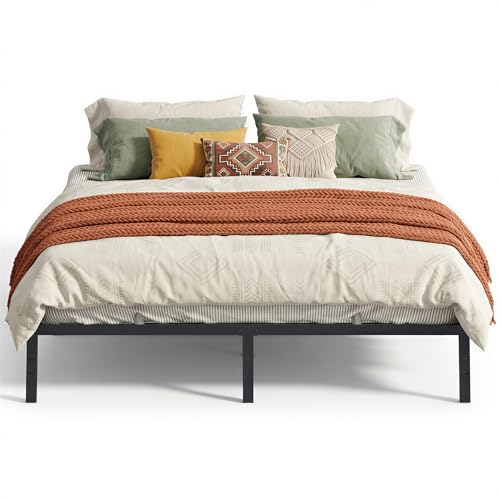
A king size bed frame with no box spring needed supports the mattress directly on a solid deck, closely spaced slats, or a rigid built-in foundation — and for most foam and hybrid mattresses sold in 2026, that kind of firm, flat support isn’t just allowed, it’s what the warranty requires. The tricky part is that “no box spring needed” describes three very different constructions, and picking the wrong one can sag a $1,200+ mattress or quietly void its coverage.
Our top picks



As an Amazon Associate we earn from qualifying purchases at no extra cost to you.
Platform, slatted, and foundation-style frames: what’s actually different
Every king bed with no box spring required uses one of four support systems. The differences matter more than the styling:
| Support type | What holds the mattress | Max slat gap (typical) | Best mattress match | Usual king price range |
|---|---|---|---|---|
| Solid platform deck | Continuous plywood or MDF panel | n/a — zero gap | Dense memory foam, latex | $400–$1,200 wood; $300–$700 upholstered |
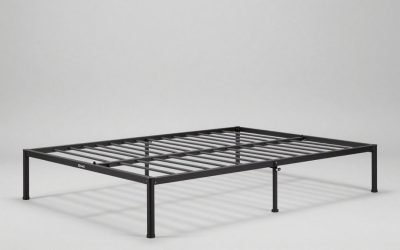
| Slatted base | Wood or steel slats, 2.5–4 in wide | 3 in (some warranties demand 2.75 in) | Foam, hybrid, innerspring | $150–$700 |
| Rail frame + bunkie board/foundation | Separate rigid board, 1.5–4 in thick | n/a | Any; good retrofit for wide-gap frames | Frame $200–$600 + board $60–$150 |
| Adjustable base | Motorized deck | n/a | Foam, latex, flexible hybrids | $700–$2,500 |
Solid platform decks
A continuous deck gives a mattress zero flex and zero warranty risk — nothing can sag between slats that don’t exist. The trade-off is airflow: dense foam on a solid panel traps more heat and moisture than slats, which is why better designs add ventilation holes or a breathable mattress pad becomes a smart add-on. Solid decks also feel firmest, which some sleepers love and others find unforgiving.
Slatted bases
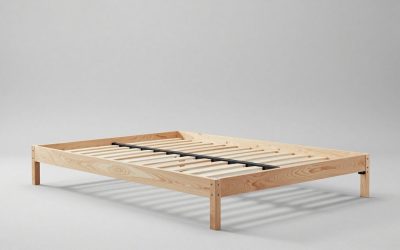
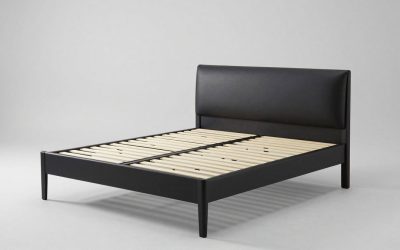
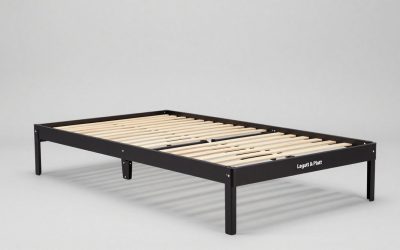
The most common “no box spring” design and the one with the most rules (covered below). Done right — stiff slats, tight spacing, a center beam — slats support anything while letting the mattress breathe.
Rail frames, foundations, and the box-spring question
If you’re shopping for a king size bed frame for box spring and mattress together — say you own a traditional innerspring set or a headboard/footboard you love — you want a rail-style frame: side rails plus a few cross slats, designed so a 9-inch box spring (or 5-inch low-profile version) does the supporting. Most platform frames can also physically accept a box spring, but stacking a 9-inch foundation on a 13-inch platform plus a 12-inch mattress puts the sleeping surface near 34 inches — awkwardly tall for most adults. A bunkie board is the smarter retrofit: same rigid support, only 1.5–2 inches of added height.
Slat gap rules and warranty requirements
This is where king beds most often go wrong. A king mattress spans 76 inches, and manufacturers know a cheap frame will flex — so warranties specify the support they consider adequate:
- Gap limit: 3 inches is the common maximum in mattress warranties; a few latex and foam brands tighten it to 2.75 inches. Measure the gap, not the slat.
- Slat dimensions: look for slats at least 2.5–3 inches wide and roughly 0.75 inches thick. Skinny 1-inch furring strips bow under a 130-lb hybrid mattress.
- Center support: nearly every king-size warranty requires a center support rail with legs touching the floor — typically a minimum of five or six total floor contact points. No center beam is the number-one reason sag claims get denied on king beds.
- Sprung slats: curved beech slats (the IKEA-style kind) count as support, but they add bounce. Fine under innerspring; they subtly change the feel of firm foam.
Already own a frame with 5-inch gaps? Don’t buy a new frame — add extra slats or drop a king bunkie board on top for $60–$150.
What the frame is made of matters as much as the support style
| Material | Typical weight capacity (king) | Squeak risk | Survives disassembly/moves | Realistic lifespan |
|---|---|---|---|---|
| Solid hardwood (oak, acacia, rubberwood) | 700–1,200 lb | Low if joinery is good | Yes — bolts re-tighten cleanly | 10–15+ years |
| Engineered wood (MDF/particleboard) | 400–700 lb | Medium — cam locks loosen | Poorly — degrades after 2–3 moves | 3–7 years |
| Steel platform | 500–1,000+ lb | Medium — bolt loosening | Excellent — folds or unbolts flat | 8–12+ years |
Match the setup to your situation
| Your situation | Best choice | Why |
|---|---|---|
| Heavy pillow-top or hybrid mattress (130+ lb) | Solid hardwood or steel platform, 700+ lb rated | Engineered-wood slats bow over a 76-in span |
| Memory foam mattress, warranty-conscious | Slats at ≤3 in gaps or vented solid deck | Meets the gap clauses in most foam warranties |
| Renter who moves every 1–2 years | Bolt-together steel or folding platform | Cam-lock furniture loosens permanently after repeat teardowns |
| Small room (10×12 ft or less) | Low-profile platform, no footboard | Keeps total height and footprint minimal |
| Kids jumping, pets climbing | Steel or hardwood with flush hardware | Slat clips and plastic corners are first to snap |
| Back pain or mobility concerns | Taller platform or adjustable base | Top of mattress near knee height (~24–26 in) eases entry |
| Want to keep an existing box spring | Rail-style frame + low-profile (5 in) box spring | Avoids the 30+ inch mattress-top height problem |
The numbers buyers skip
Footprint. A king mattress is 76 × 80 inches, but frames run 79–84 inches wide and 85–90 inches long once you include headboards and side rails. In a 10×12 ft room, a king centered on the 10-ft wall leaves roughly 22 inches of walkway per side — below the 24–30 inches that feels comfortable. A 12×12 ft room is the realistic minimum.
Height math. Platform frame (10–14 in) plus mattress (10–14 in) lands the sleeping surface at 22–28 inches — ideal for most adults is roughly knee height, around 24 inches. Low-profile frames under 8 inches suit thick mattresses; tall sleepers and anyone with joint issues should aim higher, not lower.
Clearance and storage. Under-bed space ranges from about 5 inches on low platforms to 13 inches on high ones — measure your storage bins first. Robot vacuums need roughly 4 inches of clearance.
Delivery and assembly realities. King frames ship in one to three flat boxes totaling 90–160 lbs; the longest cartons approach 84 inches, which corners awkwardly in stairwells even though every piece fits through a standard 30–32 inch doorway flat-packed. Budget 45–90 minutes with two people. What wears first: center support legs bend, corner brackets loosen into squeaks, and engineered-wood cam locks strip after a couple of moves — retightening all bolts every six months prevents most of it.
FAQ
Can I put a box spring on a platform frame? Physically yes, but it’s redundant and pushes the bed uncomfortably tall. If you want the box-spring feel, a rail frame with a 5-inch low-profile foundation is the right tool.
Will skipping a box spring void my mattress warranty? Usually the opposite — most 2026 foam and hybrid warranties require firm, flat support and may deny claims for mattresses used on worn box springs. What will void coverage is a king frame without center support legs or slats spaced wider than the stated limit.
Do king and California king frames interchange? No. Standard king is 76 × 80 inches; California king is 72 × 84. Same story for any slats or bunkie boards sized for them.