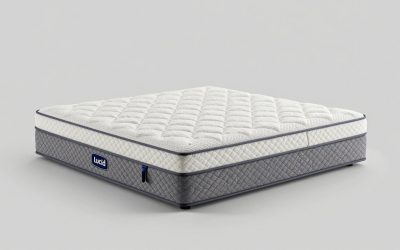
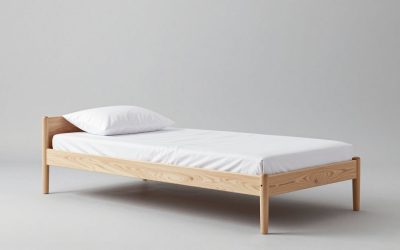
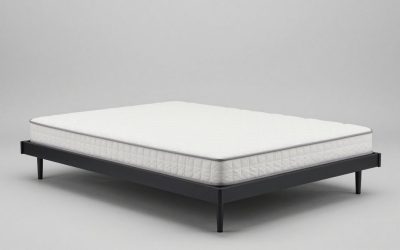
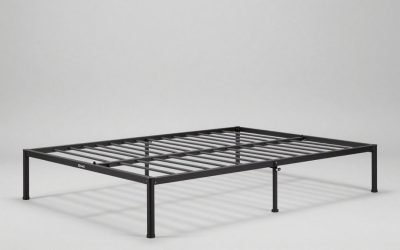
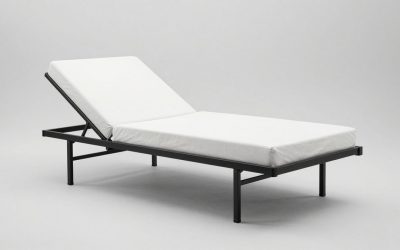
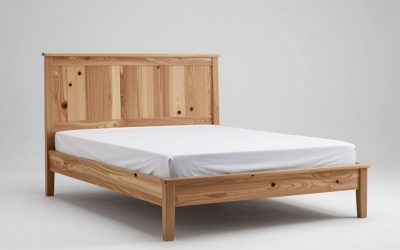
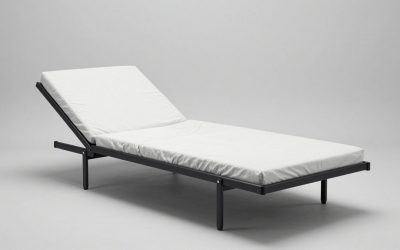
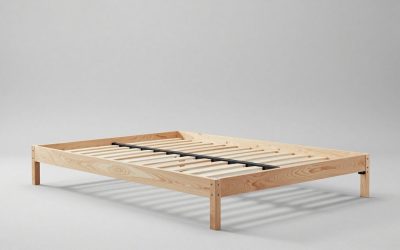
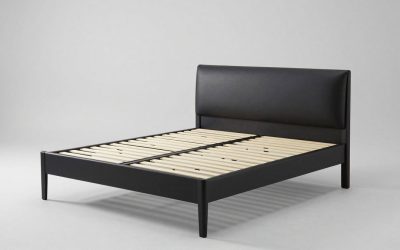
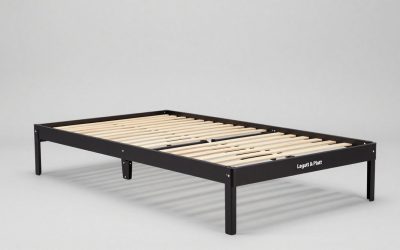
A queen size folding bed with mattress is worth buying when a room needs a real 60-by-80-inch sleep surface but can’t surrender that floor permanently — and the decision comes down to which of three mechanisms you pick: a wall-mounted Murphy bed, a freestanding cabinet bed, or a fold-flat frame paired with a folding mattress. They differ sharply in mattress quality, folded footprint, and what installation commits you to.
Our top picks
 AESOROMO Queen XL Size Folding Bed with
- Metal Frame Need Assembly: Follow the manual step…
- Sturdy Construction: Crafted with a premium reinforced steel…
- Comfortable Memory Foam Mattress: This large queen size…
 IMBSRBED Folding Bed with 13CM Memory Mattress
- Exceptinal Support –The folding bed has a full-steel…
- Comfortable and Stable Mattress –RAOGIE rollaway bed comes…
- Space-Saving & Easy to Move
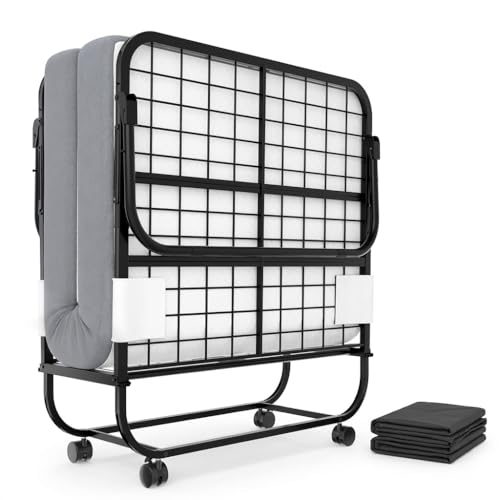 Karcog Folding Bed with Mattress for Adults
- Sturdy Construction with Bonus Cover: Crafted with a…
- Comfortable Memory Foam Mattress: Featuring a 4.3” high-density…
- Space-Saving and Slim Profile: Designed for limited space,…
As an Amazon Associate we earn from qualifying purchases at no extra cost to you.
The Three Folding Mechanisms, Compared
Before comparing prices, understand that these are almost different products. A Murphy bed swings a full standard mattress down from a wall cabinet. A cabinet bed (such as the Night & Day Murphy Cube or Arason Creden-ZzZ styles) looks like a credenza and unfolds a tri-fold foam mattress. A folding metal frame collapses in half and rolls into a closet — note that true queen-size rollaway cots barely exist; the classic hotel rollaway tops out around full size, so at queen you’re really buying a folding platform frame plus a separate mattress.
| Mechanism | Folded footprint | Open projection | Mattress | Typical price | Install |
|---|---|---|---|---|---|
| Vertical Murphy bed | ~66″ W × 16–20″ D × 85–90″ H against wall | 85–90″ into room | Standard queen, up to 10–12″ thick | $1,200–$3,500 with mattress | Anchored to wall studs; two people, half a day |
| Cabinet / chest bed | ~64″ W × 24″ D × 40–45″ H (sideboard profile) | 80–86″ into room | Included 6″ tri-fold foam | $900–$1,800 | Freestanding, no drilling; assemble in-room |
| Folding frame + folding mattress | Frame ~60″ × 40″ × 14–16″; mattress stores separately | Standard 60″ × 80″ | 4–6″ folding foam | $250–$450 total | Mostly pre-assembled; unfolds in minutes, rolls on casters |
Mattress Thickness: The Comfort Divider Nobody Advertises
This is the spec that actually determines who can sleep on the bed and for how long.
- 4-inch foam (folding frames): Fine for guests under roughly 180 lb for a few nights. Heavier adults compress through to the slats or support bars — you’ll feel them at the hips by morning. Look for base foam density of 1.8 lb/ft³ or higher; cheaper 1.2–1.5 lb/ft³ foam develops permanent body impressions within a year of regular use.
- 6-inch tri-fold (cabinet beds): A meaningful step up. Denser foam over a solid platform sleeps comfortably for week-long visits, and many owners add a 2-inch topper for nightly use. The fold seams are rarely noticeable under a fitted sheet.
- 8–12-inch standard mattress (Murphy beds): The only category where you choose a real innerspring or hybrid — which is why it’s the only folding option genuinely suited to nightly sleeping or bad backs. Check the frame’s limits: most accept up to about 10–12 inches thick and roughly 70–80 lb, because an overweight mattress defeats the lift mechanism’s counterbalance.
Weight ratings matter too: budget folding frames commonly rate 300–500 lb combined, cabinet beds around 500 lb, and quality Murphy hardware 500 lb or more of sleeper weight.
Folded Footprint vs. Room Size: Do the Math First
Every mechanism trades a different kind of space. A Murphy bed costs you a wall (roughly 66 inches wide it can’t share with windows or radiators) plus ceiling height — vertical queens need about 88 inches, though horizontal side-mount versions exist for 8-foot ceilings and lofts. A cabinet bed costs only 24 inches of wall depth, but it unfolds 80-plus inches into the room, so the floor in front must be clear of the desk or dresser it sits beside.
Concrete example: in a 10×12 ft bedroom (120 × 144 in), a vertical Murphy mounted on the 10-ft wall leaves about 54 inches beyond the foot of the open bed — comfortable. Mounted on the 12-ft wall, it leaves roughly 30 inches: usable as a passage, but tight if that’s the route to a closet. Keep a 24-inch minimum walkway at the sides; 30 inches feels normal. A folding frame avoids the question entirely — it sleeps in the middle of the room and stores in a closet at least 18 inches deep, while a folded 6-inch tri-fold mattress (about 60 × 27 × 18 in) stands in the same closet or behind a sofa.
Assembly, Moving, and What Wears Out First
Murphy kits (Bestar and similar makers) arrive as several flat boxes totaling 200–300 lb. Everything fits through a standard 30–32-inch doorway, but the cabinet must anchor into studs or masonry, and tensioning the lift mechanism is genuinely a two-person job — plan half a day. Cabinet beds ship as 4–6 flat boxes around 250–330 lb total; they’re renter-friendly because nothing touches the wall, but assemble them in the destination room, since a built unit won’t turn a hallway corner. Folding frames weigh just 40–70 lb and mostly arrive pre-assembled.
On durability, predictably it’s the soft parts that go first: folding-mattress foam sags in two to four years of regular use, zipper covers split, and frame hinge bolts loosen — retighten them yearly. Murphy pistons and springs are typically the longest-lived component, often outlasting the mattress itself, though a mis-tensioned lift that lets the bed drift open is the first thing to check after install.
Match the Bed to Your Situation
| Your situation | Best pick | Why |
|---|---|---|
| Studio apartment, sleeping on it nightly | Vertical Murphy + 10–12″ mattress | Real mattress comfort; floor fully reclaimed by day |
| Home office hosting guests monthly | Cabinet bed | No wall mounting; closed unit works as a sideboard |
| Renter, can’t drill walls | Cabinet bed or folding frame | Freestanding only; both move out in pieces |
| Guests a few weekends a year, tight budget | Folding frame + 4–6″ folding mattress | Under ~$450 total; lives in a closet |
| Heavier sleepers or back pain | Murphy with a firm hybrid mattress | ≥10″ mattress avoids bottoming out on bars |
| Kids and pets (climbing, spills) | Cabinet bed with washable zip cover | Low sleep height; covers machine-wash |
Getting a Cheap Folding Bed with Mattress Without Regretting It
Under roughly $450, the honest queen-size options are a tri-fold foam mattress used on the floor ($120–$300 depending on whether you buy 4- or 6-inch) or that same mattress on a folding platform frame ($120–$250 for the frame) — the combo is the cheapest setup that still feels like a bed rather than a camp pad. A few things separate acceptable cheap from regret: never go below 4 inches of mattress for adults, insist on a stated weight rating on the frame, prefer a mattress with a strap or non-slip base so it doesn’t walk off the platform, and check that foam density is published (if it’s hidden, it’s usually low). Between about $450 and $900 there’s a dead zone with little worth buying — the next real upgrade is a cabinet bed, which is why budget shoppers are often better off staying cheap or saving the jump.
FAQ
Can you sleep on a queen folding bed every night?
A Murphy bed, yes — it holds a standard mattress. A cabinet bed works for many people long-term, especially with a topper. A 4-inch folding setup is genuinely a guest solution; nightly use flattens the foam and most sleepers notice it within weeks.
Can I use my existing queen mattress?
Only on a Murphy frame, and only if it falls inside the thickness and weight limits (commonly 10–12 inches, ~80 lb). Folding frames technically fit any queen mattress, but the mattress then has to be stored separately — folding mattresses exist precisely because standard ones can’t fold.
How much floor space do I need to open one?
Plan 85–90 inches of clear depth in front of the wall for a vertical Murphy, 80–86 inches in front of a cabinet bed, and a clear 60 × 80-inch rectangle for a folding frame — plus 24–30 inches somewhere for a walkway.