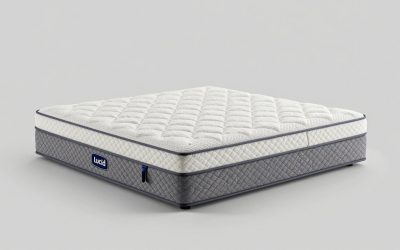
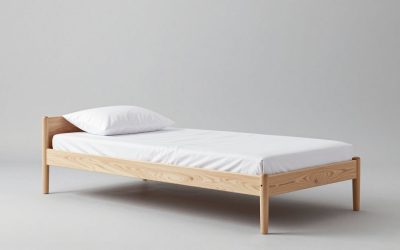
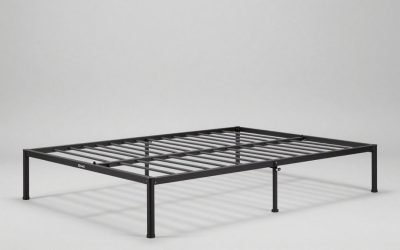
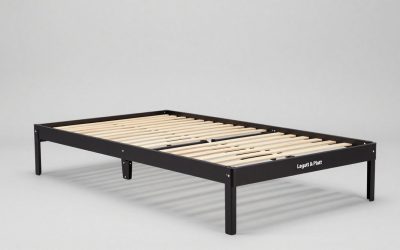
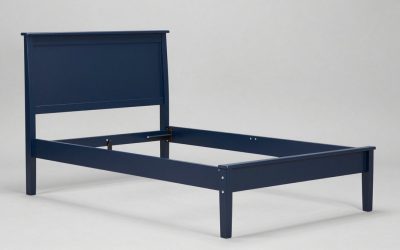
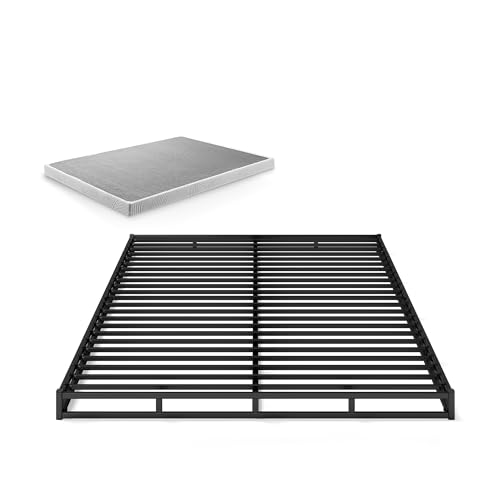
A low profile queen bed foundation is a 60 x 80 inch base about 4–5.5 inches tall (versus 8–9 inches for a standard foundation), used to keep a thick mattress at a comfortable sitting height and within the reach of a bed frame’s rails. It’s the right choice when your mattress is 12 inches or taller, when your frame sits high, or when you want a lower, modern look. Choose one with slats spaced 3 inches apart or less, a center support, and a weight rating that covers both sleepers plus the mattress.
Our top picks

As an Amazon Associate we earn from qualifying purchases at no extra cost to you.
Low Profile vs Standard Foundation: Height Math
A comfortable bed height for most adults puts the top of the mattress at about 22–26 inches from the floor, roughly knee height, so you sit with feet flat. Here’s how foundation height changes that number on a typical metal frame with about 7 inches of clearance:
| Mattress thickness | Frame height | Low profile (5 in) | Standard (9 in) |
|---|---|---|---|
| 10 in | 7 in | 22 in total | 26 in total |
| 12 in | 7 in | 24 in total | 28 in total |
| 14 in | 7 in | 26 in total | 30 in total |
| 16 in (pillow top) | 7 in | 28 in total | 32 in total |
With a thick hybrid or pillow-top mattress, a standard foundation can push the sleep surface past 30 inches, high enough that shorter people have to hop into bed. The low profile version brings it back down by about 4 inches.
Who Should Choose Low Profile
- Owners of 12 inch+ mattresses who want a normal sitting height.
- Shorter sleepers, older adults and anyone with hip or knee issues, who benefit from sitting with feet flat on the floor.
- Beds with headboards or frames designed for a specific height, so the headboard doesn’t disappear behind the mattress.
- Rooms with low windows or sloped ceilings, where a tall bed blocks the sill or feels cramped.
- Bed frames with deep rails, where a 9 inch box would rise above the rail and look awkward.
Choose a standard foundation instead if your mattress is thin (8–10 inches), you want under-bed storage space at a reasonable height, or you prefer a taller bed for easier getting up.
Construction Types
| Type | Build | Strengths | Watch for |
|---|---|---|---|
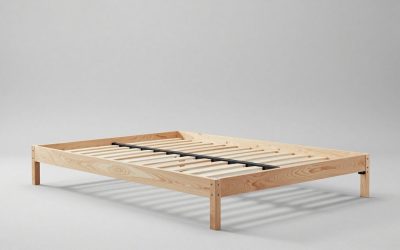
| Wood slat foundation | Wood frame, slats under a fabric cover | Quiet, traditional, light | Slats can crack if spacing is wide; squeaks if joints loosen |
| Metal grid foundation | Steel frame and grid under fabric | Strong, often 600–1,000 lb ratings, ships compact | Can squeak at joints; heavier per box |
| Split queen (two 30 x 80 pieces) | Two halves side by side | Fits through tight stairs and halls | Halves can shift without a connecting strap |
| One-piece queen | Single 60 x 80 unit | No center seam | Harder to move up stairs |
| Fold-out or tool-free | Hinged steel that unfolds | Fast setup, no tools | Hinges are a wear point over years |
Slat Spacing and Mattress Warranties
Foam and hybrid mattresses need even support. Many mattress makers require slats no more than about 3 inches apart and, for queens and larger, a center support down the middle. Wider gaps let foam sag between slats, which can lead to body impressions and may void a warranty. Before buying, check your mattress warranty for its foundation requirements and compare that to the foundation’s slat spacing.
Weight Capacity
Add up the load: two adults, plus the mattress (a queen hybrid often weighs 80–130 lb), plus any pets. A couple at 180 and 220 lb with a 110 lb mattress already puts 510 lb on the foundation. Look for ratings of at least 500–700 lb for couples, higher if anyone is heavier. Metal grid foundations tend to carry higher ratings than lightweight wood versions.
Does Your Frame Need Center Support?
A queen foundation rests on a frame, and the frame needs a center rail with at least one leg reaching the floor. Without it, the foundation can bow in the middle no matter how good it is. Many metal frames include a center bar; older or bargain frames sometimes don’t. If yours is missing one, add a center support beam or switch to a platform frame and skip the foundation altogether.
Moving and Delivery
- A one-piece low profile queen is about 60 x 80 x 5 inches; it usually fits through a 30–32 inch doorway on edge but can be hard to turn on narrow staircases.
- Split versions ship as two smaller pieces and suit apartments, attic bedrooms and tight hallways.
- Many metal foundations ship flat-packed in a box around 40–60 lb.
- Assembly usually takes 20–45 minutes; tool-free models often under 15 minutes.
What Wears First
- Fabric covers snag or tear on the frame corners. A bed skirt or fitted foundation cover hides wear.
- Wood slats can crack under concentrated weight, such as kneeling or standing on the bed.
- Metal joints can start squeaking after a year; tightening the bolts and adding a felt strip usually fixes it.
- Corners take impact when moved; reinforced corner guards help.
Decision Guide
| If you have… | Choose |
|---|---|
| A 12–16 inch hybrid mattress on a standard metal frame | Low profile metal grid foundation |
| A narrow staircase or third-floor walk-up | Split low profile queen |
| A thin 8–10 inch foam mattress | Standard height foundation, or a platform frame |
| A frame with no center leg | Add a center support first |
| A heavy couple or plus-size sleeper | Metal foundation rated 800 lb+ |
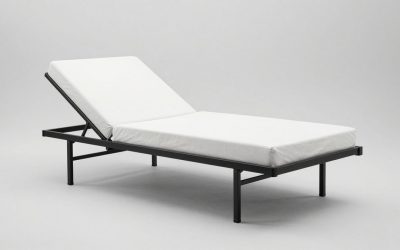
| An adjustable base | No foundation needed; the base replaces it |
Price Range
Low profile queen foundations usually cost about $100–$300. Basic fold-out metal versions sit at the low end; covered wood or heavy-duty metal models with higher ratings sit at the upper end. Mattress brands also sell matching foundations, often at a premium, and buying one can simplify warranty questions.