Key takeaways
- Under 3 inches between slats: safe for all-foam and hybrid mattresses. This is the standard most mattress warranties require.
- 3-4 inches: workable for hybrid or innerspring mattresses with a supportive base layer, but foam mattresses can develop soft dips over slats this wide apart within 12-18 months.
- Over 4 inches: designed for use with a box spring or a separate bunkie board. Placing an all-foam mattress directly on slats this wide voids most mattress warranties and causes premature sagging.
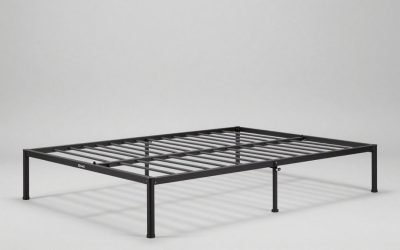
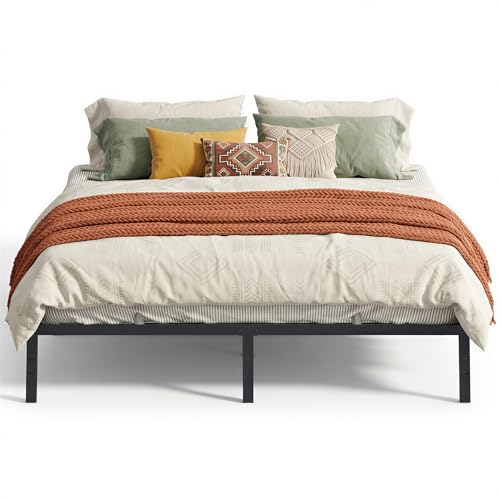
A king size metal platform bed frame stays quiet and holds up long-term when three specs line up: slat gaps under 3 inches, 14-gauge (not 16-gauge) steel tubing, and at least 3 center support legs rated for the mattress you’re putting on it. Get any one of those wrong and you’ll either feel the mattress sag between slats within a year or wake up to a creak every time someone rolls over. Here’s how to check the specs before you buy, not after.
Our top picks



As an Amazon Associate we earn from qualifying purchases at no extra cost to you.
Start with the footprint: 76×80 plus clearance
A king mattress measures 76 by 80 inches, and the metal frame underneath typically adds 1-3 inches on each side for the rail and corner brackets. So the real footprint of most king platform frames lands around 78-82 inches wide by 82-84 inches long. That’s before you account for walking space.
For comfortable movement around the bed, plan on at least 24-30 inches of clearance on the sides you’ll walk on and 2 feet at the foot if there’s a dresser or bench. In practical terms, a king bed fits reasonably in a 12×12 ft room but feels tight in anything smaller than 11×13 ft once you add nightstands. If you’re working with a 10×12 ft room, a queen frame will leave you far more breathing room; a king in that space usually means one side of the bed is pushed against a wall.
Low profile king frames (platform height 4-8 inches off the floor) help visually in smaller rooms because they reduce the amount of frame you see, but they don’t change the mattress footprint. They do matter for doorway clearance during moves, which we’ll get to below.
Slat spacing: the number that decides mattress lifespan
This is the spec most listings bury in the fine print, and it matters more than gauge or leg count for memory foam and hybrid mattresses without a separate box spring.
- Under 3 inches between slats: safe for all-foam and hybrid mattresses. This is the standard most mattress warranties require.
- 3-4 inches: workable for hybrid or innerspring mattresses with a supportive base layer, but foam mattresses can develop soft dips over slats this wide apart within 12-18 months.
- Over 4 inches: designed for use with a box spring or a separate bunkie board. Placing an all-foam mattress directly on slats this wide voids most mattress warranties and causes premature sagging.
If you already own a memory foam or all-foam hybrid mattress, measure the gap between slats before buying. Manufacturer spec sheets sometimes round this number, so a quick tape measure check after assembly avoids a return.
14-gauge vs 16-gauge steel: what the number actually means
Gauge measures thickness, and lower numbers mean thicker steel. This is the opposite of what most shoppers assume.
| Spec | 14-gauge tubing | 16-gauge tubing |
|---|---|---|
| Wall thickness | ~0.075 in | ~0.060 in |
| Typical weight limit | 700-900 lbs | 500-650 lbs |
| Flex under load | Minimal, holds shape over years | Noticeable after 2-3 years of daily use |
| Squeak risk over time | Lower, joints stay tight | Higher as welds and bolt joints loosen |
| Frame weight (boxed) | 55-70 lbs | 40-55 lbs |
| Typical price range | $180-$350 | $100-$220 |
For two adults plus a mattress and occasional pets or kids climbing on, 14-gauge is the safer long-term choice. Weight limits listed by manufacturers (often 500-900 lbs) already assume static, evenly distributed weight, not jumping or repeated edge-sitting, so buying toward the higher end of that range gives you margin.
Center legs: count and placement matter more than most people expect
A king frame spans 76 inches of width, and steel tubing that wide will bow slightly in the middle without enough vertical support. Look for:
- 2 center legs minimum on a basic king frame, placed roughly a third of the way in from each end
- 3-4 center legs on frames rated above 700 lbs or marketed for heavier sleepers
- Legs with a wide base or rubber foot, not a single point of contact, which reduces both floor pressure marks and rocking on hard floors
Frames with only the four corner legs and no center support are the most common source of a slow center sag over time, independent of slat spacing.
Where the squeaks actually come from
Noise complaints on metal platform frames trace back to a short list of joints, not the steel itself:
- Bolted rail-to-headboard/footboard connections — these loosen with regular use and are the single most common squeak source. A quarter turn with an Allen key every few months prevents most of it.
- Slat-to-rail contact points where wood or metal slats rest in a bracket without any cushioning — a thin strip of felt or rubber padding here eliminates most creaking.
- Center leg screw connections that aren’t fully seated during assembly, which flex slightly under weight shifts.
- Cam-lock or hook-and-slot rail joints instead of bolted ones — these are common on budget frames and tend to develop play (and noise) faster than fully bolted rail systems.
Frames with all-bolted joints (rails, legs, and headboard brackets) stay quiet far longer than frames relying on hook-in rail brackets, even at the same gauge.
Headboard and footboard: attached, no-headboard, or add-on
King size metal bed frames with headboard and footboard built in add rigidity, since the headboard panel itself acts as a brace across the width of the frame. A king platform bed frame without a headboard is lighter to move and ships in a smaller box, but relies more heavily on the rail gauge and center legs alone for stability. If you want a headboard later, check that the frame has universal headboard brackets before buying a plain platform version, since not all brands are cross-compatible.
Metal vs. solid wood: the trade-off
| Factor | Metal platform frame | Solid wood king frame |
|---|---|---|
| Box weight | 40-70 lbs | 100-180 lbs, often multiple boxes |
| Assembly time | 20-40 minutes | 45-90 minutes |
| Noise over time | Depends on joint type (see above) | Low if kiln-dried, can creak if joints loosen |
| Price range | $150-$400 | $500-$1,500+ |
| Weight capacity | 500-900 lbs | 600-1,000+ lbs |
| Best for | Renters, frequent movers, budget setups | Long-term primary bedrooms, resale value |
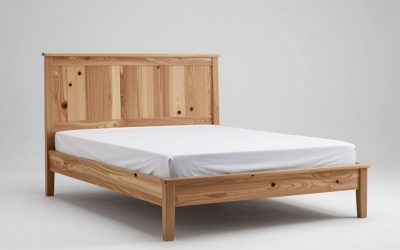
Metal wins on cost, shipping weight, and ease of moving. Solid wood wins on long-term quiet operation and resale value, but costs several times more and is much harder to move through narrow doorways or up stairs.
Which frame fits your situation
| Situation | What to prioritize |
|---|---|
| Small apartment or shared building | Low profile metal frame (4-8 in height), no headboard, all-bolted joints to minimize noise transfer through floors |
| Renters who move often | 14-gauge metal, tool-free or quick-assembly design, boxed weight under 60 lbs for easier moves through standard 32-36 in doorways |
| Kids or pets jumping on the bed | 14-gauge tubing, 3+ center legs, weight rating above 700 lbs even if actual sleeper weight is lower |
| Back pain or side sleepers on foam mattress | Slat spacing under 3 in is non-negotiable; pair with a supportive hybrid or foam mattress rather than adding a box spring |
| Two adults, long-term primary bedroom | Solid wood or heavy-gauge metal with headboard/footboard attached for rigidity and quieter long-term use |
Buying a frame and mattress together
King size bed frame and mattress sets bundle a platform frame with a foam or hybrid mattress at a combined price usually 10-20% lower than buying separately. These sets are worth it mainly for first-time setups or guest rooms, since you’re less likely to need to match slat spacing to a specific mattress you already own. If you already have a mattress, check its warranty terms for slat spacing requirements before matching it to any frame, bundled or not.
Budget metal platform frames from mainstream furniture brands (the type of frame commonly sold as a Zinus Mia-style platform bed) typically fall in the 16-gauge, sub-3-inch slat spacing category, which works fine for lighter sleepers and guest rooms but is worth upgrading to 14-gauge if it’ll be a daily-use primary bed for two adults.
Moving and assembly realities
Boxed king metal frames weigh 40-70 lbs depending on gauge and whether a headboard is included, and most ship in one or two boxes narrow enough for standard doorways (check listed box dimensions against your doorway width if you have anything under 30 inches). Assembly typically takes 20-40 minutes with a power drill; hand-tightening only with the included Allen key can take twice as long and is more likely to leave joints loose enough to squeak within the first few months. The part that wears first on any metal frame is the rail-to-frame bolt connection, so a re-tightening pass at the six-month mark extends quiet operation significantly.