Key takeaways
- 18-20 gauge: common on budget frames rated 500-700 lb. Fine for a single average-weight adult, weak under combined weight or edge-sitting.
- 16 gauge: the baseline for anything honestly marketed as heavy duty, usually rated 1,000-1,500 lb.
- 14 gauge or thicker angle steel: found on frames rated 1,800-3,500 lb, often marketed toward heavier sleepers or shared beds with pets that jump on and off.
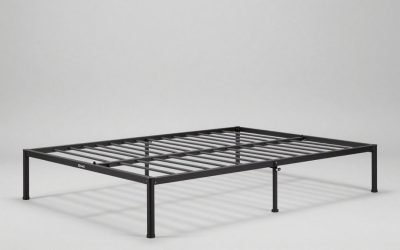
A heavy duty queen metal bed frame that actually holds up under real weight needs a stated capacity of at least 1,200 lb, steel tubing in the 14- to 16-gauge range, and a center support bar with a floor-contact leg every 12 to 16 inches. Anything lighter than that is a standard frame wearing a “heavy duty” label, and the difference shows up within a few months as sag, wobble, or a squeak that gets worse every week.
Our top picks


As an Amazon Associate we earn from qualifying purchases at no extra cost to you.
What “heavy duty” actually means in steel gauge
Steel gauge is the one spec most listings bury, and it’s the one that predicts whether a frame lasts five years or fails at eighteen months. Lower gauge numbers mean thicker steel. A frame built from 20-gauge tubing flexes noticeably under 250+ lb of concentrated weight (two people shifting position, or one heavier sleeper sitting on the edge to put on shoes). A 14-gauge frame barely deflects under the same load.
- 18-20 gauge: common on budget frames rated 500-700 lb. Fine for a single average-weight adult, weak under combined weight or edge-sitting.
- 16 gauge: the baseline for anything honestly marketed as heavy duty, usually rated 1,000-1,500 lb.
- 14 gauge or thicker angle steel: found on frames rated 1,800-3,500 lb, often marketed toward heavier sleepers or shared beds with pets that jump on and off.
Manufacturers don’t always print gauge on the box, so weight rating is the more reliable shorthand. If a queen frame lists 700 lb, assume mid-gauge steel and light-duty welds. If it lists 2,000 lb or more, assume thicker tubing and a reinforced center rail.
Weight rating by design: a real comparison
Weight ratings aren’t just about the steel, they’re about how many legs touch the floor and how the frame distributes load between them. A frame with the same gauge steel but four extra legs and a solid center bar can carry nearly double the weight of a version with a single center rail and no mid-support legs.
| Frame type | Typical weight rating | Leg count | Center support | Best for |
|---|---|---|---|---|
| Basic folding metal frame | 700-800 lb | 4-6 | Single bar, no legs under it | Guest rooms, light use, budget renters |
| Standard platform metal frame | 900-1,200 lb | 7-9 | 1-2 support legs | One average-weight adult, daily use |
| Reinforced heavy duty platform | 1,500-2,000 lb | 10-13 | Continuous center rail, 3+ legs | Couples, heavier sleepers, pets on the bed |
| Commercial-grade / hospitality-style steel frame | 2,500-3,500 lb | 13+ or welded box frame | Full-length rail plus cross braces | Heavy sleepers 300+ lb, shared beds over 500 lb combined, group homes |
Notice the jump isn’t linear with price. A frame rated 3,500 lb usually costs $150-$300, only somewhat more than a 700 lb version at $80-$150. The extra steel and welds cost the manufacturer relatively little, so a low weight rating is often a design shortcut, not a cost-saving necessity you’re paying less for.
Joint types: where the squeaking actually starts
Almost every complaint about a metal frame squeaking traces back to one of three joint types, not the steel itself.
- Hook-and-slot rail connections: the headboard/footboard legs hook into slots on the side rails. Cheap to manufacture, but metal-on-metal contact loosens with repeated weight shifts and starts clicking or squeaking within months. Look for models that add a bolt-through option at these joints.
- Bolted joints: rails bolt directly to the corner brackets. Quieter long-term, but bolts back out over time on cheaper frames without a locking washer or nylon insert nut. Worth a re-tightening check every few months on any bed used daily.
- Welded corner frames: no separate joint to loosen because the frame ships (or assembles) as one welded unit. Quietest option, but heavier to move and usually the priciest tier.
Center support design matters just as much. A single center bar with no leg underneath it is the most common cause of mattress sag in the middle of the bed, since the rail itself is doing all the work instead of transferring weight to the floor. Frames rated above 1,500 lb almost always add at least one leg directly under the center bar, and the 3,500 lb tier typically adds two or three.
Slat systems: metal vs wood, and how many you actually need
Slat spacing and material affect both noise and mattress life more than most buyers expect.
| Slat type | Typical spacing | Noise risk | Notes |
|---|---|---|---|
| Wide-spaced metal slats (5-6 total) | 4-5 inches apart | Low, but sagging risk higher | Fine for lighter mattresses, not ideal above 250 lb single sleeper weight |
| Standard wood slats | 2.5-3 inches apart | Moderate (wood-on-metal rail contact) | Common on mid-range platform frames; foam pads under slat ends reduce noise |
| Reinforced metal slat grid | 2-3 inches apart, welded to frame | Very low | No loose parts to shift; standard on heavy duty and commercial-grade frames |
A welded slat grid is the single biggest upgrade for eliminating squeaks, since it removes the moving parts (individual slats sitting in brackets) that shift and rub against the rail every time someone changes position.
Matching frame to situation
- Single average-weight adult, budget-conscious: a standard platform frame rated 900-1,200 lb with bolted joints covers this without overspending. Usually $100-$180.
- Couple or combined weight over 400 lb: go straight to the reinforced heavy duty tier, 1,500-2,000 lb, with a center rail and at least 3 support legs. Usually $150-$280.
- Heavy sleeper 300+ lb, or a bed that takes daily impact from kids or pets: the 2,500-3,500 lb commercial-grade tier is worth the extra cost. These often use a queen heavy duty bed frame with headboard and footboard design built as one welded unit, which also solves the squeaking problem by default.
- Renters or frequent movers: a bolted (not welded) heavy duty frame rated 1,500 lb+ balances durability with the ability to disassemble for moving. Fully welded frames in this category can weigh 70-90 lb boxed and won’t fit through some standard 30-32 inch interior doorways without tilting.
- Back pain or need for a firmer, more stable base: prioritize the welded slat grid over slat count. A stable, non-flexing platform matters more here than the mattress itself.
- Storage needs: heavy duty platform frames rarely include built-in drawers at the queen size, but the option is more common on a heavy duty king bed frame with storage, since the wider base has room for drawer rails without compromising the center support.
Sizing across the lineup
The same steel gauge and joint logic applies whether you’re comparing a heavy duty twin XL bed frame, a heavy duty queen size bed frame, or a heavy duty metal bed frame king, but weight ratings shift with size. A twin XL heavy duty frame typically tops out lower (around 1,200-1,500 lb) since it’s built for one sleeper, while a king frame in the same product line often needs one or two additional center legs to hit the same 2,000+ lb rating a queen achieves, simply because of the extra width unsupported between side rails.
A queen size metal platform bed frame (no headboard) will generally cost $20-$40 less than the same chassis sold as a queen heavy duty bed frame with headboard and footboard, since the added panels are mostly a styling and price difference rather than a structural one. Finish is cosmetic too: a silver metal bed frame queen and a black or bronze version of the same model share identical gauge steel and weight rating, so choose finish based on room decor, not durability.
Assembly and delivery realities
Heavier gauge steel means heavier boxes. A standard queen frame ships around 35-45 lb, while a 3,500 lb-rated commercial-grade frame can ship at 65-90 lb, sometimes split across two boxes. Assembly time runs 20-40 minutes for bolted designs with basic tools (included hex key and a Phillips screwdriver usually suffice), but frames using a full welded chassis need no assembly beyond attaching legs, trading setup time for a bulkier item to get through doorways and around stair turns. Measure your narrowest hallway turn and doorway width before ordering anything in the welded, one-piece category.