Key takeaways
- Long side against the 12-ft wall (daybed style): the bed projects 60–66 in into the room; the open trundle extends that to roughly 100–106 in. Against a 10-ft-deep room (120 in), that leaves only 14–20 in to squeeze past — fine for occasional guests, not a path you walk daily.
- Headboard on the wall, trundle pulls sideways: you need about 60 in of bed width + 40 in of trundle + a walkway, or roughly 10.5 ft of wall. It just fails on a 10-ft wall and fits comfortably on a 12-ft wall.
A queen bed frame with a twin trundle pairs a standard 60 x 80 inch queen mattress on top with a 38 x 75 inch twin mattress stored on a wheeled or lift-up platform below — and the whole setup only works if you have roughly 40 inches of clear floor on the pull-out side plus a trundle mattress no thicker than about 8 inches. Here’s how to check the fit, choose between styles, and avoid the mistakes that send these frames back.
Our top picks


As an Amazon Associate we earn from qualifying purchases at no extra cost to you.
Dimensions: What a Queen Trundle Frame Actually Measures
The mattress sizes are fixed, but the frame around them adds inches on every side. Plan from the frame footprint, not the mattress.
| Measurement | Typical Range |
|---|---|
| Queen mattress (main bed) | 60 x 80 in |
| Overall frame footprint | 63–66 in W x 83–87 in L |
| Frame height to top of slats | 12–16 in |
| Under-bed cavity (trundle space) | 10–14 in tall |
| Trundle unit itself | 75–79 in L x 38–40 in W |
| Twin trundle mattress | 38 x 75 in, 5–8 in thick |
| Floor needed to fully extend trundle | ~40 in depth + 20–24 in walkway |
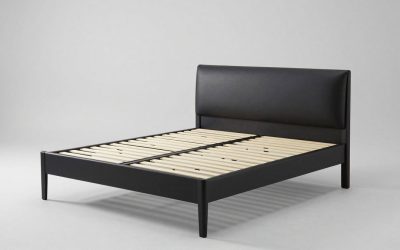
Upholstered and panel-headboard frames sit at the wide end of that footprint; simple metal platforms are the narrowest. Headboards and footboards can each add 2–4 inches of depth that buyers routinely forget.
Will the Trundle Fully Open in Your Room?
The trundle pulls out perpendicular to the bed’s long side, so the number that matters is the free floor beside the bed — not behind it.
In a 10 x 12 ft room, two layouts work:
- Long side against the 12-ft wall (daybed style): the bed projects 60–66 in into the room; the open trundle extends that to roughly 100–106 in. Against a 10-ft-deep room (120 in), that leaves only 14–20 in to squeeze past — fine for occasional guests, not a path you walk daily.
- Headboard on the wall, trundle pulls sideways: you need about 60 in of bed width + 40 in of trundle + a walkway, or roughly 10.5 ft of wall. It just fails on a 10-ft wall and fits comfortably on a 12-ft wall.
Before buying, open every closet door, dresser drawer, and the bedroom door itself near the pull-out lane — the trundle path has to stay clear. Thick rug edges also catch small casters; a low-pile rug or hard floor in the rollout zone rolls smoothest.
Mattress Fit: The Thickness Limit Most Buyers Miss
The under-bed cavity is only 10–14 inches tall, and the mattress must slide under the bottom rail with bedding on. That’s why nearly every manufacturer caps the trundle mattress at 6–8 inches, and a few drawer-style units allow just 5 inches. A plush 10-inch twin that fits your kid’s bed will not fit the trundle.
Three other fit rules:
- Standard twin only (38 x 75 in). A twin XL (38 x 80 in) overhangs the frame and jams the drawer unless the trundle is explicitly rated twin XL.
- Foam beats innerspring at this thickness. A 6-inch medium-firm memory foam twin sleeps fine for kids and passable for adults; a 6-inch innerspring mostly feels like springs.
- Count the bedding loft. A thick quilt or topper left on the mattress is the number-one reason a “compatible” mattress won’t slide in. Keep the trundle dressed in a fitted sheet and thin blanket only.
The queen mattress on top has no height restriction — anything from 8 to 14 inches works. Just note that a tall mattress on a 16-inch frame puts the sleep surface near 30 inches high.
Pop-Up vs. Roll-Out: Which Trundle Style Fits Your Guests
| Roll-Out (Drawer) | Pop-Up (Lift Frame) | |
|---|---|---|
| Sleeping height | 10–14 in off the floor | 16–20 in, near queen height |
| Mattress thickness allowed | 5–8 in | Often up to 8–10 in |
| Typical weight rating | 200–250 lb | 250–450 lb |
| Usual price (frame or add-on) | ~$150–$350 | ~$300–$600 |
| Best for | Kids’ sleepovers, occasional use | Adult guests, frequent use |
A pop-up twin pushed against the queen creates a roughly 98-inch-wide sleep surface — but the twin is 5 inches shorter and the seam is real. It’s a great sprawl zone for a parent plus kids, not a true king substitute (a real king is two twin XLs). A roll-out keeps the sleeper low to the ground, which is safer for small children but awkward for grandparents to get up from. Match the style to who actually sleeps over.
Weight Capacity, Floors, and What Wears First
Main queen beds on metal or solid-wood trundle frames are typically rated 500–800 lb combined. The trundle is the weak link: treat 250 lb as the line between “kid-rated” and “adult-rated,” and check the published limit rather than assuming.
Durability realities:
- Casters first. Plastic wheels scratch hardwood — park the trundle on silicone cups when stored and roll it across a rug when open.
- Drawer-style trundles fail at the MDF bottom panel and slides; angle-iron or wire-grid trundles fail at caster stems. Retighten all bolts at six months.
- Keep slat spacing at 3 in or less under a foam queen mattress — wider gaps sag and can void mattress warranties.
Trundle or a Twin-Over-Queen Bunk?
If the second bed gets used every night rather than occasionally, a bunk bed frame twin over queen is the smarter footprint: it sleeps two on the bottom and one up top inside roughly the same 63 x 83 in footprint, with no pull-out lane to keep clear. Requirements: at least an 8-ft ceiling (you want 30+ in between the top mattress and ceiling), a guardrail rising 5+ in above the mattress, and typical ratings of ~200–250 lb on top and 400–600 lb below. The trade-offs are climbing, awkward sheet changes, and no under-bed storage. Rule of thumb: trundle for guest rooms and sleepovers, bunk for siblings sharing a room nightly.
Setup Tips Before the Boxes Arrive
- Plan for 90–160 lb of boxes across two or three cartons — this is a two-person, 60–90 minute assembly.
- Measure doorways and stairwells. Some queen headboards ship as a single ~66-in panel; standard interior doors are only 30–36 in wide, so it has to come in on the diagonal.
- Decide the pull-out side before assembly. Many frames are reversible, but daybed-style backs lock the trundle to one direction permanently.
- Give a foam trundle mattress 24–48 hours to decompress before judging firmness — it arrives rolled and thinner than spec.
FAQ
Can an adult sleep on a twin trundle?
Yes — choose a pop-up or a roll-out rated at 250+ lb with an 8-inch foam mattress, and it’s comfortable for weekend guests. A 200-lb-rated drawer trundle is better limited to kids.
Will any trundle fit under my existing queen bed?
No. You need at least 10–12 in of under-bed clearance and roughly 76 in of unobstructed length; storage beds, low platforms, and beds with center support legs usually can’t take one. Frames sold as “trundle-ready” guarantee the cavity.
How many people can this setup sleep?
Three comfortably: two on the queen, one on the twin trundle — the same sleeper count as a twin-over-queen bunk, but with the second bed hidden rather than stacked.