Key takeaways
- Unbox and lay out all rails, slats, bolts, and the center support bar. Keep the fabric off the floor to avoid snags.
- Attach side rails to the headboard with the pre-installed bracket bolts, then connect the foot rail to form the rectangle. Do not fully tighten until all four corners are joined.
- Install the center support rail and screw in the center leg(s). Adjust the leg height so it firmly touches the floor with no wobble – this prevents sag and squeaking.
- Unroll the slats, which come connected by fabric straps, and press each end into the plastic caps on the inner ledge. Add the center stabilizing screws where indicated.
- Tighten all bolts, add the plastic leg caps, and check that all slats are evenly spaced before placing the mattress directly on top.
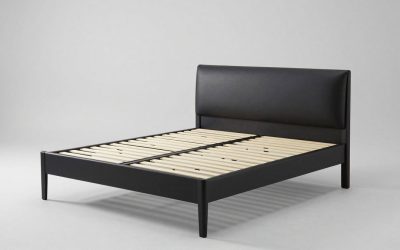
The Zinus Lottie Upholstered Platform Bed Frame is a button-tufted, low-profile platform bed that works best for shoppers who want a classic upholstered look without a box spring, with easy assembly and broad mattress compatibility, but it is not ideal if you need under-bed storage or a very firm, non-flexing base for an extra-heavy latex mattress.
As an Amazon Associate we earn from qualifying purchases at no extra cost to you.

Zinus Lottie Dimensions and Room Fit
The Lottie is a true platform with an overall height of about 42-44 inches at the headboard and a sleeping surface around 13-14 inches off the floor. That puts it lower than many traditional panel beds, which makes it easier to get in and out of for most adults while keeping a formal, tufted aesthetic.
| Size | Overall Footprint (W x L) | Headboard Height | Platform Height (without mattress) | Recommended Minimum Room Size |
|---|---|---|---|---|
| Twin | 42 x 81.5 inches | 42 inches | 13.5 inches | 8 x 10 ft |
| Full | 57 x 81.5 inches | 42 inches | 13.5 inches | 10 x 10 ft |
| Zinus Upholstered Platform Bed Queen | 64.5 x 86 inches | 43 inches | 13.5 inches | 10 x 12 ft |
| King | 80.5 x 86 inches | 43 inches | 13.5 inches | 11 x 13 ft |
In a standard 10×12 ft bedroom, a queen Lottie leaves approximately 28-30 inches of clearance on each side when centered on the 10-foot wall, enough for nightstands up to 22 inches wide plus walking space. In front of the foot of the bed you will have roughly 36-40 inches to a wall or dresser, which meets the minimum for opening drawers comfortably. The King requires at least 24 inches on each side and works best in 11×12 ft or larger rooms.
Weight capacity is typically rated at 500 lbs for Twin/Full and 700 lbs for Queen/King, including mattress and occupants. The frame itself weighs 55-75 lbs depending on size, with the headboard accounting for nearly half of that weight.
Fabric, Tufting and Build Quality
The Lottie is upholstered in a tightly woven linen-look polyester fabric with subtle texture. The color options are usually neutral – beige, light grey, dark grey, and charcoal – all with matching plastic legs that keep the visual profile light. Unlike velvet or boucle, this fabric resists snagging and shows less pet hair, but it can pill with abrasion over time and is not as soft to the touch as a true linen blend.
The defining detail is the deep button tufting across the headboard. The buttons are fabric-covered and stitched through the foam and plywood backing, not just glued. That creates the classic diamond pattern but also means dust collects in the tuft crevices and spot-cleaning requires a soft brush rather than just wiping.
Construction is a mix of solid wood and engineered wood for the side rails and headboard, with a plywood headboard core and foam padding of approximately 1-1.5 inches. This is standard for beds in the usual $300-$600 range for a queen, and it explains the trade-offs versus other materials:
| Material | Pros | Cons | Best For |
|---|---|---|---|
| Solid Wood Frame (e.g., hardwood platform) | Highest rigidity, longest lifespan, best screw-holding | Heavier, usually $700+, can warp with humidity | Buy-it-for-years buyers, heavy mattresses |
| Engineered Wood + Solid Wood (Zinus Lottie) | Lighter, affordable, stable if kept dry | Less resistant to repeated moves, edges chip if dragged | Renters, first apartments, value-focused shoppers |
| Metal Platform Base | Strongest weight support, no sag, easy to clean | Colder look, can squeak, no upholstery | Maximum support, minimalist rooms |
What Wears First on the Lottie
On this type of upholstered platform bed frame, the first signs of wear are usually fabric pilling on the side rails where legs rub getting in and out of bed, and slight compression of the foam behind the headboard buttons after 2-3 years of leaning. The wood slat system itself rarely fails before the fabric, provided the center support leg remains tight.
Slat Support: No Box Spring Needed
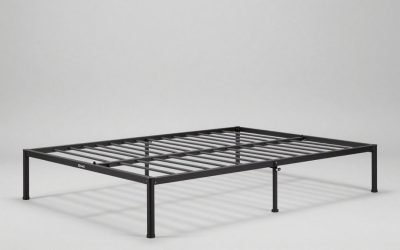
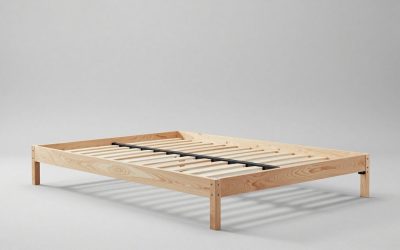
The Lottie uses closely spaced wood slats – typically 12 to 14 slats for a queen – with gaps of 2.8 to 3.2 inches. A center support rail with one to two adjustable legs runs head-to-foot underneath. This spacing meets the warranty requirement for most memory foam, hybrid, and latex mattresses, which usually require gaps no wider than 3 inches.
Because the slats are slightly flexible and rest in plastic holders on an inner ledge, they provide a bit of give. For average-weight sleepers this adds comfort and reduces pressure points. For sleepers over 250 lbs or for very dense latex mattresses over 120 lbs, that flex can feel like subtle sag in the middle over time. In those cases a solid bunkie board cut to size or a low-profile foundation adds rigidity without raising bed height much.
Under-bed clearance is minimal by design – about 3 to 4 inches – so this is not a storage platform. If you need bins underneath, you will want an upholstered platform bed frame with no headboard or a dedicated storage lift bed instead.
Assembly, Moving and Doorway Realities
The bed ships in one long, flat box weighing 60-80 lbs for a queen. The box dimensions are typically 64 x 11 x 20 inches, so measure your stairwell and elevator before delivery. The headboard itself is one assembled piece, so you need a doorway at least 29 inches wide to maneuver it flat.
Assembly is tool-included and designed for one person, but two people make aligning the headboard much easier. Expect 30-50 minutes. The sequence is:
- Unbox and lay out all rails, slats, bolts, and the center support bar. Keep the fabric off the floor to avoid snags.
- Attach side rails to the headboard with the pre-installed bracket bolts, then connect the foot rail to form the rectangle. Do not fully tighten until all four corners are joined.
- Install the center support rail and screw in the center leg(s). Adjust the leg height so it firmly touches the floor with no wobble – this prevents sag and squeaking.
- Unroll the slats, which come connected by fabric straps, and press each end into the plastic caps on the inner ledge. Add the center stabilizing screws where indicated.
- Tighten all bolts, add the plastic leg caps, and check that all slats are evenly spaced before placing the mattress directly on top.
For renters who move frequently, note that engineered wood bolt holes can loosen after two or three disassemblies. Using a drop of wood glue on a loose dowel or adding a small washer helps keep joints tight. Dragging the assembled frame will stress the leg joints; always lift when repositioning.
Which Mattress Types Work Best
As a platform, the Lottie is compatible with any mattress type that does not require a box spring, provided the mattress is 8 to 14 inches thick. A 10-12 inch mattress brings the total sleeping height to 23-26 inches, which aligns with standard nightstand height (24-28 inches) for easy reach.
- Memory foam: Excellent match. The close slats prevent foam from dipping into gaps. Choose medium firmness if you like a cushioned headboard lean.
- Hybrid (foam + coils): Excellent match. The Lottie’s slight slat flex complements pocketed coils and improves air circulation versus a solid foundation.
- Latex: Good match, but heavy. For Dunlop or Talalay latex over 90 lbs in queen, add a 0.75-inch bunkie board for extra stiffness and to protect the mattress warranty.
- Traditional innerspring: Compatible, but an older innerspring designed for a box spring may feel firmer on slats than intended. No additional support needed if the mattress is in good condition.
Avoid ultra-thin 6-inch mattresses on this frame; the low platform plus thin mattress can feel too low and makes the tufted headboard look disproportionately tall.
How the Lottie Compares to Other Zinus Upholstered Beds
Zinus offers several upholstered platforms at similar price points, but the details change the look and maintenance:
Zinus Shalini Upholstered Platform Bed Frame: Features a tall, wingback-style headboard with vertical channel tufting and a slightly higher profile. Choose Shalini if you want a dramatic, hotel-like headboard that frames pillows vertically. Lottie is more compact and traditional.
Zinus Judy Upholstered Platform Bed Frame: Has a low, rectangular headboard with subtle stitching and no deep buttons. Judy collects far less dust and is easier to vacuum, making it better for allergy concerns and for rooms where you want a more understated, mid-century look.
Zinus Dachelle Upholstered Platform Bed: Recognizable by its rounded, cloud-like headboard with dense foam and no tufting. Dachelle feels softer when leaning back to read, but the curved shape takes up 2-3 inches more depth against the wall than the flat Lottie.
Zinus Misty Upholstered Platform Bed Frame: Uses a square-tufted headboard with a lower height and often a metal frame base wrapped in fabric. Misty sits at a similar price but leans more modern and less traditional than Lottie’s diamond tufting.
If you prefer an upholstered platform bed frame no headboard at all – for example to place against a window, to use a separate wall-mounted headboard, or to maximize a small room – none of the four above are ideal. In that case look at Zinus base-only upholstered platforms or simple foundation-style frames, which save 5-7 inches of floor depth and avoid blocking natural light.
Which Zinus Bed Should You Choose?
| Your Situation | Best Pick | Why |
|---|---|---|
| Small apartment, need visual lightness | Judy or No-headboard platform | Lower headboard, easier to move, less visual bulk |
| Kids and pets, frequent cleaning | Judy or Dachelle | No deep button crevices, smoother fabric to wipe |
| Renters who move every 1-2 years | Lottie or Misty | Lightweight box, simple bolt assembly, neutral fabric matches any rental |
| Back pain, prefer very firm base | Lottie with bunkie board or metal platform | Reduces slat flex under heavier foam/latex |
| Want classic, cozy bedroom photos | Lottie or Shalini | Deep tufting photographs well and adds texture |
In general, the Zinus Lottie remains the safest all-rounder among the brand’s upholstered options in 2026. It balancesclassic styling, modest footprint, and straightforward assembly without pushing into the higher price tier where solid-wood frames live.
Care and Longevity Tips
Vacuum the tufting with an upholstery attachment weekly to prevent dust buildup in the buttons. For spills, blot immediately and spot-clean with a mild fabric cleaner; avoid saturating the foam. Every six months, retighten the corner bolts and the center support leg – this single step prevents most squeaks on wood-slat platforms. Keep room humidity between 30-50% to protect the engineered wood, and use felt pads under the legs on hard floors to prevent the plastic caps from scuffing.