Key takeaways
- Slat spacing and count: Aim for steel slats no more than 3 inches apart. Wider gaps let foam and hybrid mattresses bulge downward between supports, which voids many warranties and creates uneven pressure across your hips and shoulders.
- Center support legs: A queen needs at least one center rail with its own legs to the floor. This single feature does more to prevent long-term middle sag than gauge of the tubing itself.
- Deck height versus mattress height: Add your mattress depth to the frame’s clearance. The sweet spot for easy sit-to-stand transfers puts the top of the mattress roughly level with the back of your knee — around 24 to 25 inches for most adults.
- Noise engineering: Look for rubber or felt sleeves at slat contact points and bolt-through joinery rather than hook-in rails. Metal-on-metal contact is the source of nearly every squeak reported months after assembly.
- Headboard use case: Open iron-art scrollwork is beautiful and breathable but unforgiving against the head. If you read or work in bed, choose an upholstered or two-tier design, or plan on a firm bolster pillow.
Most people shopping for a metal bed frame are not really shopping for metal. They are shopping for an end to the 2 a.m. creak that wakes a partner, the sag in the middle that has quietly ruined a good mattress, or the pile of storage bins that has nowhere to live. A frame is the least glamorous part of a sleep setup and the one most likely to undermine it: if the foundation flexes, the mattress compensates, and your spine compensates after that. Iron and steel frames solve the structural half of that problem better than almost anything at the price, but only if you know which specs matter.
This guide looks at iron and iron-art metal bed frames from a sleep-quality standpoint rather than a purely decorative one. I have weighed slat spacing, deck height, noise behavior over time, and whether the headboard actually supports upright reading — the thing people do in bed most and plan for least. Below are the frames worth your attention in 2026, followed by a short buying framework and answers to the questions that come up most often once the box arrives.
Our top picks


As an Amazon Associate we earn from qualifying purchases at no extra cost to you.
🛒 Best Price Today on Amazon
Prime members get fast, free shipping on everything above, plus member-only deals. New members get a 30-day free trial — cancel anytime.
How to Choose an Iron Bed Frame (2026)
- Slat spacing and count: Aim for steel slats no more than 3 inches apart. Wider gaps let foam and hybrid mattresses bulge downward between supports, which voids many warranties and creates uneven pressure across your hips and shoulders.
- Center support legs: A queen needs at least one center rail with its own legs to the floor. This single feature does more to prevent long-term middle sag than gauge of the tubing itself.
- Deck height versus mattress height: Add your mattress depth to the frame’s clearance. The sweet spot for easy sit-to-stand transfers puts the top of the mattress roughly level with the back of your knee — around 24 to 25 inches for most adults.
- Noise engineering: Look for rubber or felt sleeves at slat contact points and bolt-through joinery rather than hook-in rails. Metal-on-metal contact is the source of nearly every squeak reported months after assembly.
- Headboard use case: Open iron-art scrollwork is beautiful and breathable but unforgiving against the head. If you read or work in bed, choose an upholstered or two-tier design, or plan on a firm bolster pillow.
The Best Iron Bed Frames of 2026, Reviewed
Allewie Victorian Iron-Art Metal Bed Frame, Black
This is the most convincing traditional wrought-iron look available at a mass-market price, and the scrolled headboard and footboard are genuinely rigid rather than decorative veneer. Sleep-wise it is a solid, quiet platform with generous under-bed clearance, though the open ironwork means you will want a substantial pillow if you sit up to read.
JETO 18-Inch Heavy Duty Metal Bed Frame
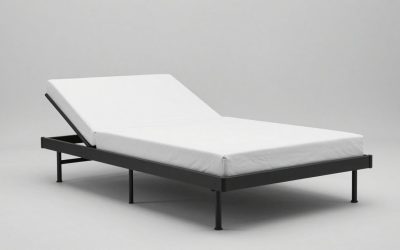
A no-headboard workhorse built around load capacity and clearance, and my default recommendation for anyone pairing an expensive hybrid mattress with a small bedroom. The 18-inch height swallows storage containers whole, and the dense steel slat deck supports foam evenly enough to replace a box spring outright.
Allewie Upholstered Metal Bed Frame, Beige
The curved fabric headboard and footboard soften an iron chassis without giving up structural honesty, and the padding makes it the better choice for readers and late-night phone scrollers. Roughly a foot of under-bed clearance keeps it practical, and the neutral beige suits the warmer, textural bedrooms trending in 2026.
OLEVS Bed Frame with Charging Station and LED Light
Two-tier storage headboard, built-in outlets, and ambient LED strips make this the most feature-dense pick here — useful if you want the phone off the mattress and out of arm’s reach. From a sleep-hygiene angle, choose the warmest LED setting and treat the light as a wayfinding aid at night, not evening room lighting.
Allewie Fully Upholstered Platform Bed, Blue
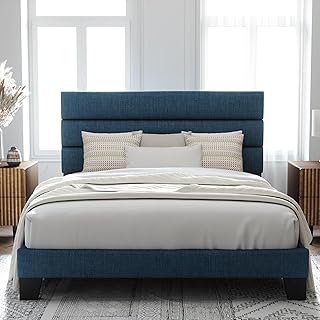
A quieter, softer-edged alternative for anyone who finds exposed iron too cold, with wooden slat support and full fabric wrapping that eliminates most rattle paths. The lower profile limits storage, so treat it as a design-first choice rather than a space-saving one.
Frequently Asked Questions
Do I need a box spring with an iron bed frame?
No. Every frame here uses a closely spaced slat deck that functions as the foundation. Adding a box spring only raises the sleep surface and, with foam mattresses, can actually reduce support consistency.
Why do metal frames squeak, and can it be fixed?
Squeaks come from micro-movement at bolted joints and slat contact points. Retorque every bolt after two weeks of use, then add adhesive felt pads where slats meet the rails. That resolves the large majority of cases without new hardware.
Is a metal frame cold or noisy compared with wood?
Temperature is a non-issue because your mattress and bedding insulate you completely. Airflow underneath is actually an advantage, since it helps foam mattresses shed accumulated body heat and moisture overnight.
How long should assembly take?
Plan on 30 to 60 minutes for a headboard-and-footboard model, less for a platform-only frame. Assemble it in the room where it will live and leave bolts slightly loose until every piece is joined.
Final Thoughts
For classic iron character with real rigidity, the Allewie Victorian Iron-Art frame remains the one to beat. Choose the JETO 18-Inch frame if maximum clearance and load capacity matter more than a headboard, or the Allewie Upholstered Beige model if you spend waking hours propped up in bed and want your back supported while you do it.