Key takeaways
- Read the load rating skeptically: Advertised capacities of 3,000 or 3,500 pounds describe static, evenly distributed weight in ideal conditions — not two people moving. Aim for a rating at least three times your combined sleeping weight to build in real margin.
- Count the center legs: This is the single strongest predictor of long-term performance. A queen frame carrying serious weight needs a minimum of two center support legs running to the floor; three is better. Frames relying on side rails alone will sag at the midpoint no matter how thick the steel.
- Check slat spacing, not just slat count: Gaps wider than three inches let foam and hybrid mattresses bulge downward between supports, creating pressure inconsistencies that show up as morning hip and lower-back pain. Tighter spacing also protects most mattress warranties.
- Look for welded joints over bolt-only construction: Every bolted connection is a place that can loosen under repetitive stress. Welded corner assemblies and reinforced joints stay silent far longer, which matters more than most buyers anticipate.
- Verify usable under-bed clearance: A 14-inch frame typically yields about 12.4 inches of storage height, but center supports and cross braces divide that space. Measure your bins before committing, and confirm total height works with your mattress for comfortable sit-to-stand.
Sleep quality collapses long before a bed frame does. The nightly creak that wakes a partner, the slow sag in the middle of the mattress, the faint sideways sway every time you shift position — these are the symptoms most people learn to tolerate, and they quietly fragment sleep architecture in ways no mattress upgrade can fix. For anyone above roughly 250 pounds, or for two sleepers whose combined weight clears 400, a bed frame stops being furniture and becomes structural engineering. Standard frames are typically built around a 400–600 pound assumption, and the failure point is almost never dramatic. It’s the twelfth month, when a center leg has migrated a half-inch and the slats have taken on a permanent bow.
This guide focuses on frames engineered for genuine load — thick-gauge steel, closely spaced slats, and center support that carries weight straight down to the floor rather than out to the rails. Below you’ll find the specifications that actually predict longevity, six frames worth considering in 2026, and honest notes on which ones earn their claims versus which lean on optimistic marketing numbers.
Our top picks



As an Amazon Associate we earn from qualifying purchases at no extra cost to you. Ratings are shown as listed on Amazon.
🛒 Best Price Today on Amazon
Prime members get fast, free shipping on everything above, plus member-only deals. New members get a 30-day free trial — cancel anytime.
How to Choose a Bed Frame For Heavy People (2026)
- Read the load rating skeptically: Advertised capacities of 3,000 or 3,500 pounds describe static, evenly distributed weight in ideal conditions — not two people moving. Aim for a rating at least three times your combined sleeping weight to build in real margin.
- Count the center legs: This is the single strongest predictor of long-term performance. A queen frame carrying serious weight needs a minimum of two center support legs running to the floor; three is better. Frames relying on side rails alone will sag at the midpoint no matter how thick the steel.
- Check slat spacing, not just slat count: Gaps wider than three inches let foam and hybrid mattresses bulge downward between supports, creating pressure inconsistencies that show up as morning hip and lower-back pain. Tighter spacing also protects most mattress warranties.
- Look for welded joints over bolt-only construction: Every bolted connection is a place that can loosen under repetitive stress. Welded corner assemblies and reinforced joints stay silent far longer, which matters more than most buyers anticipate.
- Verify usable under-bed clearance: A 14-inch frame typically yields about 12.4 inches of storage height, but center supports and cross braces divide that space. Measure your bins before committing, and confirm total height works with your mattress for comfortable sit-to-stand.
The Best Bed Frame For Heavy People (2026)s Reviewed
ROIL 14 Inch Queen Bed Frame
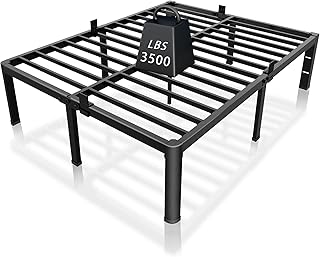
The strongest overall package here, combining a 3,500-pound rating with four mattress baffles that stop lateral drift — a small feature that eliminates the most common complaint about platform frames. Rounded corners and a pre-drilled headboard hole make it unusually adaptable for a heavy-duty frame.
MAF 14 Inch Queen Metal Platform Bed Frame
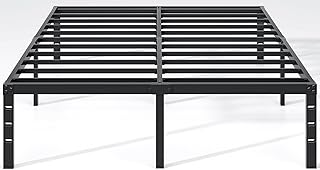
MAF’s steel slat support system distributes weight more evenly than the flat-strip designs common at this price, and the noise-free construction genuinely delivers over time. A dependable choice for couples where sleep disruption from movement is the primary concern.
Queen Bed Frame, 14 Inch Heavy Duty Steel Platform
A straightforward, no-frills 3,500-pound platform with scratch-proof feet — a detail worth noting if you have hardwood or luxury vinyl flooring, where standard metal feet leave permanent marks. Assembly is fast and the frame runs quiet from night one.
NEW JETO Metal Bed Frame with Storage
JETO prioritizes clean under-bed access, keeping cross-bracing arranged so standard storage bins slide in without obstruction. The build is solidly heavy-duty, though it sits a step below the 3,500-pound options for the heaviest sleepers.
Mellow Naturalista Classic 12 Inch
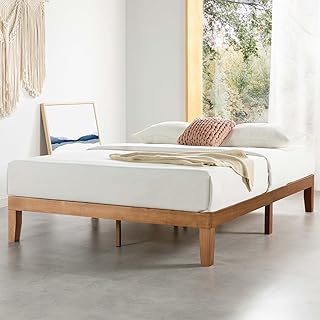
The best option for buyers who want warm solid pine rather than exposed metal, with wooden slats that provide firm, consistent support. Note the 12-inch height and slightly lower ceiling on capacity — a good fit for single heavier sleepers, less so for maximum-load couples.
Frequently Asked Questions
Do I need a box spring with these frames?
No. Every frame here is a platform design with integrated slat support, which is structurally superior for heavy sleepers. Adding a box spring introduces another compressible layer and raises the bed to an awkward height.
Why does my current bed frame squeak so much?
Squeaking almost always originates at bolted metal-on-metal joints that have worked loose under repeated load. Welded construction and rubber or felt joint padding — standard on the MAF and ROIL frames — largely eliminate it.
Will a heavy-duty frame make my mattress feel firmer?
Slightly, and that’s usually beneficial. Removing the sag that a failing frame introduces restores your mattress to its designed feel, which often resolves the lower-back stiffness people mistakenly blame on the mattress itself.
How long should a properly rated frame last?
Eight to ten years is realistic with a well-built steel platform. Retighten all bolts at the six-month mark, then annually — this single habit prevents the majority of premature failures.
Final Thoughts
For most heavier sleepers, the ROIL 14 Inch is the clearest choice, pairing the highest verified load rating with mattress baffles and headboard compatibility that competitors skip. The MAF 14 Inch is the better pick if silence is your priority, thanks to its superior slat support system, while the Mellow Naturalista Classic serves anyone who wants solid pine construction without sacrificing meaningful strength.