Key takeaways
- Treat capacity as a system total: A 750 lb rating includes the mattress, which can run 100–150 lb for a king hybrid, plus pillows, bedding, and everyone on the deck. Subtract the mattress first, then decide whether the remaining headroom feels generous rather than borderline.
- Look at deck and leg architecture: Heavy-gauge or welded steel decking, a reinforced center rail, and at least six legs on a king-width base are what actually prevent mid-deck flex. Four-leg frames and thin slat decks concentrate load exactly where a heavier torso sits.
- Insist on independent dual motors: Separate head and foot actuators divide the lifting work instead of asking one motor to raise the entire load through its full arc. This matters most at the hip hinge, which carries the highest torque during incline.
- Pair the mattress deliberately: Choose a flexible 10–14 inch hybrid or high-density foam build rated for adjustable use. Firmer support cores hold spinal alignment better at higher body weights and resist the hammocking that undermines the benefit of elevating at all.
- Read the warranty, not just the rating: Some coverage narrows sharply after year one or excludes damage attributed to exceeding load limits. Confirm motor and frame terms separately before buying, and keep the assembly documentation.
Weight capacity is the most quietly misunderstood number in the adjustable bed category. Most listings advertise a single figure that has to cover the mattress, the bedding, and every person on the deck — and that figure is almost always measured with the base lying flat, not folded into a steep incline where leverage multiplies the stress on hinges, lift arms, and motor mounts. The predictable outcome is a market full of frames that “support” a heavier sleeper on paper but start creaking, drifting, or stalling within a year of nightly use.
This guide approaches the problem the way I do when advising clients: structure first, features second. Below are the bases worth considering in 2026 for higher body weights — models with real steel decking, dual-motor lift, and load ratings the manufacturer is willing to publish — along with a framework for reading spec sheets critically and answers to the questions that come up most often around mattress pairing, shared beds, and positional sleep benefits.
Our top picks



As an Amazon Associate we earn from qualifying purchases at no extra cost to you. Ratings are shown as listed on Amazon.
🛒 Best Price Today on Amazon
Prime members get fast, free shipping on everything above, plus member-only deals. New members get a 30-day free trial — cancel anytime.
How to Choose an Adjustable Bed For Heavy People (2026)
- Treat capacity as a system total: A 750 lb rating includes the mattress, which can run 100–150 lb for a king hybrid, plus pillows, bedding, and everyone on the deck. Subtract the mattress first, then decide whether the remaining headroom feels generous rather than borderline.
- Look at deck and leg architecture: Heavy-gauge or welded steel decking, a reinforced center rail, and at least six legs on a king-width base are what actually prevent mid-deck flex. Four-leg frames and thin slat decks concentrate load exactly where a heavier torso sits.
- Insist on independent dual motors: Separate head and foot actuators divide the lifting work instead of asking one motor to raise the entire load through its full arc. This matters most at the hip hinge, which carries the highest torque during incline.
- Pair the mattress deliberately: Choose a flexible 10–14 inch hybrid or high-density foam build rated for adjustable use. Firmer support cores hold spinal alignment better at higher body weights and resist the hammocking that undermines the benefit of elevating at all.
- Read the warranty, not just the rating: Some coverage narrows sharply after year one or excludes damage attributed to exceeding load limits. Confirm motor and frame terms separately before buying, and keep the assembly documentation.
The Best Adjustable Beds For Heavy People (2026) Reviewed
Sven & Son Classic Adjustable Bed Base (Split King)
The split-king configuration is the smartest structural choice available to heavier couples, because each half carries one body on its own frame and motor rather than sharing a single stressed deck. The bundled 14-inch hybrid is a genuinely good pairing, though sleepers well above average weight may prefer stepping up from the medium-soft feel to preserve lumbar support.
Mixcous King Adjustable Bed Frame (750 lb)
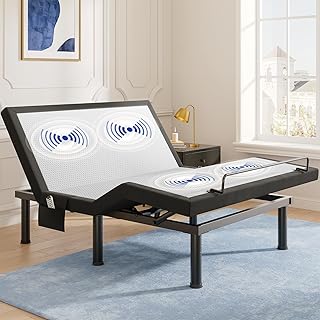
Mixcous states its 750 lb capacity plainly rather than burying it, and the heavy-duty frame backs that claim with the kind of steel structure the rating implies. Zero gravity and anti-snore presets are well calibrated here, and assembly is straightforward enough for two people to finish in under half an hour.
EGOHOME Massage Split King with 14″ Memory Foam
A strong all-in-one option, combining independent head and foot incline with adjustable 12-inch legs and zero-clearance operation that lets the base sit inside an existing bed frame. The massage function is more substantial than the token motors found on budget bases, and the split design again spreads load intelligently.
Heavy Duty King Upholstered Adjustable Bed Frame
This one earns its place on presentation as much as engineering — the upholstered surround hides the industrial look that puts many buyers off adjustable bases, without sacrificing independent head and foot tilt. Dual USB ports and under-bed lighting are genuinely useful for anyone who gets up during the night.
Tami Tami T600 Queen
The most practical pick for a single sleeper or a smaller bedroom, with a notably quiet motor, side storage pockets, and an assembly process that lives up to its five-minute billing. Verify the queen-width capacity against your combined load before committing, since narrower decks have less structural redundancy than kings.
Frequently Asked Questions
What capacity should I actually be looking for?
Add your body weight, your partner’s if applicable, and roughly 100–150 lb for a king mattress and bedding, then aim for a base rated at least 25 percent above that total. The margin absorbs dynamic load — the momentary force of sitting down hard or shifting during incline — which exceeds static weight considerably.
Can I use my existing mattress?
Only if it’s designed to flex. Innerspring mattresses with rigid perimeter frames will fatigue and eventually fail on an articulating deck, while foam, latex, and most modern hybrids handle repeated bending well. Check the mattress warranty, as some explicitly exclude adjustable base use.
Is a split base worth the extra cost for couples?
For higher combined weights, yes — decisively. Two independent decks halve the load each frame and motor carries, which meaningfully extends service life, and each person can set their own incline without compromise.
Do these positions genuinely help with snoring or reflux?
Modest head elevation has reasonable evidence behind it for positional snoring and nighttime reflux, and leg elevation can ease lower-limb swelling. An adjustable base is a comfort and positioning tool, though — it isn’t a treatment for diagnosed sleep apnea, which warrants a conversation with a clinician.
Final Thoughts
For couples at higher body weights, the Sven & Son Classic split king remains the most structurally sound choice in this group, with the EGOHOME split king close behind if you want a bundled memory foam mattress and zero-clearance installation. Solo sleepers who want maximum published capacity in a single-deck king should start with the Mixcous 750 lb frame.