Key takeaways
- Independent head and foot lift: Head-only bases are the cheaper option and the wrong one for back pain. Elevating the knees is what shortens the lever arm on your lumbar spine; without foot articulation, raising the head alone can actually increase strain through the low back.
- A genuine zero-gravity preset: This one-touch position distributes body weight across a wider surface and takes pressure off the lumbar discs. Look for it as a programmed button rather than something you have to approximate manually every night.
- Mattress pairing: Your mattress has to flex with the base without bottoming out. Gel memory foam and thinner hybrids in the 10-14 inch range articulate cleanly; thick innerspring or heavily bordered mattresses fight the frame and wear unevenly.
- Split sizing for couples: If your partner sleeps flat and you don’t, a split king with dual motors ends the negotiation. Each side moves independently, so your inclined position never becomes a shared decision.
- Motors, capacity, and warranty: Check the weight rating includes mattress plus sleepers, favour quiet motors if you reposition mid-night, and read the warranty split — frames and mattresses are often covered under separate terms.
Back pain doesn’t clock out at bedtime. A flat mattress holds the lumbar spine in one fixed position for seven or eight hours, and for anyone dealing with disc irritation, facet joint stiffness, or chronically shortened hip flexors, that immobility is the whole problem. The pattern is predictable: you drift off without much trouble, surface around 3 a.m. hunting for a position that doesn’t exist, then spend the first half hour of the morning slowly unfolding. It’s why so many people with chronic back trouble end up sleeping in a recliner — it eases the spine and quietly sabotages everything else, from neck posture to sleep continuity.
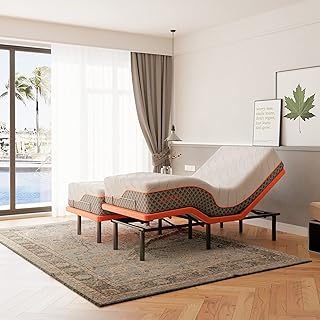
An adjustable base is the durable version of that recliner instinct. Raising the torso and elevating the knees independently reduces the load running through the lower back, while still keeping you on a real mattress with real support. This guide covers what genuinely matters when you’re shopping in 2026 — articulation range, mattress pairing, split sizing, motor quality — followed by reviews of the base-and-mattress bundles I’d actually recommend, spanning compact twin XL setups through split king systems built for two.
Our top picks


As an Amazon Associate we earn from qualifying purchases at no extra cost to you. Ratings are shown as listed on Amazon.
🛒 Best Price Today on Amazon
Prime members get fast, free shipping on everything above, plus member-only deals. New members get a 30-day free trial — cancel anytime.
How to Choose an Adjustable Bed For Back Pain (2026)
- Independent head and foot lift: Head-only bases are the cheaper option and the wrong one for back pain. Elevating the knees is what shortens the lever arm on your lumbar spine; without foot articulation, raising the head alone can actually increase strain through the low back.
- A genuine zero-gravity preset: This one-touch position distributes body weight across a wider surface and takes pressure off the lumbar discs. Look for it as a programmed button rather than something you have to approximate manually every night.
- Mattress pairing: Your mattress has to flex with the base without bottoming out. Gel memory foam and thinner hybrids in the 10-14 inch range articulate cleanly; thick innerspring or heavily bordered mattresses fight the frame and wear unevenly.
- Split sizing for couples: If your partner sleeps flat and you don’t, a split king with dual motors ends the negotiation. Each side moves independently, so your inclined position never becomes a shared decision.
- Motors, capacity, and warranty: Check the weight rating includes mattress plus sleepers, favour quiet motors if you reposition mid-night, and read the warranty split — frames and mattresses are often covered under separate terms.
The Best Adjustable Beds For Back Pain (2026), Reviewed
Sven & Son Classic Base + 14″ Hybrid (Queen)
The strongest all-round pick here: a well-built head-and-foot base paired with a hybrid mattress that flexes properly at the hinge points while its coil layer keeps the hips from sinking. The medium-soft feel suits side sleepers whose pain flares from pressure at the shoulder and greater trochanter.
Blissful Nights e4 King Adjustable Bed Frame
A frame-only option for anyone who already owns a mattress worth keeping, with zero gravity, anti-snore and massage presets on a wireless remote. The anti-snore setting is a useful bonus for back-pain sufferers who sleep supine, since that position tends to worsen airway collapse.
ESHINE Split King with 12″ Hybrid
The one I’d point couples toward. Dual independent sides mean one partner can sit up at 45 degrees while the other stays flat, and the 12-inch hybrid strikes a sensible balance between contouring and the firmer support most aching backs prefer.
Sven & Son Classic Base + 12″ Memory Foam (Full)
Effectively the same engineering as the queen bundle, scaled to a full-size room. Memory foam at medium firmness works well for people whose pain sits in the SI joints and who need the mattress to fill the lumbar gap rather than bridge it.
Twin XL Adjustable Frame + 14″ Gel Memory Foam
The most accessible entry point, and a smart choice for guest rooms, recovery from surgery, or anyone testing whether articulation helps before committing to a larger system. Gel infusion helps offset the heat retention that thicker foam mattresses are prone to.
Frequently Asked Questions
Does an adjustable bed genuinely help back pain?
For many people, yes — though it’s a positioning tool, not a cure. Elevating the knees reduces tension on the psoas and lowers pressure across the lumbar discs, which tends to help most with morning stiffness and mid-night waking. Persistent or radiating pain still warrants a clinical assessment.
What angle should I sleep at?
Start modestly: roughly 10-15 degrees at the head and 15-20 at the knees, then adjust by feel over a week or two. Extreme angles can create new problems at the neck and thoracic spine, so more elevation isn’t automatically better.
Can I use my existing mattress?
Only if it’s flexible. Memory foam, latex and most modern hybrids adapt fine. Traditional innersprings with rigid perimeter support generally don’t, and forcing them onto a base will damage the mattress and strain the motors.
Are the massage and lighting features worth paying for?
Massage offers modest, short-lived relief and shouldn’t drive your decision. Under-bed lighting is more practical than it sounds — it lets you navigate a night-time trip to the bathroom without bright overhead light disrupting your melatonin.
Final Thoughts
If you want one recommendation, the Sven & Son Classic with the 14″ hybrid delivers the most balanced combination of articulation quality and spinal support for a solo sleeper. Couples should look at the ESHINE Split King for its independent sides, while the Blissful Nights e4 is the sensible choice if your current mattress is already doing its job and you simply need a capable base beneath it.