Key takeaways
- Read the load rating in context: Published figures like 3,000 or 3,500 lbs describe a static, evenly distributed load, not the concentrated force of someone sitting on the edge. Add your mattress weight to combined sleeper weight, then choose a frame rated at roughly three times that total for genuine margin.
- Slat spacing and material: Steel slats spaced three inches apart or less prevent the localized sag that shortens foam and hybrid mattress life. Wide-set wooden slats are the single most common cause of premature body impressions.
- Legs and center support: Count the floor contact points. Nine or more legs, plus a welded or double-bolted center rail running head to foot, distributes weight far better than a four-corner design with a token middle bar.
- Silence engineering: Look for rubber or felt caps, interlocking slat channels, and mattress baffles or stoppers. Frames that rely on metal-on-metal contact will eventually announce every position change you make at 3 a.m.
- Deck height and clearance: A 14- to 18-inch deck gives usable storage and, just as importantly, sets a comfortable transfer height. With your mattress on top, aim for a seated position where your hips sit level with or slightly above your knees.
Most bed frames are designed around an assumption that never makes it into the product listing: an average-sized sleeper who lies perfectly still. Add a heavier body, a partner, and a 90-pound hybrid mattress, and the weak points surface quickly — a deck that dishes toward the middle, slats that bow between supports, and bolted joints that develop a click every time you change position. From a sleep-quality standpoint, that last problem is the sneakiest. Noise and micro-movement trigger brief cortical arousals you almost never remember in the morning, yet they quietly erode the deep and REM sleep you were counting on.
The remedy is structural rather than cosmetic. This guide evaluates six heavy-duty platform frames through the criteria that actually keep a mattress flat, silent, and properly supported under load: steel gauge, slat spacing, how many legs carry weight to the floor, and how the joints are fastened. You’ll find the current picks below, followed by a buying checklist, expert notes on the standouts, and answers to the questions readers ask most.
Our top picks
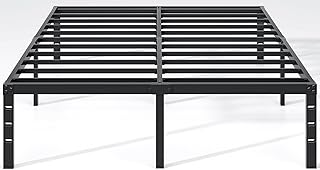


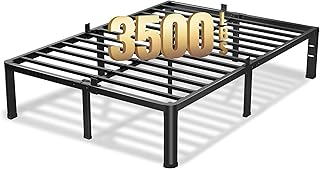
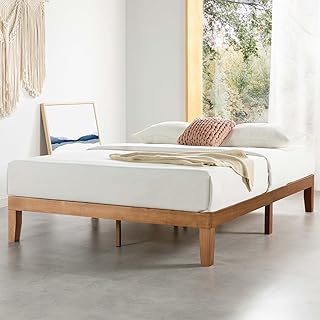

As an Amazon Associate we earn from qualifying purchases at no extra cost to you. Ratings are shown as listed on Amazon.
🛒 Best Price Today on Amazon
Prime members get fast, free shipping on everything above, plus member-only deals. New members get a 30-day free trial — cancel anytime.
How to Choose a Bed Frame for a Heavy Person (2026)
- Read the load rating in context: Published figures like 3,000 or 3,500 lbs describe a static, evenly distributed load, not the concentrated force of someone sitting on the edge. Add your mattress weight to combined sleeper weight, then choose a frame rated at roughly three times that total for genuine margin.
- Slat spacing and material: Steel slats spaced three inches apart or less prevent the localized sag that shortens foam and hybrid mattress life. Wide-set wooden slats are the single most common cause of premature body impressions.
- Legs and center support: Count the floor contact points. Nine or more legs, plus a welded or double-bolted center rail running head to foot, distributes weight far better than a four-corner design with a token middle bar.
- Silence engineering: Look for rubber or felt caps, interlocking slat channels, and mattress baffles or stoppers. Frames that rely on metal-on-metal contact will eventually announce every position change you make at 3 a.m.
- Deck height and clearance: A 14- to 18-inch deck gives usable storage and, just as importantly, sets a comfortable transfer height. With your mattress on top, aim for a seated position where your hips sit level with or slightly above your knees.
The Best Bed Frames for Heavy People (2026), Reviewed
JETO 14 Inch Metal Bed Frame with Storage
A sensible entry point for anyone replacing a failing box-spring setup on a budget, with a reinforced 14-inch steel deck and enough under-bed clearance for flat bins. Assembly is genuinely quick, though I’d retorque the center hardware after the first month of use.
MAF 14 Inch Platform Bed Frame with Round Corner Legs
The 3,000-lb steel slat system and integrated mattress baffle keep a heavy hybrid from creeping toward the foot of the bed, which is a recurring complaint with slick-topped platform decks. Rounded corner legs are a small but welcome detail if your bed sits along a walking path.
Upcanso 16 Inch Queen Bed Frame
This is the balance point of the group: a 3,500-lb rating, dense steel slat spacing, and 14 inches of storage clearance at a height that suits most adults without feeling perched. It’s the frame I’d recommend first for couples with a combined weight above 500 pounds.
VIPSHOW 18 Inch Bed Frame with Round Corners
Four mattress stoppers, rubber-capped feet, and pre-drilled headboard holes make this the most complete package here, and the 3,500-lb chassis stays reassuringly quiet under shifting load. The extra deck height is a real advantage for anyone with hip or knee stiffness who struggles to rise from a low bed.
Mellow Naturalista Classic 12 Inch Solid Wood Platform
For sleepers who want warmth and a lower profile rather than maximum tonnage, this solid pine platform offers honest joinery and closely spaced wooden slats. Treat it as the design-forward option: excellent for a single heavier sleeper, less suited to two.
Frequently Asked Questions
Do these frames actually hold their advertised weight?
Under laboratory conditions, yes — but those tests use evenly distributed static loads. Real beds absorb impact when you sit down and torsional stress when you roll, so treat the published number as a ceiling and build in a healthy safety factor.
Do I still need a box spring?
No. Every metal frame here is a complete foundation with a supportive slat deck. Adding a box spring raises your bed awkwardly and introduces a sagging wooden component that defeats the purpose of buying heavy-duty steel.
How do I stop a metal frame from squeaking?
Tighten bolts in a crisscross sequence rather than one side at a time, confirm all legs contact the floor evenly, and add felt washers at any metal-to-metal junction. Recheck the hardware at 30 days, then twice yearly.
Is an 18-inch frame too tall?
It depends on your mattress. An 18-inch deck like the EMODA Queen paired with a 12-inch mattress puts the sleep surface at 30 inches, which suits taller users but may require a step for shorter ones.
Final Thoughts
For most heavier sleepers and couples, the Upcanso 16 Inch delivers the best combination of load capacity, slat density, and practical height. Choose the VIPSHOW 18 Inch if easier entry and exit or maximum storage clearance matter more, and the Mellow Naturalista Classic if you’d rather have solid wood beneath you than steel.