Key takeaways
- Weight capacity with headroom: Add the combined weight of every sleeper plus roughly 100 lbs for a mattress, then double it. A rating of 2,500–3,500 lbs sounds excessive but gives you the safety margin that absorbs sitting, leaning, and rolling.
- Leg and center-support count: Corner legs alone concentrate stress on the side rails. Look for at least nine support points, including central legs running down the spine of the frame — this is the single best predictor of whether a frame will sag.
- Slat spacing and material: Steel slats spaced 3 inches apart or less prevent the mattress from bulging between supports, which is what causes premature foam breakdown. Wide-set wooden slats are the most common failure point in cheaper platforms.
- Noise engineering: Bolt-through joints, rubber or felt washers at contact points, and welded corners keep a frame silent. Frames that rely on friction-fit hooks will develop a creak within months of heavy use.
- Height and edge access: A 14–18 inch frame puts the mattress surface at a knee-friendly height, which matters for anyone with hip or joint discomfort, and buys usable under-bed storage without a box spring.
If you weigh more than the “average sleeper” that mattress marketing keeps imagining, you already know the sound of a failing bed frame: the two-in-the-morning creak when you roll over, the slat that pops loose and takes a corner of the mattress with it, the slow sag that turns a good mattress into a hammock. Most budget frames are engineered around a static load figure, not around real bodies that shift, sit on the edge, and generate sudden dynamic force. That gap is why so many people replace a frame twice in three years and blame the mattress.
As a sleep-wellness specialist, I care about frames for one reason: an unstable foundation quietly degrades sleep architecture. Micro-movements and noise pull you out of deep stages without fully waking you, so you feel unrested even after eight hours in bed. This guide focuses on what actually determines durability for heavier sleepers — steel gauge, slat spacing, leg count, center-rail support — and reviews the frames that hold up under sustained load rather than the ones that merely advertise a big number on the box.
Our top picks
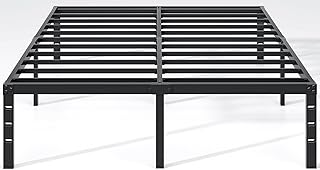


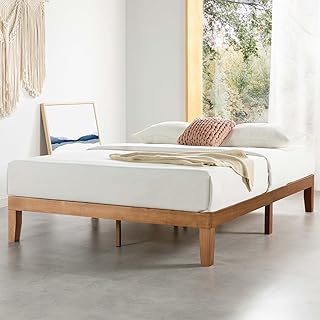

As an Amazon Associate we earn from qualifying purchases at no extra cost to you. Ratings are shown as listed on Amazon.
🛒 Best Price Today on Amazon
Prime members get fast, free shipping on everything above, plus member-only deals. New members get a 30-day free trial — cancel anytime.
How to Choose a Bed Frame For Fat Person (2026)
- Weight capacity with headroom: Add the combined weight of every sleeper plus roughly 100 lbs for a mattress, then double it. A rating of 2,500–3,500 lbs sounds excessive but gives you the safety margin that absorbs sitting, leaning, and rolling.
- Leg and center-support count: Corner legs alone concentrate stress on the side rails. Look for at least nine support points, including central legs running down the spine of the frame — this is the single best predictor of whether a frame will sag.
- Slat spacing and material: Steel slats spaced 3 inches apart or less prevent the mattress from bulging between supports, which is what causes premature foam breakdown. Wide-set wooden slats are the most common failure point in cheaper platforms.
- Noise engineering: Bolt-through joints, rubber or felt washers at contact points, and welded corners keep a frame silent. Frames that rely on friction-fit hooks will develop a creak within months of heavy use.
- Height and edge access: A 14–18 inch frame puts the mattress surface at a knee-friendly height, which matters for anyone with hip or joint discomfort, and buys usable under-bed storage without a box spring.
The Best Bed Frames For Fat People (2026), Reviewed
ROIL 18 Inch Queen Bed Frame
The standout here is thoughtful engineering rather than brute steel: rounded corners, four mattress baffles that stop the mattress from creeping, and a 3,500 lb capacity across a dense slat grid. At 18 inches with 16.4 inches of clearance and a headboard hole, it’s the most complete package for a heavier sleeper who wants storage and a real headboard.
Upcanso 16 Inch Queen Bed Frame
Upcanso’s 3,500 lb steel slat system is genuinely stiff underfoot — sit on the edge and you don’t feel that unsettling flex you get from thin-gauge frames. The 16-inch profile leaves 14 inches of storage, and assembly is straightforward enough for one person, though a second set of hands makes aligning the center rail faster.
NEW JETO 14 Inch Metal Bed Frame
A no-nonsense heavy-duty queen platform that prioritizes a wide, evenly distributed slat layout over decorative extras. It’s the frame I’d point someone toward who wants proven metal construction, quiet performance, and generous storage without paying for a headboard they’ll never use.
Maenizi 14 Inch Full Size Bed Frame
Rated to 3,000 lbs in a full size, this is a smart choice for a single heavier sleeper or a smaller bedroom where a queen won’t fit. The noise-free joinery is the highlight — it stays silent through nightly position changes, which is exactly what protects uninterrupted deep sleep.
Lutown-Teen 14 Inch Full XL Bed Frame
Full XL is the overlooked size for taller, broader sleepers who need extra length without a queen’s footprint. Lutown-Teen delivers sturdy steel slats and a quiet, well-braced platform, making it a practical pick for guest rooms, dorms, and narrow spaces.
Mellow Naturalista Classic 12 Inch Solid Wood Platform
If you prefer wood, solid pine with closely set wooden slats is the version to buy — it’s warmer in a room and assembles without tools beyond the basics. Just note that its 12-inch height and wood construction make it the gentler-duty option in this lineup, best suited to moderate loads.
Frequently Asked Questions
Do I need a box spring with these frames?
No. Every frame here is a platform design with integrated slats, and adding a box spring would raise the bed uncomfortably high while introducing a second component that can sag.
Are the advertised weight limits realistic?
They’re static ratings measured under even distribution, not real-world use. Treat the number as a durability signal and aim for a frame rated at roughly double your total mattress-plus-sleepers weight.
Will a metal frame make noise over time?
Only if the hardware loosens. Re-torque every bolt after the first two weeks and again at six months, and add felt pads under the legs — that routine eliminates nearly all creaking complaints.
Which mattress types pair best with steel slat platforms?
Foam, latex, and hybrid mattresses all perform well on closely spaced steel slats. Firmer hybrids with reinforced perimeters tend to serve heavier sleepers best, since edge support influences how easily you get in and out of bed.
Final Thoughts
For most heavier sleepers, the ROIL 18 Inch Queen is the frame worth stretching for — the baffles, rounded corners, and 3,500 lb rating solve problems most competitors ignore. The Upcanso 16 Inch is the value alternative with nearly identical strength, and the Maenizi 14 Inch Full is the smart pick when you need genuine heavy-duty support in a smaller footprint.