Key takeaways
- Slat spacing and support: Aim for slats no more than 2.5 to 3 inches apart. Wider gaps let foam mattresses sag between supports, creating soft spots that pull your spine out of neutral alignment — and most memory foam warranties are voided by inadequate slat spacing.
- Center rail and legs: On any queen or larger frame, insist on a center support rail with its own leg or legs reaching the floor. Without it, the middle third of the bed carries the most weight with the least reinforcement, which is exactly where most couples sleep.
- Noise engineering: Squeaks come from metal-on-metal contact at joints. Look for frames that use rubber or felt washers, welded rather than bolted connections, or wood-on-wood contact points. If you or your partner is a restless sleeper, prioritize this over almost everything else.
- Height and under-bed clearance: A 14-inch frame plus a 10-inch mattress puts the sleep surface around 24 inches — comfortable for most adults to sit and stand from. Taller frames buy you storage space; lower ones suit tall mattresses or anyone who prefers a grounded feel.
- Assembly reality check: Read the assembly notes honestly. Tool-free folding frames go together in fifteen minutes; upholstered platforms with headboards can take an hour and often benefit from a second pair of hands. Neither is better, but knowing which you’re getting prevents a very frustrating evening.
Most people spend months agonizing over which mattress to buy, then grab a bed frame in ten minutes based on whichever photo looks nicest. That order of operations is backwards. A frame that flexes under load, spaces its slats too widely, or squeaks every time you shift position will quietly undermine the mattress you researched so carefully — and sleep fragmentation from noise and instability is far more common than most sleepers realize, because you rarely wake fully enough to remember it.
This guide approaches frame shopping the way I’d approach a sleep assessment: structure first, aesthetics second. Below you’ll find the frames worth your attention in 2026, a breakdown of the specifications that actually predict a good night’s rest, and answers to the questions I hear most often from clients who are mid-purchase and second-guessing themselves.
Our top picks


As an Amazon Associate we earn from qualifying purchases at no extra cost to you. Ratings are shown as listed on Amazon.
🛒 Best Price Today on Amazon
Prime members get fast, free shipping on everything above, plus member-only deals. New members get a 30-day free trial — cancel anytime.
How to Choose a Places To Buy A Bed Frame (2026)
- Slat spacing and support: Aim for slats no more than 2.5 to 3 inches apart. Wider gaps let foam mattresses sag between supports, creating soft spots that pull your spine out of neutral alignment — and most memory foam warranties are voided by inadequate slat spacing.
- Center rail and legs: On any queen or larger frame, insist on a center support rail with its own leg or legs reaching the floor. Without it, the middle third of the bed carries the most weight with the least reinforcement, which is exactly where most couples sleep.
- Noise engineering: Squeaks come from metal-on-metal contact at joints. Look for frames that use rubber or felt washers, welded rather than bolted connections, or wood-on-wood contact points. If you or your partner is a restless sleeper, prioritize this over almost everything else.
- Height and under-bed clearance: A 14-inch frame plus a 10-inch mattress puts the sleep surface around 24 inches — comfortable for most adults to sit and stand from. Taller frames buy you storage space; lower ones suit tall mattresses or anyone who prefers a grounded feel.
- Assembly reality check: Read the assembly notes honestly. Tool-free folding frames go together in fifteen minutes; upholstered platforms with headboards can take an hour and often benefit from a second pair of hands. Neither is better, but knowing which you’re getting prevents a very frustrating evening.
The Best Places To Buy A Bed Frame (2026)s Reviewed
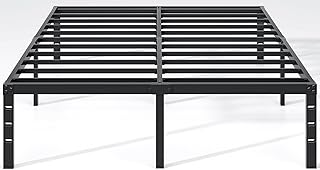
NEW JETO Metal Bed Frame, Queen, 14 Inch
This is the frame I point people toward when they need storage and stability without spending much — the 14-inch clearance swallows bins that would otherwise clutter a bedroom, and the heavy-duty steel construction holds firm under a dense hybrid mattress. Assembly is genuinely simple, and the closely set supports mean no box spring is required.
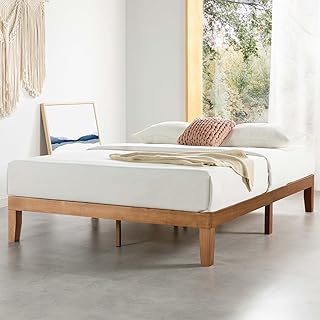
Mellow Naturalista Classic 12-Inch Solid Wood Platform
Solid pine with wooden slats is the quietest configuration you can buy, because wood-on-wood joints don’t develop the metallic creak that metal frames eventually do. At 12 inches it sits slightly lower than the metal options here, which suits thicker mattresses and anyone who dislikes a perched feeling.
Queen 14-Inch Heavy Duty Steel Platform (3,500 lb)
The 3,500-pound rating is well beyond what any two sleepers require, and that overhead is precisely the point: a frame operating far below its limit doesn’t flex, and a frame that doesn’t flex doesn’t make noise. The scratch-proof feet are a small detail that saves hardwood floors during the inevitable repositioning.
ZINUS Vivek Deluxe Wood Platform with Headboard
A slatted wood headboard does something practical as well as decorative — it gives back sleepers and readers a firm surface to brace pillows against, which helps maintain neck position during evening wind-down. Zinus assembly instructions remain among the clearest in the category.
GRUSIGN Queen Platform with Velvet Headboard
The adjustable-height slat support is the standout feature here, letting you fine-tune sleep surface height to match your own leg length rather than accepting whatever the manufacturer decided. The upholstered headboard is comfortable enough for genuine bedtime reading, which matters if you’d otherwise scroll on a phone instead.
Frequently Asked Questions
Do I still need a box spring?
Not with any modern platform frame. Box springs exist to add flex and support beneath old innerspring mattresses; foam and hybrid mattresses need a firm, evenly spaced surface instead. Adding a box spring on top of a platform frame usually makes the bed too tall and too soft.
Why does my new bed frame squeak already?
Almost always loose hardware. Bolts settle during the first week or two of use as the frame finds its load path. Re-tighten every connection after ten nights, and add felt or rubber washers at any joint that still complains.
Metal or wood — which supports sleep better?
Both work when properly built. Wood tends to run quieter and feels warmer in a room; steel offers higher weight capacity in a thinner profile and typically costs less. Judge the specific frame, not the material category.
How long should a bed frame last?
A well-made frame should outlast two or three mattresses — figure fifteen years or more. Replace it sooner if you notice sagging between slats, persistent noise after re-tightening, or any visible bend in the center rail.
Final Thoughts
If you want one recommendation, the Queen 14-Inch Heavy Duty Steel Platform delivers the most structural margin for the money and stays silent doing it. Sleepers who prioritize quiet above all should choose the Mellow Naturalista Classic in solid pine, while anyone fighting a storage shortage will get the most day-to-day value from the NEW JETO metal frame. Any of the three will protect your mattress investment rather than slowly undoing it.