Key takeaways
- Raise the upper body slightly so the head is not lying flat, which is what wedge pillows do.
- Encourage side sleeping and keep the neck aligned so the head does not tip forward or back, which is what contoured and side-sleeper pillows aim for.
The best anti snore pillows are the ones that keep your head and neck in a steady, open position for your sleep style: a gentle 7 inch foam wedge for back sleepers, an adjustable-fill or cervical pillow sized to shoulder width for side sleepers, and a contoured design such as the TEMPUR-Neck or an adjustable shredded foam pillow like the Coop Home Goods Original for people who switch positions. A pillow is a comfort and positioning aid, not a cure, and loud nightly snoring with gasping, choking or daytime sleepiness can be a sign of sleep apnea, so that pattern is worth discussing with a doctor before you spend money on bedding. With that clear, here is how pillow shape, height and firmness relate to snoring, with measurements and a decision matrix to help you choose.
Our top picks


As an Amazon Associate we earn from qualifying purchases at no extra cost to you. Ratings are shown as listed on Amazon.
How a pillow for snoring is supposed to help
Snoring is often louder when someone sleeps flat on their back, because gravity lets the jaw and soft tissue fall backward. Positioning pillows aim to do one of two things:
- Raise the upper body slightly so the head is not lying flat, which is what wedge pillows do.
- Encourage side sleeping and keep the neck aligned so the head does not tip forward or back, which is what contoured and side-sleeper pillows aim for.
Results vary widely from person to person. Some people notice quieter nights; others notice no change. Treat any pillow as an experiment in comfort and positioning, and keep a note of how you feel over two to three weeks.
Anti snore pillow types compared
| Type | Typical height | Typical size | Main idea | Best sleep position | Typical price range |
|---|---|---|---|---|---|
| Foam wedge | 7-10 in at top | about 24 x 24 in | Raises head and torso about 15-22° | Back | $35-$90 |
| Cervical contour pillow | about 3-5 in, with raised edge | about 20-24 x 12-14 in | Cradles neck, keeps chin neutral | Back and side | $40-$150 |
| Adjustable shredded foam | About 4-7 in, user adjustable | Standard 20 x 26 in or queen 20 x 30 in | Fill removed or added to match shoulder width | Side and combination | $50-$100 |
| Side-sleeper cutout pillow | about 4-6 in | about 24 x 16 in, curved center | Shoulder cutout supports staying on side | Side | $40-$120 |
| Body pillow | Not applicable | about 20 x 54 in | Hug and leg support makes rolling onto back less likely | Side | $30-$90 |
Finding the right height for side sleepers
For an anti snore pillow side sleeper setup, the pillow must fill the gap between your ear and the mattress so your neck stays level. A quick way to estimate: measure from the base of your neck to the outer edge of your shoulder. Most adults fall between 4 and 7 inches. On a medium mattress, aim for a compressed pillow height close to that measurement; on a soft mattress where your shoulder sinks, go about an inch lower.
| Shoulder width (neck to shoulder edge) | Suggested compressed loft, medium mattress | Suggested compressed loft, soft mattress |
|---|---|---|
| 4-5 in | 4-5 in | 3-4 in |
| 5-6 in | 5-6 in | 4-5 in |
| 6-7 in | 6-7 in | 5-6 in |
This is where adjustable-fill pillows shine: you can remove handfuls of foam until your nose lines up with the center of your chest when lying on your side.
Picks by sleeper
Back sleepers: a modest wedge
If you snore mostly on your back and cannot stay on your side, a 7 inch wedge gives a gentle incline without making you feel propped up. A 10 inch wedge raises you more but increases the chance of sliding down. Put a small pillow under your knees to stay in place.
Side sleepers: adjustable or cutout designs
The Coop Home Goods Original Adjustable Pillow lets you tune loft to your shoulder width, and its shredded fill can be pushed under the neck for extra support. Side-sleeper pillows with a curved shoulder cutout help keep the arm comfortable so you are less likely to roll onto your back.
Cervical pillow for snoring and neck alignment
A cervical pillow such as the TEMPUR-Neck has a raised edge that supports the neck and a lower center for the head. It suits back and side sleepers who want a consistent neutral position. Choose the size that matches your build; contour pillows that are too tall push the chin toward the chest.
Combination sleepers
If you change position often, a medium-loft adjustable pillow combined with a body pillow tends to work better than a rigid contour, which only fits well in one position.
Decision matrix
| Your situation | Try first | Add-on |
|---|---|---|
| Snore mainly on back, comfortable sleeping slightly raised | 7 in foam wedge | Knee pillow |
| Want to train yourself to side sleep | Side-sleeper cutout pillow | Body pillow behind your back |
| Neck stiffness in the morning | Cervical contour pillow sized to your shoulder | Medium-firm mattress topper if the bed sags |
| Shared bed, partner disturbed | Adjustable pillow plus body pillow | White noise for the partner |
| Gasping, choking or heavy daytime sleepiness | See a doctor first | Ask about a sleep evaluation |
Ownership realities
- Break-in time: contour and wedge pillows can feel odd for the first one to two weeks. Give a new pillow at least 10 nights before judging it.
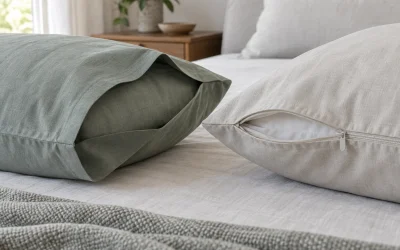
- Allergens: pillows collect dust mites and skin cells. A zippered pillow protector and washing the cover every one to two weeks keeps it fresher.
- Lifespan: memory foam and shredded foam pillows typically last 2 to 3 years before losing support; fiberfill pillows often flatten in 1 to 2 years.
- Off-gassing: new foam may smell for a few days. Let it air out before use.
- Returns: many bedding brands offer sleep trials; check the length and whether used pillows can be returned before buying.
Bottom line
Choose an anti snore pillow by sleep position rather than by marketing claims: a modest wedge for back sleepers, an adjustable or cutout pillow sized to your shoulder for side sleepers and a cervical contour for those who want steady neck alignment. Treat it as a comfort and positioning tool, give it a couple of weeks, and if snoring is loud, nightly or paired with gasping or daytime fatigue, talk to a doctor about whether a sleep evaluation for sleep apnea makes sense.