Key takeaways
- Wedge pillow: raises head and torso; portable and affordable; can cause sliding if too short.
- Incline pillow systems: longer slopes plus side support for staying in position; bulkier and pricier.
- Bed risers under the headboard legs: raise the whole mattress by 4 to 8 inches; affect your partner too and only work on frames with legs.
- Adjustable base: the most flexible option, but usually several hundred dollars or more and may require a compatible mattress.
The best bed wedge pillows for most people are 7 to 10 inch memory foam wedge pillows with a firm polyurethane base and a washable cover, such as the Brentwood Home Zuma wedge, while side sleepers who want to stay elevated all night may prefer a body-shaped system like MedCline that keeps the shoulder and arm supported. The right wedge depends on height, incline angle, width and what you want to use it for, whether that is sleeping upright after a heavy dinner, reading in bed or keeping your upper body raised on a doctor’s advice. This guide gives the measurements that matter, compares common wedge classes and explains how to pick one that will not leave you sliding down the bed by 3 a.m.
Our top picks


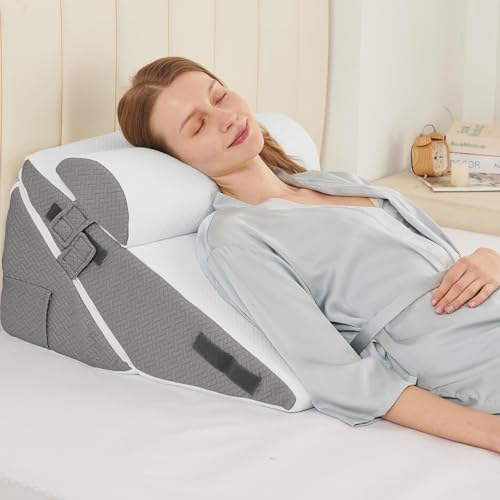
As an Amazon Associate we earn from qualifying purchases at no extra cost to you. Ratings are shown as listed on Amazon.
Why height and angle matter more than brand
A wedge pillow is a simple shape, so its dimensions decide almost everything. Height determines how far your head and torso are raised. Length determines how gradual the slope is, and therefore how comfortable it feels for your lower back. A short, steep wedge tends to fold you at the waist; a longer incline pillow lifts more of your torso evenly.
You can estimate the angle with simple trigonometry: angle equals the arctangent of height divided by length. A 7 inch wedge that is 24 inches long rises at about 16 degrees. A 12 inch wedge on the same length rises at about 27 degrees, which feels much more like sitting up.
Wedge pillow sizes compared
| Wedge height | Typical length | Approx. incline angle | Typical width | Best for | Typical price range |
|---|---|---|---|---|---|
| 7 in | 24-26 in | 15-16° | 24-26 in | Sleeping with a gentle lift | $35-$70 |
| 10 in | 24-26 in | 21-23° | 24-26 in | Sleeping or reading, moderate lift | $40-$90 |
| 12 in | 24-28 in | 23-27° | 24-28 in | Reading, watching TV, post-procedure rest as advised | $45-$100 |
| Adjustable 2-piece (stackable) | 24-26 in | about 10-30° | 24-26 in | Changing needs, shared households | $50-$120 |
| Full-body incline system (e.g. MedCline) | about 30-40 in with body pillow | about 20-25° | about 30 in plus arm opening | Side sleepers who want to stay elevated | $200-$350 |
Memory foam wedge vs all-polyurethane foam
Most quality wedges combine a firm base foam with a softer memory foam top layer, usually 1.5 to 2 inches thick. The base keeps the slope from collapsing under your back, while the top layer cushions your shoulders and head. All-polyurethane wedges cost less and are lighter but can feel hard and bounce slightly. Solid memory foam wedges feel plush but may compress over a year or two, which flattens the incline.
Cooling covers and gel-infused top layers help if you sleep warm, because a wedge holds more of your back against foam than a regular pillow does.
Picks by situation
| Your situation | Suggested wedge | Notes |
|---|---|---|
| Back sleeper wanting gentle elevation | 7-10 in memory foam wedge | Add your usual thin pillow on top only if your neck needs it |
| Side sleeper wanting to stay raised | Full-body incline system or 7 in wedge with body pillow | Arm channel prevents shoulder pressure on a steep slope |
| Reading and TV in bed | 12 in wedge or adjustable stackable set | Pair with a lumbar pillow for lower-back support |
| Small bed or narrow frame | 24 in wide wedge | Leaves room for a partner on a queen (60 in wide) |
| Already own an adjustable base | Skip the wedge | The base raises the whole mattress more evenly |
A note on the wedge pillow for acid reflux
Many people look for a wedge pillow for acid reflux or nighttime heartburn. Raising the head of the bed is a comfort measure that some clinicians suggest, but a pillow is not a treatment, and symptoms that occur often or that come with trouble swallowing, chest pain or unexplained weight loss deserve a conversation with a doctor. If your doctor has recommended elevating your upper body, ask how much elevation they have in mind so you can choose the right wedge height, and remember that a wedge raises only your torso while bed risers lift the entire head end of the mattress.
Wedge vs incline pillow vs bed risers
- Wedge pillow: raises head and torso; portable and affordable; can cause sliding if too short.
- Incline pillow systems: longer slopes plus side support for staying in position; bulkier and pricier.
- Bed risers under the headboard legs: raise the whole mattress by 4 to 8 inches; affect your partner too and only work on frames with legs.
- Adjustable base: the most flexible option, but usually several hundred dollars or more and may require a compatible mattress.
Stopping the slide
The most common complaint about wedge pillows is waking up having slid down. A few fixes help:
- Choose a longer wedge so the incline starts under your lower back, not mid-spine.
- Place a pillow under your knees to create a slight bend that anchors your hips.
- Pick a cover with some grip, such as quilted cotton, rather than slick polyester.
- Push the wedge firmly against the headboard so it cannot shift backward.
Ownership realities
- Expansion: compressed wedges can take 24 to 72 hours to reach full height. Measure after that period, not on day one.
- Odor: new foam may smell for a few days. Air it out in a ventilated room.
- Cleaning: look for a zippered, machine-washable cover. The foam itself should only be spot cleaned.
- Lifespan: a good dual-layer wedge typically keeps its shape for 2 to 4 years. If the slope dips where your back rests, it is time to replace it.
- Storage: a 12 inch wedge is bulky. Measure your closet or under-bed space if you will not leave it on the bed.
Bottom line
For general comfort sleeping or reading, a 7 to 10 inch memory foam wedge with a firm base, such as the Brentwood Home Zuma, covers most needs. Side sleepers who want to stay elevated all night should look at a full-body system like MedCline. Choose height by the angle you want, opt for a longer slope to prevent sliding and, if you are buying for a health reason, check with your doctor about how much elevation is right for you.