Key takeaways
- Slat spacing under 3 inches: Tempur-Pedic’s warranty language centers on continuous, even support. Gaps wider than roughly 2.75 to 3 inches allow the foam to settle into the voids over months, producing a washboard feel that no amount of rotating will fix.
- Center support that reaches the floor: Look for a middle rail with at least one — ideally two or three — vertical legs. Side-rail-only construction is the single most common failure point once a heavy foam mattress is loaded on top.
- Total load rating, not just mattress weight: Add the mattress, two sleepers, and bedding, then look for a frame rated comfortably above that figure. A 12-inch Tempur mattress plus two adults can approach 500 pounds in a queen.
- Deck height and step-up comfort: Thick memory foam adds significant height. A 14-inch platform under a 12-inch mattress puts the sleep surface above 26 inches, which is a genuine climb for shorter sleepers and anyone with hip or knee limitations.
- Silence under movement: Foam already absorbs motion transfer beautifully; a squeaking frame undoes that advantage. Prioritize designs with rubber or felt slat sleeves, machined joinery, or bolt-through connections rather than hooked metal brackets.
Tempur-Pedic mattresses are dense, heavy, and unusually particular about what sits underneath them. A queen can push past 100 pounds before anyone lies down on it, and because the material responds to the surface below it rather than bridging gaps like an innerspring, the foundation quietly dictates how the mattress performs. Slats spaced too widely create soft spots that read as premature sagging. A flimsy center rail lets the middle dip a few millimeters — enough to change how your hips settle and how your lower back feels at 3 a.m. Plenty of sleepers blame the mattress when the frame is the culprit.
This guide approaches the problem from a sleep-quality standpoint rather than a decorating one. Below you’ll find frames vetted for slat geometry, load capacity, and noise behavior, plus adjustable bases for anyone who wants incline positions without giving up memory-foam support. I’ve also flagged which options suit split configurations for couples with different comfort needs, and answered the questions that come up most often about warranty compliance and box springs.
Our top picks



As an Amazon Associate we earn from qualifying purchases at no extra cost to you. Ratings are shown as listed on Amazon.
🛒 Best Price Today on Amazon
Prime members get fast, free shipping on everything above, plus member-only deals. New members get a 30-day free trial — cancel anytime.
How to Choose a Bed Frame For Tempurpedic (2026)
- Slat spacing under 3 inches: Tempur-Pedic’s warranty language centers on continuous, even support. Gaps wider than roughly 2.75 to 3 inches allow the foam to settle into the voids over months, producing a washboard feel that no amount of rotating will fix.
- Center support that reaches the floor: Look for a middle rail with at least one — ideally two or three — vertical legs. Side-rail-only construction is the single most common failure point once a heavy foam mattress is loaded on top.
- Total load rating, not just mattress weight: Add the mattress, two sleepers, and bedding, then look for a frame rated comfortably above that figure. A 12-inch Tempur mattress plus two adults can approach 500 pounds in a queen.
- Deck height and step-up comfort: Thick memory foam adds significant height. A 14-inch platform under a 12-inch mattress puts the sleep surface above 26 inches, which is a genuine climb for shorter sleepers and anyone with hip or knee limitations.
- Silence under movement: Foam already absorbs motion transfer beautifully; a squeaking frame undoes that advantage. Prioritize designs with rubber or felt slat sleeves, machined joinery, or bolt-through connections rather than hooked metal brackets.
The Best Bed Frames For Tempurpedic (2026) Reviewed
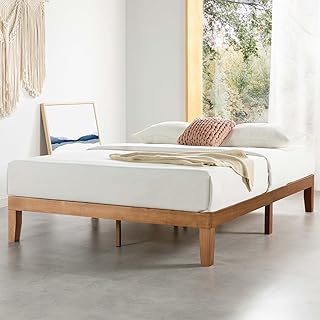
Mellow Naturalista Classic 12-Inch Solid Wood Platform
Solid pine construction with tightly spaced wooden slats gives dense foam the flat, unbroken plane it needs, and the 12-inch profile keeps a thick Tempur mattress at a sensible entry height. It’s the most straightforward recommendation here for a traditional bedroom — no headboard, no fuss, just a rigid deck that holds its shape.
ESHINE Split Queen Adjustable Base with 12-Inch Mattress
A top-split queen lets one partner read at a 45-degree incline while the other stays flat, which is precisely the scenario memory foam handles better than any other material. Massage settings, USB charging, and underbed lighting are conveniences, but the real value is independent head articulation in a footprint that fits a standard queen room.
Vipbear Premium Split King Adjustable Base
Zero-gravity positioning — hips slightly below the knees and chest — reduces lumbar load, and it pairs unusually well with Tempur foam’s contouring. The full split king gives each sleeper an entirely independent base, making this the strongest pick for couples with different sleep schedules or reflux and snoring concerns.
SHA CERLIN 14-Inch Metal Platform with Wooden Headboard
Steel framing with a non-slip, noise-dampened slat system handles heavy foam without the seasonal wood movement that can loosen joints over time. The 14-inch clearance opens up meaningful storage underneath, though pair it with a lower-profile Tempur model to keep the mattress top from sitting too high.
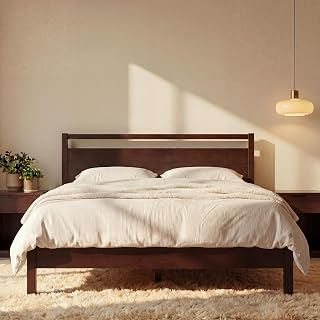
Zinus Allen Mid Century Wood Platform
Close slat spacing, a solid wood foundation, and a low-profile silhouette make this a natural match for taller Tempur mattresses that would look bulky on a high frame. Assembly is genuinely quick, and the mid-century tapered legs read more expensive than the price suggests.
Frequently Asked Questions
Does a Tempur-Pedic mattress need a box spring?
No. Traditional box springs flex, which is the opposite of what dense foam requires. A rigid platform or slatted foundation with proper center support is both sufficient and preferable.
Will the wrong frame void my warranty?
It can. Inadequate support — typically widely spaced slats or a missing center leg — is a documented reason claims get denied, since the resulting impressions aren’t considered manufacturing defects. Photograph your setup after assembly for your records.
Can Tempur-Pedic mattresses be used on adjustable bases?
Most models are designed to flex, and foam pairs with articulation better than innerspring does. Confirm your specific model’s compatibility, as a few firmer or hybrid constructions have limitations.
Do I need a bunkie board over existing slats?
Only if the gaps exceed roughly three inches. A thin plywood sheet or bunkie board is an inexpensive fix that restores a continuous surface without raising the height much.
Final Thoughts
For most sleepers, the Mellow Naturalista Classic offers the best combination of rigid support and sensible height at a fair price, while the Zinus Allen is the pick if a lower, more contemporary profile suits your room. Couples who want incline positions should go straight to the Vipbear Split King, which delivers true independent articulation and gets the most out of what a Tempur-Pedic mattress can do.