Key takeaways
- Rated capacity with real headroom: Add both sleepers’ weight plus your mattress (a queen hybrid runs 90–130 lbs), then look for a frame rated at least double that figure. A 3,000–3,500 lb steel platform gives genuine margin; a 1,100 lb rating is thinner than it sounds once dynamic load from movement is factored in.
- Center support and leg count: The middle third of the frame carries the most load. Prioritize a continuous center rail with its own dedicated legs — nine to twelve total legs is the benchmark — rather than a four-corner design with a bolted crossbar.
- Slat gauge and spacing: Steel slats should be flat-profile and closely set, ideally under three inches apart, to prevent mattress sag between them. Wide-set round tubing is the single most common cause of premature foam breakdown in heavier households.
- Noise control at the joints: Squeaks come from metal-on-metal contact, not from weight itself. Look for pre-installed rubber or felt pads at slat contact points, locking nuts instead of friction fits, and welded rather than merely bolted corner brackets.
- Height for easy transfers: A 14–16 inch deck height plus mattress typically lands the sleep surface at 24–28 inches, which most adults find easiest for sitting and standing without knee strain. Taller frames also open genuinely usable under-bed storage.
A bed frame that groans, sags, or shifts under a couple’s combined weight isn’t just an annoyance — it’s a sleep disruptor. In clinical sleep terms, micro-arousals from noise and instability fragment the deeper stages of rest, and a frame that flexes in the middle creates a subtle hammock effect that pulls both sleepers toward the center, forcing spinal misalignment and repeated repositioning through the night. Most mass-market frames publish a weight rating that assumes a single occupant and a lightweight mattress, which is why so many couples over a combined 400 pounds find themselves shopping again within eighteen months.
This guide approaches the problem from a sleep-wellness perspective rather than a purely structural one: the goal isn’t only a frame that survives, but one that stays silent, level, and supportive enough that your mattress can do its job. Below you’ll find the specifications that actually predict longevity for heavier couples — center-leg count, slat gauge and spacing, joint design — along with five frames spanning steel platforms, solid pine, and upholstered options, so you can match capacity to your bedroom and budget.
Our top picks



As an Amazon Associate we earn from qualifying purchases at no extra cost to you. Ratings are shown as listed on Amazon.
🛒 Best Price Today on Amazon
Prime members get fast, free shipping on everything above, plus member-only deals. New members get a 30-day free trial — cancel anytime.
How to Choose a Bed Frame For Overweight Couple (2026)
- Rated capacity with real headroom: Add both sleepers’ weight plus your mattress (a queen hybrid runs 90–130 lbs), then look for a frame rated at least double that figure. A 3,000–3,500 lb steel platform gives genuine margin; a 1,100 lb rating is thinner than it sounds once dynamic load from movement is factored in.
- Center support and leg count: The middle third of the frame carries the most load. Prioritize a continuous center rail with its own dedicated legs — nine to twelve total legs is the benchmark — rather than a four-corner design with a bolted crossbar.
- Slat gauge and spacing: Steel slats should be flat-profile and closely set, ideally under three inches apart, to prevent mattress sag between them. Wide-set round tubing is the single most common cause of premature foam breakdown in heavier households.
- Noise control at the joints: Squeaks come from metal-on-metal contact, not from weight itself. Look for pre-installed rubber or felt pads at slat contact points, locking nuts instead of friction fits, and welded rather than merely bolted corner brackets.
- Height for easy transfers: A 14–16 inch deck height plus mattress typically lands the sleep surface at 24–28 inches, which most adults find easiest for sitting and standing without knee strain. Taller frames also open genuinely usable under-bed storage.
The Best Bed Frame For Overweight Couple (2026)s Reviewed
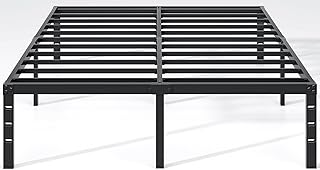
Upcanso 16 Inch Queen Bed Frame
With a 3,500 lb rating and heavy-gauge steel slats, this is the most conservatively over-engineered option here — the kind of margin that keeps a frame silent in year five, not just year one. The 16-inch deck also delivers 14 inches of clear storage, which is unusually generous for a frame in this capacity class.
NEW JETO 14 Inch Metal Bed Frame
A well-balanced heavy-duty platform that pairs a reinforced center rail with straightforward, tool-light assembly — a real consideration when the parts themselves are hefty. The 14-inch height hits the ergonomic sweet spot for most couples without making the bed feel perched.
Maenizi 14 Inch Full Size Bed Frame
Rated to 3,000 lbs in a full size, this is the strongest recommendation for couples working with a smaller bedroom, where load-per-square-inch is actually higher than on a queen. Its noise-dampening slat pads address the squeak issue at the source rather than masking it.
Marsail Queen Bed Frame with Upholstered Headboard
Twelve support legs distribute load impressively well, and the adjustable upholstered headboard suits couples who read or sit up in bed — a small comfort feature with real sleep-hygiene value. Its 1,300 lb capacity is best suited to combined loads under about 500 lbs with the mattress included.
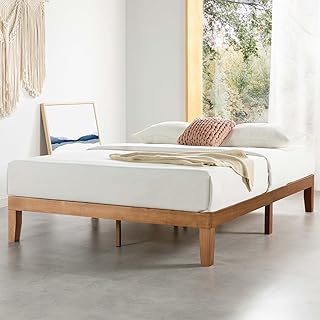
Mellow Naturalista Classic Solid Wood Platform
For those who prefer wood, solid pine construction with closely spaced wooden slats offers a warmer aesthetic and naturally quieter joints than budget steel. Choose it for moderate loads and a design-forward bedroom rather than for maximum rated capacity.
Frequently Asked Questions
How much weight capacity do we actually need?
Total both sleepers’ weight, add your mattress, then double it. Static ratings don’t account for the impact loading that occurs when someone sits down abruptly or rolls over, so headroom is protection, not overkill.
Will a heavy-duty frame stop our mattress from sagging?
It stops sag caused by inadequate support, which is a common but often misdiagnosed problem. If your mattress has already developed a permanent body impression, a new frame will prevent it worsening but won’t reverse the foam damage.
Do we still need a box spring?
No — all the frames here are platform designs with integrated slat systems. Adding a box spring raises the sleep surface unnecessarily and introduces another wearing component with its own failure point.
Why does our current bed squeak so much?
Almost always loose fasteners or unpadded metal contact points, not excessive weight. Retighten every bolt seasonally and add felt pads where slats meet the rails; if noise persists, the frame’s joints have likely deformed and it should be replaced.
Final Thoughts
For most heavier couples, the Upcanso 16 Inch is the safest long-term investment thanks to its 3,500 lb rating and deep storage clearance, with the NEW JETO 14 Inch a strong value alternative for those wanting proven steel construction at a lower deck height. Couples in smaller rooms should look at the Maenizi Full, which delivers near-identical structural confidence in a tighter footprint.