Key takeaways
- Grip-ring stem: A metal ring near the top creates friction inside the socket. Common sizes are 3/8 inch diameter x 1-1/2 inch long and 7/16 inch diameter x 1-3/8 inch long. You push to install and pull to remove. Best for light to medium beds where you want tool-free installation.
- Threaded stem: The post is threaded (usually 3/8″-16, 1/2″-13, or M10/M12) and screws into a threaded insert or T-nut inside the leg. Much stronger and will not pull out when you drag the bed. Required for heavier platform beds and any bed over 300 lbs total load.
- Grip-neck stem: A notched stem that locks into a top-hat socket. Less common on newer frames but found on some older US-made beds.
Caster wheels for bed frame are safe when you match the mount type to your frame, use at least 2-inch diameter wheels rated for 75 to 125 lbs per caster, and choose locking casters with soft tread if you have hard floors.
Our top picks


As an Amazon Associate we earn from qualifying purchases at no extra cost to you.
Stem vs. Plate Casters: The Mount Decides Everything
The single biggest mistake is buying the wrong attachment style. Bed frames do not use a universal mount, and a caster that doesn’t fit the socket will wobble, bend, or fall out under load.
Stem Casters
Stem casters have a vertical post that inserts into the leg. This is the standard for most traditional wood bed frames, platform beds with wood legs, and adjustable metal bed frame with wheels that use round or square leg inserts.
- Grip-ring stem: A metal ring near the top creates friction inside the socket. Common sizes are 3/8 inch diameter x 1-1/2 inch long and 7/16 inch diameter x 1-3/8 inch long. You push to install and pull to remove. Best for light to medium beds where you want tool-free installation.
- Threaded stem: The post is threaded (usually 3/8″-16, 1/2″-13, or M10/M12) and screws into a threaded insert or T-nut inside the leg. Much stronger and will not pull out when you drag the bed. Required for heavier platform beds and any bed over 300 lbs total load.
- Grip-neck stem: A notched stem that locks into a top-hat socket. Less common on newer frames but found on some older US-made beds.
Before you buy, pull one existing glide or caster out and measure the stem diameter with calipers and the socket depth. If your leg has no socket and just a flat wood bottom, you cannot use a stem caster without drilling and installing a socket insert.
Plate Casters
Plate casters have a flat metal plate with four screw holes that bolts to the bottom of the leg or side rail. This is the right choice for DIY platforms, heavy solid-wood frames, and metal angle-iron frames where there is no stem socket.
- Standard plate size: Most bed-rated plates are 2-1/2 x 3-5/8 inches or 2 x 2-1/2 inches. Check that the plate is smaller than your leg bottom so it doesn’t overhang and snag bedding.
- Strength advantage: Four screws spread the load better than a single stem, so plate casters handle shear forces when you push a heavy bed sideways.
- Height penalty: Plate casters add 3 to 4 inches of height, which changes your overall bed height. On a standard 14-inch platform frame, you will end up at 17 to 18 inches before the mattress.
Wheel Diameter, Material, and Floor Protection
Diameter controls how easily the bed rolls and whether it will damage floors. Small, hard wheels concentrate weight and catch on cracks, rugs, and transitions.
| Wheel Diameter | Typical Load per Caster | Rolling Effort on Carpet | Best Floor Type | Floor Damage Risk |
|---|---|---|---|---|
| 1-1/4 to 1-1/2 inch (30-38mm) | 40-75 lbs | Very high, digs in | Low-pile carpet only | High on hardwood/vinyl |
| 2 inch (50mm) | 75-100 lbs | Moderate | Hardwood, laminate, low carpet | Medium if hard plastic |
| 2-1/2 to 3 inch (60-75mm) | 100-150 lbs | Low, rolls over cords/rugs | All hard floors + medium carpet | Low with soft tread |
| 4 inch (100mm) | 150-250 lbs | Very low | Garage platforms, heavy beds | Very low, but adds height |
For a queen bed in a bedroom, 2-inch to 3-inch is the sweet spot. Anything smaller will flatten carpet and require excessive force to move, which strains the frame joints.
Wheel material matters more than color:
- Hard plastic/nylon: Cheap and durable but noisy and will scratch hardwood and luxury vinyl plank (LVP) under heavy load. Avoid if you have finished wood floors.
- Soft rubber / thermoplastic rubber (TPR): The best all-around for bedrooms. Quiet, grips the floor so the bed doesn’t drift, and distributes weight. Look for non-marking gray or soft-roller tread.
- Polyurethane: Excellent weight capacity and floor protection, rolls easily on both hard floors and carpet. Usually costs slightly more but lasts longer than basic rubber.
- Metal or hard phenolic: For industrial use only. Never use on residential flooring.
If you already have hard plastic wheels, add adhesive felt pads around the caster plate or use a low-profile rug under the bed to prevent indentations. On hardwood, also keep wheels clean – grit embedded in the tread acts like sandpaper.
Weight Ratings and Why Four Casters Are Not Enough Math
A caster’s rating is per wheel, but you should never divide your total bed weight by four and buy exactly that rating. Weight is never evenly distributed, and moving the bed creates dynamic loads.
Calculate like this: Add frame weight + mattress weight + occupants + bedding. A typical queen setup is: metal frame 45 lbs + hybrid mattress 90 lbs + two adults 340 lbs = 475 lbs. Divide by 4 = 119 lbs per caster in static load. Add a 30% safety margin for uneven loading and movement, so you need casters rated at least 155 lbs each. In practice, choose 125 to 150 lb rated casters for a queen, 75 to 100 lb for a twin.
For king and California king beds, use six casters (one extra on each center support rail) instead of four. Center supports prevent the side rails from bowing and cut the per-caster load by 33%.
Locking Mechanisms
- Side brake (friction brake): A small lever presses against the wheel tread. Keeps the bed from rolling but allows swiveling. Adequate for light use on hard floors.
- Total lock / double lock: Locks both the wheel rotation and the swivel bearing. This is what you want for a bed. With two total-lock casters on the foot of the bed and two swivel-only on the head, the bed stays planted when you sit on the edge but still steers easily when unlocked.
- Face-contact brake: More positive lock than a side brake and less prone to slipping on dusty floors.
Always lock at least two casters on diagonally opposite corners. Locking only one caster allows the bed to pivot.
How to Choose Safe Ones: Decision Matrix by Situation
Use your floor type, frame type, and who uses the bed to narrow it quickly.
| Your Situation | Recommended Caster | Why |
|---|---|---|
| Renters with hardwood or LVP and a wood platform bed | 2-1/2 inch soft rubber or polyurethane, grip-ring or threaded stem with total lock | Protects floors, holds position, removable without damage |
| Small apartment, need to move bed to access storage | 2 inch polyurethane plate caster, two with total lock | Low height addition, rolls over thresholds easier than 1-1/2 inch |
| Kids or pets who jump on the bed | 3 inch threaded stem or plate mount, 125+ lbs rating, total lock on all four | Handles dynamic shock loads and prevents sliding |
| Heavy solid-wood frame or king with two sleepers | 3 inch plate mount polyurethane, 150 lbs rating, 6-caster layout | Spreads 500+ lbs safely and prevents rail sag |
| Adjustable metal bed frame with wheels | Manufacturer-spec threaded stem, 2 to 3 inch, at least 2 locking | Keeps warranty and ensures mechanism clearance |
Installation and Real-World Clearance Checks
Adding casters changes dimensions and stresses. Measure before you drill.
- Bed height: A standard bed height with mattress is 22 to 26 inches at the top of the mattress. A 3-inch caster can push a low 14-inch platform to 24 to 25 inches with an 10-inch mattress – good for getting up, but too tall for a low-profile look. Measure from floor to top of side rail before and after.
- Under-bed clearance: If you want storage bins, you need at least 6 to 7 inches of clearance. A 2-inch caster on a frame that already sits 4 inches off the floor gives you 6 inches, enough for flat bins.
- Doorway and rug fit: A bed on casters is wider at the base. Allow 34 to 36 inches for a doorway if you plan to roll the bed out for cleaning. On rugs, large 2-1/2 inch+ wheels will cross a 1/2-inch rug edge; small 1-1/4 inch wheels will jam.
- Assembly reality: Stem socket inserts need a 3/8 or 1/2 inch hole drilled precisely perpendicular. If drilled at an angle, the bed will wobble. Plate casters need four #10 wood screws at least 3/4 inch long into solid wood – not just into particleboard. Reinforce particleboard legs with a hardwood block glued and screwed inside the leg first.
- What wears first: The swivel bearing loosens before the wheel wears out. If the bed develops a wobble after a year, tighten the kingpin nut or replace the caster. Hard floors will show dents before the wheel fails if you used narrow hard plastic.
Adjustable Metal Bed Frame with Wheels: Special Considerations
An adjustable metal bed frame with wheels is convenient for cleaning and rearranging, but not all adjustable bases are designed for casters. Many modern adjustable bases sit directly on the floor with flat feet for stability during head/foot articulation. Adding aftermarket wheels can raise the pivot point and void the warranty or make the frame unstable when the head is elevated.
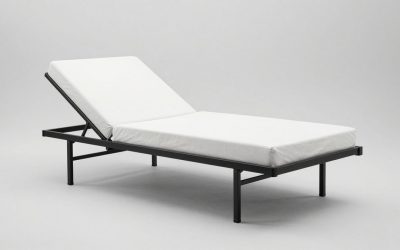
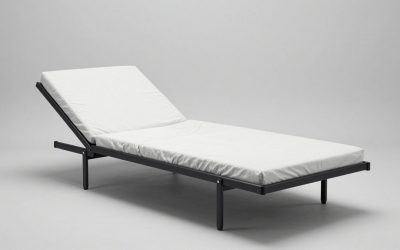
If your adjustable frame is the folding, angle-iron type with leg inserts, use only the size and stem type specified in the manual – typically a 2-inch or 2.5-inch threaded stem caster. Ensure the locked wheels still allow the base to articulate without the motor housing hitting the floor. Keep the total bed height under 28 inches including mattress, or getting in and out becomes difficult, especially for back pain or limited mobility. For heavy adjustable bases that already weigh 120 to 170 lbs before the mattress, choose casters rated at least 150 lbs each and use the center leg supports that come with the frame.
If your base did not come with wheel options, consider locking furniture sliders or a low furniture dolly for occasional moves instead of permanent casters. It protects the motor and frame joints from rolling vibration.
Safe Use Checklist
- Lock wheels whenever you sit, sleep, or adjust the bed. Unlock only to move.
- Push from the frame, not the headboard, to avoid racking the joints.
- Check stem fit monthly – a loose grip-ring will work itself out and drop the corner.
- On hard floors, clean wheels with a damp cloth to remove grit that causes scratches.
- Replace any caster that is cracked, flat-spotted, or has a sticky brake. Usually $15 to $40 for a set of four in general market ranges, with polyurethane total-lock sets at the higher end.
The right caster wheels for a bed frame disappear into daily life: the bed glides when you want it to and does not move, squeak, or scar the floor when you don’t. Match the mount, go one size larger in diameter than you think you need, and prioritize soft tread and a positive total lock over a bargain hard-plastic wheel.