The best toddler beds for boys are low-profile wood frames between 7 and 12 inches off the floor, with fixed side rails at least 4 inches above the mattress top, Greenguard Gold or equivalent low-VOC finishes, and standard crib mattress compatibility (52 x 27.5 inches) for safety and cost savings.
For a first bed, the switch from crib to toddler bed is less about theme and more about preventing falls, maintaining safe sleep boundaries, and getting a frame that survives 2-4 years of climbing, jumping, and nighttime rolling. The options below break down by your actual situation, not just by color or character.
Our top picks
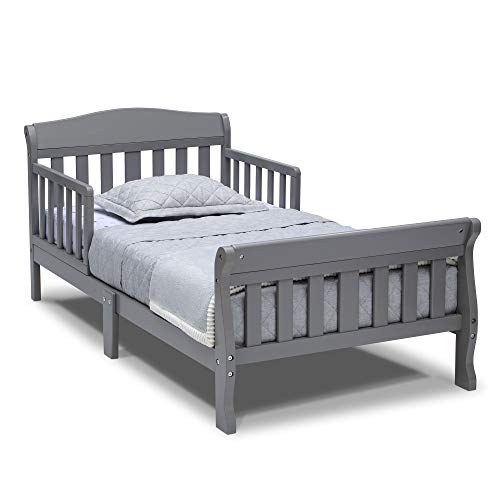 Delta Children Canton Toddler Bed
- Bed fits full size crib mattress (mattress, bedding…
- Low to the ground for easy access for…
- JPMA certified to meet or exceed all safety…
 Delta Children Spidey and His Amazing Friends
- Recommended for ages 15 months+ | Holds up…
- Colorful decals and 3D accents at the footboard,…
- Bed features two attached guardrails for your child’s…
 Delta Children Plastic Toddler Bed
- Recommended for ages 15 months
- Features two attached guardrails with low to the…
- Sturdy steel frame and high-quality plastic construction
| Product | Key specs | |
|---|---|---|
| Delta Children Canton Toddler Bed | Bed fits full size crib mattress (mattress, bedding… Low to the ground for easy access for… JPMA certified to meet or exceed all safety… | Check price |
| Delta Children Spidey and His Amazing Friends | Recommended for ages 15 months+ | Holds up… Colorful decals and 3D accents at the footboard,… Bed features two attached guardrails for your child’s… | Check price |
| Delta Children Plastic Toddler Bed | Recommended for ages 15 months Features two attached guardrails with low to the… Sturdy steel frame and high-quality plastic construction | Check price |
 Delta Children Jordan Toddler Bed -Greenguard Gold Delta Children Jordan Toddler Bed -Greenguard Gold | This toddler bed meets the most stringent chemical… Low to the ground for your child's easy… We know chemicals have no place in your… | Check price |
As an Amazon Associate we earn from qualifying purchases at no extra cost to you.
What Makes a Toddler Bed Safe and Durable
1. Low-Profile Height and Stability
The ideal toddler bed deck height is 7 to 10 inches from the floor to the top of the slats. With a standard 5 to 6-inch crib mattress, the sleep surface ends up 12 to 16 inches high, so even if a child rolls over the rail, the fall distance is minimal. Look for a wide stance and a low center of gravity. Four-leg beds with legs splayed outward resist tipping better than narrow pedestal designs. Guardrail height matters more than bed height: ensure the rail sits at least 4 inches above the mattress surface when compressed, and that the gap between rail and mattress is less than 1.5 inches to prevent entrapment.
2. Side Rail Design
Two configurations dominate:
- Integrated half-rails (50-70% length): Built into the headboard and footboard. Best for restless sleepers because they cannot be dislodged. They leave a single entry gap of 12-15 inches at the foot end.
- Removable mesh or wood rails: Useful if you want to transition to an open big-kid bed later, but check that they lock with metal hardware, not plastic clips.
Avoid beds with no rail on one side unless that side will be pushed permanently against a wall. Even then, wall-side gaps can trap a child if the bed shifts.
3. Non-Toxic Wood Finishes
For toddler beds for boys, painted finishes in navy, natural pine, gray, or white should be explicitly labeled non-toxic and low-VOC. The most reliable third-party certifications in 2026 remain Greenguard Gold, TSCA Title VI compliant for composite wood, and paints tested to ASTM F963 or EN 71-3 for heavy metals. Solid wood frames typically use poplar, pine, or rubberwood with water-based finishes. Engineered wood (MDF or particleboard) is not automatically unsafe, but it requires a fully sealed laminate or coating to limit formaldehyde off-gassing and to resist chipping from teeth and toys.
4. Crib Mattress Compatibility
Almost all toddler beds are designed to reuse a standard US crib mattress: 52 x 27.5 inches, 4 to 6 inches thick. This saves $80-$250 versus buying a new size and keeps the mattress-to-frame fit tight. Always measure the interior frame length. A gap larger than 1 inch on any side between mattress and frame sides is a failed fit. If you already own a mini-crib mattress (37-38 x 23-24 inches), you need a specific mini toddler bed, not a standard one.
Decision Matrix: Which Toddler Bed Type Fits Your Situation
| Situation | Best Frame Type | Why It Works | Example Spec to Look For |
|---|---|---|---|
| Small bedroom or shared room (10×10 ft or smaller) | Low-profile platform without footboard | Leaves 24-30 inches of clearance for dresser and play space, visually lighter | Exterior: 54 x 29 inches; Deck height: 7-8 inches |
| Active climber or frequent roller | Solid wood with two integrated half-rails | Highest side coverage, no removable parts to loosen | Rail height: 12-14 inches from slats; Weight limit: 50 lbs |
| Renter or frequent moves | Metal frame or simple solid pine slat bed | Lightest box weight, fewest joints to wear | Box weight: 25-35 lbs; Tool-free or 6-bolt assembly |
| Wants a themed room without replacing furniture yearly | Neutral wood bed + themed bedding/decal | Theme peels off, bed stays durable for siblings | Natural or white finish, flat headboard for decals |
| Pet in room or allergies | Solid wood with slatted base, no upholstery | Easy to wipe, no fabric trapping hair/dust | Slats spaced 2.5-3 inches apart for ventilation |
Best Toddler Beds for Boys by Need
Best for Small Rooms: Low Footprint Platform
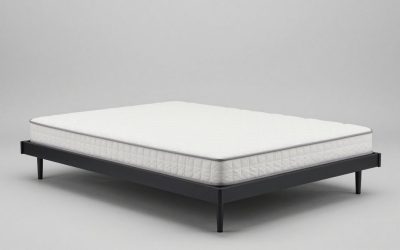
Look to types like the IKEA SNIGLAR or Storkcraft Toddler Bed style: exterior dimensions around 54.5 x 28.5 inches, about 6 inches shorter than a twin bed. In a typical 10×12 ft room, this leaves roughly 62 inches of open floor length if placed on the 10-foot wall, enough for a 36-inch dresser plus a 30-inch play aisle. These beds usually cost $120-$250, use solid beech or pine, and weigh under 30 lbs flat-packed. The trade-off is minimal storage and basic rails, so pair it with a wall-mounted shelf instead of a headboard with cubbies.
Best for Durability: Solid Wood with Integrated Rails
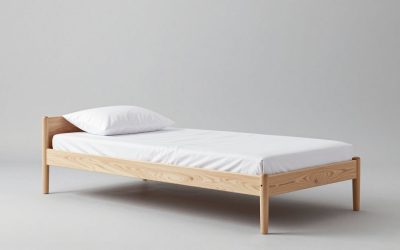
Frames like the Delta Children Canton or DaVinci Sleigh Toddler Bed use solid New Zealand pine or rubberwood, full-length side rails, and metal-on-metal bolts. Weight limits are consistently 50 lbs, which covers most children to age 5-6. Slat rolls are screwed, not just wedged, so jumping does not bow the center. Expect a price range of usually $180-$400 for this class. The finish options in slate gray, navy, or natural wood hide scuffs better than high-gloss white and work with construction, dinosaur, or space themes through bedding rather than molded plastic.
Best for Themed Rooms Without the Plastic Shell
Instead of a molded race car or fire truck bed, which often uses MDF, limited mattress ventilation, and a 45-50 lb limit, choose a house-frame or simple panel bed and theme it. A house-frame bed with an open pitched roof (brands like Dream On Me and generic solid pine house beds) gives a “fort” feel, keeps the low 8-inch deck, and still uses a standard crib mattress. You can add boy-favorite themes with removable wall decals, a canopy, or bedding sets for $30-$60, and remove them when tastes change without replacing the entire bed. House frames are taller at the peaks (50-55 inches high) so check ceiling clearance and skip a ceiling fan placement directly above.
Best for Convertible Longevity
If you want the bed to last beyond toddler years, consider a 2-in-1 crib-to-toddler convertible, or a toddler bed that converts to a small bench. However, true toddler beds themselves do not convert to twin size; if you want that path, buy a convertible crib from the start. For standalone toddler beds, the longest use comes from solid wood frames with a 50-lb capacity and replaceable rails. Engineered wood race-car beds typically show edge chipping at 12-18 months where feet kick the sidewalls.
Material and Construction Trade-Offs
| Material | Pros | Cons | Durability Reality |
|---|---|---|---|
| Solid Wood (pine, rubberwood, poplar, beech) | Strong joints, repairable, holds screws after disassembly, low VOC with water-based finish | Heavier (35-55 lbs), can dent with hard impacts, usually $180-$400 | What wears first: Finish on top rails from chewing/leaning. Sand and reseal possible. |
| Engineered Wood (MDF, particleboard + veneer) | Lower cost (usually $120-$220), smooth painted look, themed shapes easy to mold | Swells if moisture gets in chips, screws strip if moved twice, heavier than it looks | What wears first: Cam-lock fasteners loosen, vinyl edge banding peels at corners. |
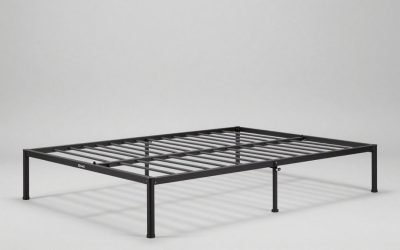
| Metal (steel tube) | Lightest to move, highest weight limit, no off-gassing, wipe clean | Colder look, can bend if thin gauge, rails often lower and shorter | What wears first: Powder coat chips at welds, may squeak without rubber washers. |
| Solid Wood + Upholstered Headboard | Soft edge for leaning, noise-dampening | Fabric traps dust, not washable, harder to disinfect | What wears first: Fabric stains and pulls; foam compresses within a year of leaning. |
Room Fit and Real Measurements
Measure before you buy. A toddler bed needs more clearance than its footprint suggests:
- Floor footprint: Standard toddler bed exterior is 54-58 inches long x 28-31 inches wide. Add 2 inches on each side for bedding overhang.
- Clearance around bed: Leave at least 24 inches from the open side for getting in/out, and 36 inches if a parent needs to kneel beside the bed for bedtime routines. If the bed sits against the wall, leave 0.5 inch max to prevent limbs slipping between bed and wall.
- Doorway and hallway width: Flat-pack boxes are typically 55 x 15 x 7 inches and fit through any 28-inch doorway. Assembled beds do not fit through 30-inch doors without tilting. If you assemble in another room, you will need to partially disassemble to move it.
- Mattress height math: A 7-inch deck + 5-inch mattress = 12-inch sleep surface. Top of rail at 14 inches above slats = only 9 inches above mattress, which is below the 4-inch safety threshold once bedding compresses. Aim for rails 12-14 inches above slats with a 5-inch mattress.
In a compact 10×10 ft room with a 52 x 28 inch crib mattress bed, a 50 x 32 inch dresser, and a 24 x 24 inch nightstand, you can place the toddler bed on one wall, keep a 30-inch central play lane, and still open a standard 30-inch closet door if the bed is at least 18 inches from the closet track.
Assembly, Moving and Long-Term Durability
Assembly time is usually 20-45 minutes with two people. Most solid wood beds ship with 16-24 bolts and wooden dowels, plus a slat roll that screws down with 8-12 screws. Box weight tells you a lot: 25-35 lbs is typically pine or metal, 40-55 lbs is rubberwood or poplar. Heavier is generally more stable but harder to move upstairs.
For renters, look for beds with barrel nuts and Allen bolts rather than cam locks. Barrel nuts survive 3-4 disassemblies; cam locks often strip particleboard after the first move. Keep the assembly manual taped under the slats for reassembly.
What wears first on toddler beds for boys in daily use is not the structure but the top edge of the rails and the finish near the entry gap, where shoes, books, and toy trucks scrape. Water-based lacquer touch-up markers in matching shades hide this. Check slat supports every 3 months; center support legs with plastic glides crack first on uneven floors. Tighten all bolts monthly for the first 3 months as wood settles.
Weight limits are static load ratings. A 50-lb limit does not mean a 40-lb child jumping creates 40 lbs of force; dynamic force can double it. If your child jumps on the bed, prioritize solid wood with center legs and spaced slats no more than 3 inches apart.
Answering Real Follow-Up Questions
Can I use a twin mattress or a crib mattress topper?
No to a twin mattress, it will overhang and create entrapment gaps. Crib mattress toppers are not recommended if they raise the sleep surface so the rail is less than 4 inches above the compressed mattress. If you need waterproofing, use a thin encasement cover under the fitted sheet instead of a thick topper.
When should I switch from crib to toddler bed?
Most children transition between 18 months and 3 years, often when they climb out of the crib or reach 35 inches tall. If the crib is still containing them safely, there is no rush. Moving too early often creates more night waking than waiting a few months.
Do I need a box spring?
No. Toddler beds use a slat roll or solid platform to support the crib mattress. A box spring would make the sleep surface dangerously high and defeat the low-profile safety design.