The best bunk beds for kids for most small rooms are twin-over-twin models with a 5-inch guardrail height above the mattress, a 165-200 lb limit on the top bunk, and at least 30 inches of clearance between the top mattress and ceiling, while twin-over-full models are the better pick if you need a larger bottom bed for an older child, guests, or a parent who co-reads at bedtime.
Our top picks
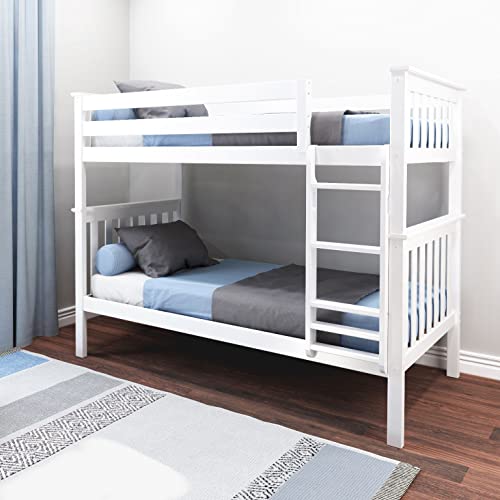 Max & Lily Bunk Bed Twin over
- Twin Bunk Bed: Fun and functional, our bunk…
- Superior Quality: Our kids bunk beds are crafted…
- Sturdy & Stable: Twin bunk bed is capable…
 Max & Lily Twin Over Full Bunk
- Superior Quality: Solid New Zealand Pine wood bed…
- Strong: High 400 lb
- Stable: Metal on metal structural connections won't loosen…
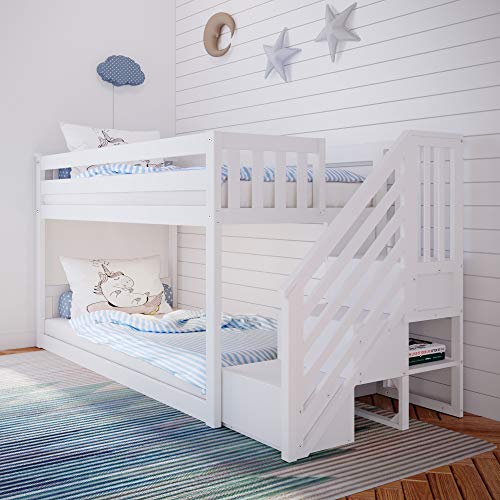 Max & Lily Low Bunk Bed
- Twin High Loft Bed: Fun and functional, our…
- Sturdy & Stable: High, 400-pound resting weight capacity…
- Low Bunk + Staircase , Clean Design: Slatted…
| Product | Key specs | |
|---|---|---|
| Max & Lily Bunk Bed Twin over | Twin Bunk Bed: Fun and functional, our bunk… Superior Quality: Our kids bunk beds are crafted… Sturdy & Stable: Twin bunk bed is capable… | Check price |
| Max & Lily Twin Over Full Bunk | Superior Quality: Solid New Zealand Pine wood bed… Strong: High 400 lb Stable: Metal on metal structural connections won't loosen… | Check price |
| Max & Lily Low Bunk Bed | Twin High Loft Bed: Fun and functional, our… Sturdy & Stable: High, 400-pound resting weight capacity… Low Bunk + Staircase , Clean Design: Slatted… | Check price |
 Max & Lily Solid Wood Twin Over Max & Lily Solid Wood Twin Over | Space-Saving Design with Slide: Create a playful haven… Superior Quality Construction: Crafted from durable, knot-free solid… Sturdy & Secure Support: Capable of accommodating up… | Check price |
As an Amazon Associate we earn from qualifying purchases at no extra cost to you.
Twin-Over-Twin vs Twin-Over-Full: Real Dimensions
The footprint difference looks small on paper but changes how a 10×12 ft kids room functions. A standard twin mattress is 38 x 75 inches and a full is 54 x 75 inches, so the frame adds 2-4 inches on each side for posts and ladder.
| Configuration | Overall Footprint (L x W x H) | Bottom Sleeping Surface | Ideal Room Size | General Market Price Range |
|---|---|---|---|---|
| Twin-Over-Twin | 78-80″ L x 42-45″ W x 60-65″ H | 38″ x 75″ | 8×10 ft and up; leaves room for desk + dresser in 10×12 ft layout | usually $300–$600 |
| Twin-Over-Full | 78-80″ L x 58-61″ W x 62-68″ H | 54″ x 75″ | 10×10 ft minimum; best in 10×12 ft or 11×12 ft where 24″ walkway can be kept on 3 sides | usually $450–$850 |
| Twin-Over-Twin with Trundle | 78-80″ L x 42-45″ W x 60-65″ H (80″ L when trundle extended) | 38″ x 75″ + 38″ x 75″ trundle | Needs 80″ of clear floor length for pull-out | usually $500–$900 |
In a typical 10×12 ft room with a 30-inch wide doorway and a closet on one wall, a twin-over-twin leaves you about 78 inches of remaining length on the long wall for a 48-inch desk and a 30-inch nightstand with 24-30 inches of walkway space in front. A twin-over-full eats 16 extra inches of width, which often forces you to push the bed against a window wall or give up the dresser and use under-bed storage instead.
How to Pick By Your Situation
Use the room, kids’ ages, and how long you plan to keep the bed to decide:
- Two young kids sharing a small room (under 10×11 ft): Choose twin-over-twin. The narrower frame preserves floor play space and requires less ceiling height.
- Siblings with a 4+ year age gap or one child over 12: Choose twin-over-full. The full bottom is more comfortable for a teen and works as a guest bed later without buying new furniture.
- Low ceilings (under 8 ft / 96 inches): Choose a low-profile twin-over-twin at 60-62 inches tall. This keeps 30+ inches above the top mattress for sitting up safely.
- Frequent sleepovers: Twin-over-full or twin-over-twin with trundle is more practical than adding a separate floor mattress every time.
- Renting or planning to move within 2 years: Choose a bolt-together metal or solid wood design that separates into two standalone twins. Avoid models that only function as a bunk.
Safety Specs That Actually Matter: Guardrails, Weight Limits, and Ceiling Clearance
Product listings often bury these numbers, but they determine whether bunk beds for kids are safe and comfortable day to day.
Guardrail Height
For the top bunk, look for a guardrail that sits at least 5 inches above the top of the mattress. This is the CPSC recommendation and it only works if you use the correct mattress thickness. Most bunk beds for kids are designed for a 5-8 inch thick mattress on top. If you put a 10-inch pillow-top mattress on a bed designed for 6 inches, your effective guardrail height drops to 3 inches or less.
Measure from the mattress surface, not the bed slat, to the top of the rail. For the bottom bunk on a twin-over-full, a shorter 3-4 inch rail or no rail is common since fall risk is lower, but a removable rail is worth considering for kids under 6.
Weight Limits
Weight limits are per bunk, not total:
- Top bunk (twin): Usually 165-200 lbs for wood frames, 175-225 lbs for steel frames. This includes child + mattress + bedding.
- Bottom bunk (twin): Usually 200-250 lbs.
- Bottom bunk (full): Usually 250-400 lbs depending on slat system and center support leg.
If an adult will regularly lie on the bottom bunk for bedtime stories, get a twin-over-full with a full bottom rated for at least 350 lbs and a center support rail with a leg to the floor. Without that leg, slats bow over time even if the initial limit looks high.
Ceiling Clearance
You need two clearances:
- Top bunk to ceiling: Minimum 30 inches from the top mattress surface to the ceiling so a child can sit up without hitting their head. 33-36 inches is ideal for kids over 10.
- Between bunks: 27-30 inches from bottom mattress surface to the underside of the top bunk. Less than 24 inches feels cramped and makes changing sheets difficult.
Example math: In a room with 96-inch (8 ft) ceilings, a 65-inch tall bunk with an 8-inch bottom mattress and 6-inch top mattress leaves about 25 inches above the top mattress. That is tight for older kids. Switch to a 61-inch low bunk or a 5-inch top mattress to gain 4-5 inches back.
Also check ceiling fan and light clearance. Keep at least 30 inches horizontally between the top bunk edge and any ceiling fan blade, and never position the top bunk directly under a fan.
Wood vs Metal vs Engineered Wood: Durability Trade-Off
Material affects weight, noise, how it handles moves, and what fails first.
| Material | Typical Weight of Frame | Durability Reality | What Wears First | Best For |
|---|---|---|---|---|
| Solid Wood (pine, rubberwood, poplar) | 120–180 lbs | Strongest long-term; handles disassembly and reassembly well; can be tightened and refinished | Ladder rungs loosen; pine dents easily | Families keeping the bed 5+ years or converting to two twins |
| Engineered Wood (MDF/particleboard with veneer) | 90–140 lbs | Lowest durability; screws strip on second assembly; swells if exposed to moisture | Cam locks and dowels loosen; laminate chips at edges | Short-term use, tight budgets, rooms without humidity issues |
| Metal (powder-coated steel tube) | 70–110 lbs | Highest weight capacity for the lightest frame; resists warping; can squeak if bolts loosen | Joint squeaks; paint chips at welds | Small rooms where you need to move the bed, renters, kids who climb a lot |
Solid wood twin-over-full models cost more initially, usually $600–$900, but they are the only type that consistently survives three or more moves without wobble. Metal bunks in the $300–$500 range are lighter to carry upstairs and easier to clean, but check the slat system. Look for 14 or more metal slats per bunk or a welded wire grid rather than 10 widely spaced slats that let a thin mattress sag. For engineered wood, avoid any model where the guardrail or ladder attaches only with cam locks into particleboard. The ladder takes lateral force every day and will work loose within 1-2 years.
Assembly, Moving and Small-Room Fit: What Listings Don’t Tell You
Box Size and Doorway Reality
Bunk beds for kids typically ship in one or two boxes weighing 90-160 lbs total. Boxes are usually 80 inches long and will not fit in most elevators lengthwise. Measure your stairwell turn, hallway corners, and bedroom doorway before delivery. Interior doorways are 28-30 inches wide, so unboxed headboards at 42 inches (twin) or 58 inches (full) must be tilted or carried in vertically. If your doorway is under 30 inches, choose a model that ships as separate headboard/footboard panels rather than pre-assembled ends.
Assembly Time and Tools
Expect 1.5 to 3 hours with two adults, even with included Allen keys. You will need your own Phillips screwdriver and a ratchet or wrench for the ladder bolts. The most common assembly mistake is overtightening ladder bolts before all rungs are aligned, which racks the frame and causes squeaking. Hand-tighten all connections first, then fully tighten in a diagonal sequence once the bed is square against the wall.
For small rooms, assemble the bed in the final position. A fully assembled twin-over-twin cannot be turned through a standard doorway without partial disassembly. Leave 2 inches between the bed and wall for bedding tuck and ventilation. If the bed will touch a window wall, confirm the window sill height is below or well above the guardrail so curtains and blinds cannot be grabbed from the top bunk.
What Wears First and How to Prevent It
- Slats and center support: Add non-slip slat caps or a bunkie board if gaps exceed 3 inches. A solid bunkie board also prevents a thin mattress from bowing.
- Ladder attachment: Tighten bolts every 3-6 months. Angled ladders with wide 3.5-inch steps are easier on small feet than vertical 1.5-inch round rungs.
- Guardrail hardware: Check that rails are screwed into solid wood or welded metal, not just into MDF. Wobble means the fastener is stripping.
- Finish: Pine shows dents within months in active households. If appearance matters, choose rubberwood or metal with a powder coat that touch-up paint can fix.
Decision Matrix: Which Bunk Bed For Kids Should You Buy?
| Your Situation | Recommended Pick | Why |
|---|---|---|
| Room is 10×12 ft or smaller, two kids under 10 | Twin-over-twin, low profile (60-62″ H), solid wood or metal | Saves 16″ of width, preserves 30″+ ceiling clearance, leaves space for storage |
| One child is 12+, guests often stay over | Twin-over-full with 350 lb+ bottom capacity | Full bottom sleeps teens and adults comfortably, extends usable life to college age |
| Ceilings under 8 ft | Low twin-over-twin + 5-6″ top mattress | Keeps safe sitting height on top without head contact |
| Renters who move often or need to separate beds later | Solid wood or metal that converts to two twins | Survives disassembly; engineered wood does not |
| Budget is primary concern, under $400 | Metal twin-over-twin with 14+ slats | Lower price, lighter to move, higher top-bunk limit than budget wood |
For most families shopping for bunk beds for kids in 2026, a convertible twin-over-twin in solid wood or steel with 30-36 inches of top clearance, a 5-inch guardrail above the mattress, and an angled ladder is the most versatile starting point. Move to twin-over-full only when you are certain you need the larger bottom bed and your room can give up the extra width without blocking the doorway, closet, or heat vent.
Small-Room Layout Tips for Bunk Beds
Place the long side of the bed against the solid wall opposite the window to avoid drafts and curtain access from the top bunk. Keep a 24-inch minimum walkway on the ladder side so kids can climb without hitting a desk chair. If you add under-bed drawers to a twin-over-full, allow 18 inches of pull-out space in front. For storage, prefer a single 6-drawer dresser over two small dressers, and use the reclaimed 12-14 square feet from the smaller bunk footprint for a vertical bookshelf rather than spreading furniture across every wall.