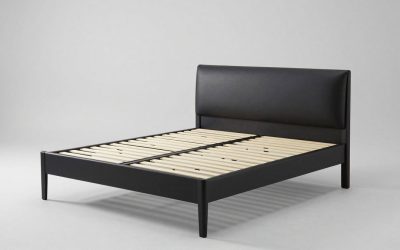
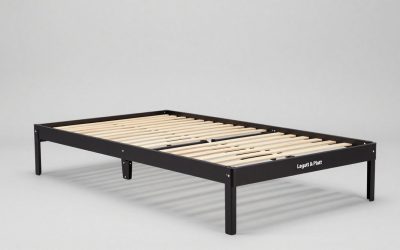
The best bunk bed for kids in 2026 is a solid wood twin-over-twin with full-length guardrails, ASTM F1427 and CPSC-compliant construction, and a 400 lb total weight capacity, but the right pick depends on ceiling height, room size, and whether you need storage or separation into two beds later. The eight picks below are ranked by safety certification, material durability, and assembly ease with specific recommendations for age, room layout, and long-term use.
Our top picks
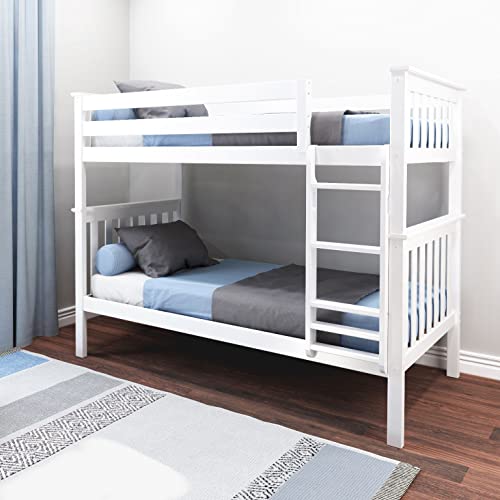 Max & Lily Bunk Bed Twin over
- Twin Bunk Bed: Fun and functional, our bunk…
- Superior Quality: Our kids bunk beds are crafted…
- Sturdy & Stable: Twin bunk bed is capable…
 Max & Lily Fundamental Twin Low Bunk
- Fundamental Twin Bunk: Our low bunk bed for…
- Crafted with Care: Made with solid wood and…
- Sturdy & Stable: This kids twin bunk bed…
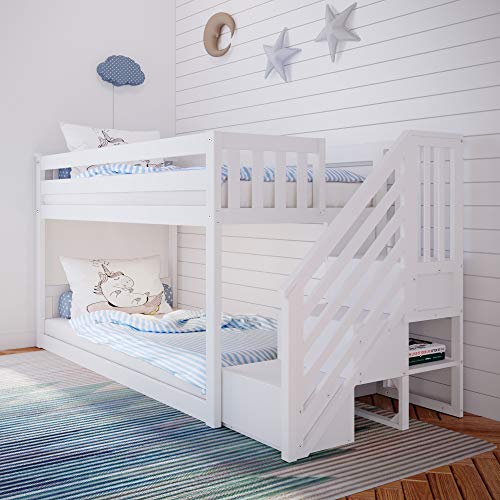 Max & Lily Low Bunk Bed
- Twin High Loft Bed: Fun and functional, our…
- Sturdy & Stable: High, 400-pound resting weight capacity…
- Low Bunk + Staircase , Clean Design: Slatted…
| Product | Key specs | |
|---|---|---|
| Max & Lily Bunk Bed Twin over | Twin Bunk Bed: Fun and functional, our bunk… Superior Quality: Our kids bunk beds are crafted… Sturdy & Stable: Twin bunk bed is capable… | Check price |
| Max & Lily Fundamental Twin Low Bunk | Fundamental Twin Bunk: Our low bunk bed for… Crafted with Care: Made with solid wood and… Sturdy & Stable: This kids twin bunk bed… | Check price |
| Max & Lily Low Bunk Bed | Twin High Loft Bed: Fun and functional, our… Sturdy & Stable: High, 400-pound resting weight capacity… Low Bunk + Staircase , Clean Design: Slatted… | Check price |
 Max & Lily Solid Wood Twin Over Max & Lily Solid Wood Twin Over | Space-Saving Design with Slide: Create a playful haven… Superior Quality Construction: Crafted from durable, knot-free solid… Sturdy & Secure Support: Capable of accommodating up… | Check price |
As an Amazon Associate we earn from qualifying purchases at no extra cost to you.
How to Choose the Safest Bunk Bed Before You Compare Models
Safety certifications matter more than style. In the U.S., all bunk beds sold legally must meet CPSC requirements and ASTM F1427 standards, which cover guardrail height, opening sizes to prevent entrapment, and structural testing. Look for these specifics on the product spec sheet, not just in marketing copy:
- Guardrails: Continuous on both sides of the top bunk, at least 5 inches above the top of the mattress. If the rail is 14 inches high and you use an 8-inch mattress, you have 6 inches of effective protection.
- Entrapment gaps: Openings in guardrails and between rails should be under 3.5 inches or over 9 inches to prevent head and torso entrapment.
- Ladder/steps: Angled ladders or staircases with handrails are safer for kids under 8. Vertical ladders save floor space but require more coordination.
- Third-party certification: GREENGUARD Gold for low chemical emissions and JPMA certification are voluntary but indicate independent testing.
- Mattress fit: Top bunk mattresses should be 5 to 8 inches thick. A 10-inch mattress reduces guardrail effectiveness and is a common safety mistake.
Age guidance from the CPSC and the American Academy of Pediatrics is clear: children under 6 should not sleep on the top bunk. For the bottom bunk, a low-profile design with a guardrail is recommended for kids under 4.
Material and Construction Trade-Offs
Material determines weight limits, wobble over time, and how well the bed survives moves and rough use. Box weight and doorway clearance also affect assembly reality more than most listings explain.
| Construction Type | Typical Weight Limit (Top / Bottom) | Durability Profile | Assembly & Moving Reality | Best For |
|---|---|---|---|---|
| Solid Wood (Pine, Rubberwood, Birch) | 200-250 lb / 250-400 lb | Most durable joints; resists loosening; can be sanded and refinished; heaviest | 2 boxes, 80-140 lb each; needs 30-inch doorway clearance; 2-person assembly 2-3 hours | Long-term use, kids who climb, families who want to separate into two beds |
| Engineered Wood (MDF/Particleboard with veneer) | 150-200 lb / 200-250 lb | Lower screw-holding strength; edges chip if moved often; sensitive to humidity | 1-2 boxes, 70-110 lb; lighter but more pieces; assembly 1.5-2.5 hours | Budget picks, low-use guest rooms, short-term needs |
| Metal (Steel tube frame) | 200-225 lb / 225-300 lb | Very strong for weight; powder coating can chip; may squeak if bolts loosen; no refinishing | 1 box, 60-90 lb; narrowest profile; assembly 1-2 hours; easiest to move | Small rooms, teens, renters who move frequently |
| Solid Wood + Metal Hybrid | 200-250 lb / 250-350 lb | Wood headboards reduce wobble, metal rails save weight; balanced durability | 2 boxes, 70-120 lb; moderate complexity | Modern style with higher durability than full metal |
What wears first is almost always the same: ladder rungs loosen, guardrail bolts need retightening every 6 months, and engineered wood cam locks strip after one disassembly. Solid wood beds with mortise-and-tenon or metal-on-metal bolt connections hold up best through two or three moves.
The 8 Safest and Most Durable Bunk Beds for 2026, Ranked
1. Max & Lily Twin-Over-Twin Solid Wood Bunk – Best Overall for Safety and Durability
Consistently built from solid New Zealand pine with slat rolls that require no box spring, this type usually offers a 400 lb total capacity and full-length guardrails on all four sides of the top bunk. It separates into two twin beds, which extends its life past the bunk stage. Assembly is hardware-intensive but well-documented. Usually $400–$700 depending on finish and staircase vs. ladder option. Needs a room with at least 7.5 ft ceilings for 36 inches of sitting clearance on the top bunk.
2. Storkcraft Cariboo Solid Wood Bunk – Best Value in Solid Wood
A long-standing solid wood option that meets ASTM and CPSC standards without extra certification markups. Typically supports 200 lb on top and 250 lb on bottom, with a low 62-inch overall height that fits 8-foot ceilings with 30+ inches of top-bunk ceiling clearance. Usually $300–$500. Best for a 10×10 ft room where a taller bunk would feel cramped.
3. Pottery Barn Kids Camp Bunk – Best Low-Height Pick for Younger Kids
Built lower to the ground (around 58-62 inches tall) with GREENGUARD Gold certification, this style maximizes guardrail height relative to the mattress. The integrated staircase with storage drawers eliminates a separate ladder and adds stability for ages 6-9. Usually $800–$1,200. Requires more floor space: add 18-20 inches of depth for the staircase versus a vertical ladder.
4. Walker Edison Twin-Over-Twin Metal Bunk – Best for Small Rooms and Renters
Steel frame with integrated ladders on both ends, typically around 65 inches tall and only 57 inches wide x 78 inches long. At 55-65 lb total weight, it is the easiest to move through 28-inch apartment doorways and to re-tighten if squeaking develops. Usually $200–$400. Ideal for a 10×12 ft room shared with a desk, leaving 24-30 inches of clearance around the bed for drawers to open.
5. DHP Twin-Over-Futon Bunk – Best for Growing Kids and Small Apartments
Metal twin-over-futon design where the bottom converts from a couch to a full-size sleeping area (54 x 75 inches). Top bunk is standard twin (38 x 75 inches). Total height is usually 72 inches, so it needs 8-foot ceilings minimum. Usually $300–$550. The futon mechanism is the first wear point; check that the hinge locks firmly in sofa position.
6. IKEA TUFFING Metal Bunk – Best Minimalist Low Bunk
Deliberately low at about 51 inches tall, this is one of the few bunks where the top bunk is under 4 feet high, reducing fall risk severity. Weight limit is lower (typically 100 kg / 220 lb per bed) and the design is strictly functional. Usually $200–$350. Perfect for low 7.5-foot ceilings or for parents who want the smallest possible footprint.
7. Max & Lily Twin-Over-Full with Staircase – Best for Siblings With an Age Gap
Solid wood twin on top (38 x 75 inches) over a full (54 x 75 inches) on the bottom gives an older or larger child more sleeping space below without increasing overall height beyond 66-68 inches. The staircase version usually includes three to four built-in drawers. Usually $600–$900. Plan for a room at least 10×12 ft; footprint is about 58 inches wide x 80 inches long plus 20 inches for stairs.
8. Donco Kids Twin-Over-Twin with Slide or Tent Option – Best for Play-Focused Rooms
Solid pine construction with optional slide or curtain add-ons that are removable. Safety is still ASTM-compliant, but the slide adds 60-70 inches of floor length when attached. Usually $400–$700. Choose this only if you can maintain 36 inches of clear landing space at the slide exit and still have a 30-inch egress path to the bedroom door.
Room-Size and Clearance Guide
A standard twin-over-twin bunk is 58-60 inches wide x 80-82 inches long x 61-68 inches tall. Before you buy, measure these three clearances:
- Ceiling clearance: You need at least 30-36 inches between the top of the top mattress and the ceiling so a seated child does not hit their head. With an 8-foot (96-inch) ceiling, a 65-inch tall bunk + 6-inch mattress leaves 25 inches – tight. A low 61-inch bunk leaves 29 inches.
- Side and end clearance: Leave 24 inches minimum on one side for making the bed and 30 inches in front of the ladder or stairs. In a 10×12 ft room, a bunk on the 10-foot wall leaves about 60 inches of depth for a dresser or desk opposite.
- Window and fan clearance: Never place the top bunk directly against a window or under a ceiling fan. Keep at least 36 inches from fan blades and ensure guardrails are not creating a climbable step to a window sill.
For L-shaped or triple bunks, add 10-15 sq ft to these requirements. If the room is under 100 sq ft, choose a vertical ladder or a loft-over-desk instead of a staircase model.
Decision Matrix: Which Bunk Fits Your Situation?
Use this to narrow the eight picks without comparing every spec:
- Small apartment or rental, 10×10 ft room, need to move in 1-2 years: Metal frame (Walker Edison or IKEA TUFFING). Lightest, narrowest, easiest disassembly.
- Two young kids (6 and 8) sharing for 5+ years: Solid wood twin-over-twin that separates into two beds (Max & Lily, Storkcraft). Highest durability and resale value.
- Ceilings under 8 feet or top-bunk anxiety: Low-profile bunk under 62 inches tall (Pottery Barn Kids Camp style or IKEA TUFFING).
- Siblings with a 4+ year age gap: Twin-over-full with staircase (Max & Lily Twin-Over-Full). The full bottom accommodates a teen.
- One room must be bedroom + playroom: Twin-over-futon or slide-optional model (DHP or Donco Kids) only if you have the extra 5-6 feet of floor space.
- Kids and pets, high humidity, or frequent cleaning: Solid wood or metal; avoid engineered wood which swells with moisture and shows claw marks.
Assembly, Moving, and Long-Term Durability Realities
Expect 90 to 180 minutes with two adults, a Phillips head screwdriver, and the included Allen keys. Pre-drill holes in solid wood reduce splitting, but do not over-torque bolts in engineered wood. Unbox in the bedroom if hallways are narrow; the longest side rail is typically 78-80 inches and will not turn a tight 90-degree hallway corner when boxed.
Box weight is the hidden factor: solid wood ships in two boxes often totaling 130-180 lb. If you live in a walk-up, plan help. Check the slat count: 12-14 slats per bed with center support legs is standard for a 200+ lb rating. Fewer than 10 slats will sag with a heavier mattress.
Durability maintenance is simple and prevents most wobble: retighten all bolts after the first two weeks of use, then every six months. Use felt pads under legs on hard floors to reduce lateral stress. If you plan to separate the bunk into two beds later, keep the extra leg caps and hardware bag taped to the bed frame.