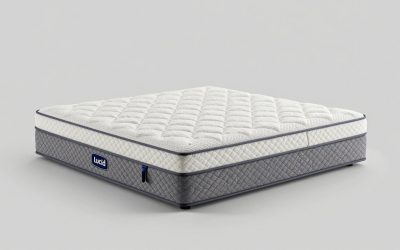
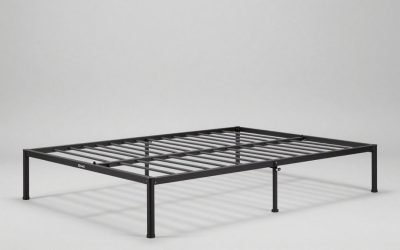
The best bunk bed for teens in 2026 is a full-over-full or twin XL-over-twin XL bunk with a 400+ lb weight capacity per bunk, full-length guardrails, and a solid wood or heavy-gauge steel frame, because teens need the extra sleeping length and higher weight support that standard twin bunk beds for younger kids do not provide.
Our top picks
 Walker Edison Elodie Urban Industrial Twin Over
- Dimensions: 69.25” H x 41.75” D x 79”…
- Top and bottom bunks support up to 200…
- Fits most twin beds, 5”- 9” mattress thickness…
 Bonnlo Twin Over Twin Metal Bunk Bed
- 【Safety Features】This bunk bed twin over twin is…
- 【Sturdy & Stable】This low-profile bunk bed has 20…
- 【Space-Saving & Practical】This low bunk bed is designed…
 LED Bunk Bed Twin Over Twin with
- Our Bunk beds are the epitome of practicality…
- This twin over twin bunk bed include a…
- Flexibility is key with this twin bunk bed,…
| Product | Key specs | |
|---|---|---|
| Walker Edison Elodie Urban Industrial Twin Over | Dimensions: 69.25” H x 41.75” D x 79”… Top and bottom bunks support up to 200… Fits most twin beds, 5”- 9” mattress thickness… | Check price |
| Bonnlo Twin Over Twin Metal Bunk Bed | 【Safety Features】This bunk bed twin over twin is… 【Sturdy & Stable】This low-profile bunk bed has 20… 【Space-Saving & Practical】This low bunk bed is designed… | Check price |
| LED Bunk Bed Twin Over Twin with | Our Bunk beds are the epitome of practicality… This twin over twin bunk bed include a… Flexibility is key with this twin bunk bed,… | Check price |
 Bunk Bed Bunk Bed | 【Upgraded Safety and Convenience】 14.2" high guardrails and… 【Heavy-Duty Metal Construction】 Industrial-grade steel bunk bed frame… 【Smart Storage and Modern Charging】 10.4" under-bed clearance… | Check price |
As an Amazon Associate we earn from qualifying purchases at no extra cost to you.
Twin vs Twin XL vs Full: Which Size Actually Fits a Teen?
Standard twin bunk beds are 75 inches long, which leaves little room for teens over 5’8″ and makes them outgrow the bed quickly. For growing kids, mattress length and width matter more than the frame style.
| Configuration | Mattress Size (per bunk) | Best For Height | Typical Weight Limit Per Bunk | Footprint (approx.) |
|---|---|---|---|---|
| Twin-over-Twin | 38″ x 75″ | Under 5’6″ | 200-250 lbs | 42″ W x 80″ L |
| Twin XL-over-Twin XL | 38″ x 80″ | 5’6″ to 6’2″ | 250-400 lbs | 42″ W x 85″ L |
| Full-over-Full | 54″ x 75″ | Under 5’10”, needs more width | 350-500 lbs | 58″ W x 80″ L |
| Full XL-over-Full XL / Twin XL-over-Full | 54″ x 80″ (Full XL) | Over 5’10”, wants width + length | 400-500 lbs | 58″ W x 85″ L |
For most teens, twin XL is the smartest upgrade if floor space is tight. You get 5 extra inches of legroom without adding width. Choose full-over-full if the room is shared, if the teen is broad-shouldered or over 180 lbs, or if the bottom bunk will double as a lounge for friends. Full XL is ideal but less common and usually $500-$900 for the frame alone, compared to usually $400-$750 for a quality twin XL bunk and usually $600-$1,100 for a full-over-full in solid wood.
Weight Capacity and Safety: What Teens Really Need
A teen plus mattress, bedding, and a friend sitting on the edge can easily exceed 250 lbs on the top bunk. Check two numbers before buying: static weight capacity and the recommended mattress thickness.
- Weight capacity: Look for at least 350 lbs on the top bunk and 400-500 lbs on the bottom for full-size models. Brands like Max & Lily, DHP, and Walker Edison publish these numbers in their spec sheets; if a listing does not list it, assume it is a kids-only 200 lb limit.
- Guardrail height: The top rail should be at least 14 inches above the mattress surface. That means if the rail is 16 inches high total, use a 6-8 inch mattress, not a 10-12 inch pillow-top.
- Ladder vs. staircase: Angled ladders save 18-24 inches of floor space. Staircase storage bunks are safer for nightly use and offer drawers, but add 18-22 inches to the overall length and require more clearance.
- Ceiling clearance: You need at least 30-36 inches between the top mattress and the ceiling so a teen can sit up without hitting their head. In an 8-foot (96-inch) room, a bunk with a 65-inch total height leaves about 23-25 inches above a 6-inch top mattress, which feels cramped. Low-profile bunks at 60-62 inches high are better for standard ceilings.
Metal vs. Solid Wood vs. Engineered Wood for Teens
Durability for teens is less about cute finishes and more about wobble, noise, and how the bed handles moving and reassembling.
| Material | Pros for Teens | Cons | Durability & Maintenance | Price Range (Frame Only) |
|---|---|---|---|---|
| Solid Wood (pine, rubberwood, birch) | Highest rigidity, quietest, holds screws after disassembly, can be refinished | Heaviest, needs tightening every 6-12 months | Lasts 8-15 years; scratches can be sanded; hardware is replaceable | Usually $600-$1,200 |
| Engineered Wood (MDF/particleboard with veneer) | Lower cost, smooth painted finish | Wobbles sooner, veneer chips, screw holes strip if moved 2+ times | Lasts 3-6 years of teen use; weak point is ladder joints and slats | Usually $300-$600 |
| Metal (steel tube frame) | Highest weight capacity for price, lightweight to move, easy to clean | Can squeak, feels colder/industrial, weld points can bend under lateral force | Lasts 5-10 years; add rubber washers and thread-locker to reduce noise | Usually $350-$700 |
Solid wood is the best long-term choice for teens who will use the bunk daily through high school. Metal is the best value for high weight capacity on a budget and for renters who move often, since it breaks down into lighter, narrower pieces. Avoid all-engineered-wood bunks if the teen is over 150 lbs or if you plan to separate the bunks into two beds later.
Construction Details That Matter More Than Style
- Slat system: Look for 12-14 solid wood slats per bunk or a metal grid foundation. Wire-spoke foundations with 3-4 supports will sag under a heavier teen.
- Joint hardware: Through-bolts with barrel nuts hold better than wood screws alone. Metal-on-metal connectors with Allen bolts are easiest to re-tighten.
- Finish: Low-VOC water-based finishes on solid wood resist sweat and skincare products better than thin laminate wraps, which peel at the edges after a year of use.
Room Fit and Clearance: Will It Fit a 10×12 ft Teen Room?
A typical teen room is 10×12 feet with an 8-foot ceiling, a closet on one wall, and a 30-inch doorway. Measure before you order.
- Footprint + clearance: A twin XL bunk needs 42″ x 85″. A full-over-full needs 58″ x 80-85″. Leave at least 30 inches of clearance in front of dressers and 24 inches between the bunk side and the wall for making the bed. In a 10×12 room, a full-over-full leaves only 62 inches of usable width, so you can fit a 36-inch desk only if the bunk is on the 10-foot wall.
- Doorway and stairs: Box 1 for solid wood bunks is often 80-90 lbs and 85 inches long. Measure stairwell turns and doorway width (standard is 29-30 inches). Metal frames ship in two smaller boxes (usually 45-65 lbs each) and are easier to get upstairs.
- Ceiling fan and light: Keep the top bunk at least 36 inches from a ceiling fan blade and avoid placing the ladder directly under a pendant light.
- Mattress height planning: Use a 6-8 inch mattress on top and 8-10 inches on the bottom. A thick 12-inch mattress on top reduces guardrail effectiveness and eats into sitting height.
Decision Matrix: Pick by Your Situation
| Your Situation | Best Pick | Why |
|---|---|---|
| Small room, one teen, 5’10″+ | Twin XL-over-Twin XL, low-profile metal or solid wood | Gives legroom without taking extra floor width; low height keeps ceiling clearance comfortable |
| Shared room for two teens or teen + sibling | Full-over-Full solid wood with storage staircase | More shoulder room and higher weight limits; stairs are safer for daily use |
| Renter or frequent moves, tight budget | Heavy-gauge metal twin XL or full bunk (DHP, Walker Edison styles) | Lighter boxes, breaks down flat, tolerates reassembly better than MDF |
| Wants lounge / study space | Twin XL-over-Full or Full loft with desk underneath | Bottom full works as daybed; loft frees 30-35 sq ft for a desk (standard desk height is 29-30 inches, need 58-60 inches clearance under loft) |
| Strong style preference, modern teen | Solid wood in walnut, gray, or white wash; or matte black metal | Neutral finishes age well from 13 to 18 and match Pottery Barn Teen or South Shore dressers |
Assembly, Moving, and What Wears First
Bunk beds for teens are heavier and take longer to build than kids’ models. Expect 2-3 hours with two people, plus a drill with Allen bits, a rubber mallet, and a level. Pre-drill checks are critical: lay out all slats and count barrel nuts before starting.
- Box weight and delivery: Solid wood full bunks ship in 2-3 boxes totaling 130-180 lbs. Check if delivery is threshold-only; you may need help to carry upstairs.
- What loosens first: Ladder rungs, guardrail bolts, and center support legs. Re-torque all bolts after the first two weeks of use and every 6 months after.
- Noise prevention: Add felt pads under posts, nylon washers on metal bolts, and tighten slat screws. A plywood bunkie board over slats reduces creaking and prevents thin mattresses from sagging.
- Separating into two beds: Many solid wood models (Max & Lily, Walker Edison Solid Wood series) convert to two standalone beds, which is useful when a teen gets their own room later. Metal bunks rarely convert cleanly.
Sturdy Picks by Situation in 2026
1. Best Overall for Tall Teens: Twin XL-Over-Twin XL Solid Wood Bunk
Look for a low-profile solid wood frame around 61-63 inches tall with a 400 lb top / 500 lb bottom rating, like the Max & Lily Twin XL bunk or similar rubberwood frames. It fits under 8-foot ceilings with better sitting clearance and provides the 80-inch length teens need. Usually $600-$850 without mattresses.
2. Best for Shared Rooms: Full-Over-Full with Staircase Storage
A full-over-full solid wood bunk with integrated drawers uses vertical space efficiently and holds up to daily two-teen use. These footprints are larger, so they suit rooms at least 11×11 feet. Usually $800-$1,200 and worth it if you need drawer storage instead of a separate dresser.
3. Best Budget Metal for High Weight Capacity: Heavy-Duty Metal Full Bunk
DHP and Walker Edison offer full-over-full metal bunks with 350-400 lb per bunk ratings and integrated ladders. They are noisier than wood but much lighter to move and easier to clean. Usually $350-$650, ideal for renters or guest rooms.
4. Best for Small Rooms That Need a Desk: Twin XL Loft or Twin XL-Over-Full L-Shape
If the priority is homework space, a twin XL loft bed with clearance of 58-60 inches underneath fits a standard 30-inch high desk and chair (chair seat height 17-19 inches). An L-shaped twin XL-over-full also frees a corner for a desk while keeping a second sleep space. Usually $500-$950 depending on material.
FAQ
Can a teen sleep on the top bunk safely?
Yes, if the top bunk is rated for at least 350 lbs, has guardrails on all four sides with gaps under 3.5 inches, and uses a mattress no thicker than 8 inches to keep the rail effective. Teens over 6 feet or over 200 lbs may be more comfortable and safer on the bottom full bunk.
What mattress type is best for a bunk bed for teens?
A 6-8 inch medium-firm innerspring or hybrid works best on top for support and low profile. On the bottom, an 8-10 inch hybrid or foam is fine. Avoid ultra-plush 12-inch mattresses on the top bunk because they reduce guardrail height and sitting clearance.
How much ceiling height do you need for a teen bunk?
With 8-foot ceilings, choose a bunk no taller than 62-65 inches. You need 30-36 inches from mattress top to ceiling. If your ceiling is 7.5 feet or lower, consider a low bunk at 55-60 inches or a loft alternative.