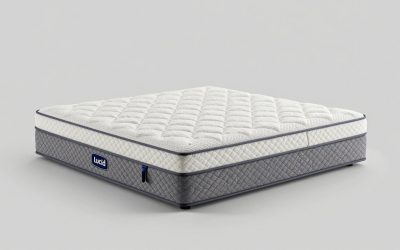
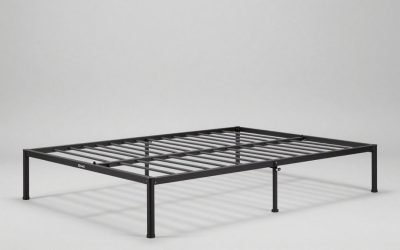
The best loft beds for adults for small apartments are heavy-duty full and queen loft beds with a 400 to 600 lb weight capacity, a steel or solid hardwood frame, a mattress thickness limit of 6 to 8 inches, and at least 54 to 58 inches of clearance underneath for a desk or sofa.
Our top picks
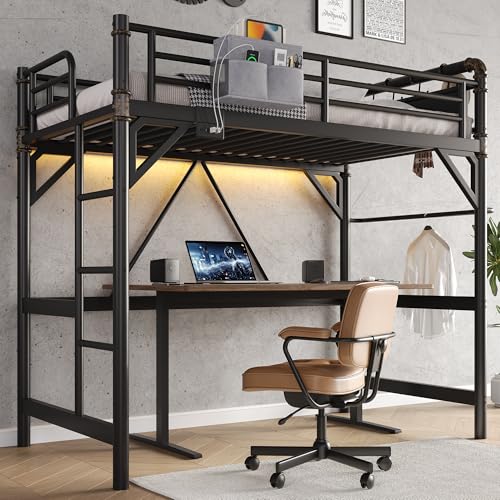 Twin Size Loft Bed with LED Lights
- This twin loft frame with built-in RGB LED…
- Our loft beds are the epitome of practicality…
- This loft bed include a handy bedside storage…
 Decofy Metal Loft Bed Twin Size
- Metal Loft Bed Twin Size: The twin size…
- Space-Saving Loft Bed: The loft beds is designed…
- Loft Bed with Bedside Storage Bag: This full…
 EYATZO Full Loft Bed with LED Lights
- 【LED Lights, Charging Station & Storage Pocket】– Enhance…
- 【Flexible Under-Bed & Space-Saving Design】– Maximize your room's…
- 【Noise-Free & Heavy Duty Metal Bed Frame】– Constructed…
| Product | Key specs | |
|---|---|---|
| Twin Size Loft Bed with LED Lights | This twin loft frame with built-in RGB LED… Our loft beds are the epitome of practicality… This loft bed include a handy bedside storage… | Check price |
| Decofy Metal Loft Bed Twin Size | Metal Loft Bed Twin Size: The twin size… Space-Saving Loft Bed: The loft beds is designed… Loft Bed with Bedside Storage Bag: This full… | Check price |
| EYATZO Full Loft Bed with LED Lights | 【LED Lights, Charging Station & Storage Pocket】– Enhance… 【Flexible Under-Bed & Space-Saving Design】– Maximize your room's… 【Noise-Free & Heavy Duty Metal Bed Frame】– Constructed… | Check price |
 Twin XL Loft Bed with Charging Station Twin XL Loft Bed with Charging Station | 【Smart LED Lights, Charging Station & Storage】– Elevate… 【Space Saving & Flexible Under-Bed】– With 51 inches… 【Heavy-Duty & Noise-Free Metal Frame】– Crafted with reinforced… | Check price |
As an Amazon Associate we earn from qualifying purchases at no extra cost to you.
Full vs. Queen Adult Loft Beds: Which Size Makes Sense?
For most small apartments, the choice between full and queen comes down to floor footprint versus sleeping comfort, not just mattress size.
- Full loft bed (54″ x 75″): Best for studios and rooms under 10×12 ft. The frame footprint is typically 57-60″ wide x 78-80″ long, leaving you about 3 to 4 feet of walkway space on one side in a 10-foot wide room. Lighter overall weight and easier to assemble in tight spaces.
- Queen loft bed (60″ x 80″): Needs a room at least 10×12 ft to avoid blocking closets or windows. The frame footprint is usually 63-66″ wide x 83-85″ long. You gain 6 inches of width and 5 inches of length, which matters for couples or taller adults, but you lose valuable floor area underneath and along the sides.
- Weight capacity difference: Full and queen models from the same heavy-duty line often share the same capacity, but queen frames distribute weight over a larger span. Look for center support beams and reinforced slats on queen models. Without them, effective capacity can be lower despite the same listed rating.
If the loft is for one adult and you plan to put a full desk and chair underneath, a full loft saves 6 to 8 square feet of floor space and is easier to move through a standard 29 to 30 inch apartment doorway during assembly. Choose queen only if two adults will sleep there regularly or if your room is at least 11×12 ft.
Weight Capacity: What Heavy-Duty Really Means
Listed weight limits for loft beds for adults include the mattress, sleeper, and bedding combined. For adult use, do not consider anything under 350 lbs.
| Category | Typical Weight Capacity | Best For | What to Check |
|---|---|---|---|
| Standard Metal Full/Queen | 250 – 350 lbs | Single adult under 200 lbs, occasional use | Slat spacing wider than 3″, thin side rails |
| Heavy-Duty Steel Full | 400 – 500 lbs | Single adult, daily use, plus mattress | 2″ x 2″ steel posts, welded joints, close slat spacing |
| Heavy-Duty Steel Queen | 500 – 600 lbs | Couples or larger adults | Center longitudinal beam, additional legs |
| Solid Hardwood Full/Queen | 400 – 600 lbs | Long-term durability, quieter frame | Mortise and tenon or steel bracket joints, not just wood screws |
For two adults, add both body weights plus 50 to 70 lbs for a queen mattress and bedding. A couple totaling 340 lbs needs at least a 500 lb rated frame to have a safe margin. Always check if the capacity is static weight or dynamic weight, dynamic ratings are more realistic for movement during sleep.
Steel vs. Hardwood Frames: Construction Trade-Offs
Both materials can be heavy-duty, but they behave differently in a small apartment.
| Feature | Heavy-Gauge Steel | Solid Hardwood (Rubberwood, Acacia, Ash) | Engineered Wood / MDF with Veneer |
|---|---|---|---|
| Weight Capacity | 400 – 600 lbs, highest strength-to-weight | 400 – 600 lbs, very strong when jointed properly | 200 – 350 lbs, not recommended for daily adult use |
| Stability & Noise | Can squeak if bolts loosen, use nylon washers | Naturally dampens vibration, quieter long-term | Prone to wobble and loosening at particleboard joints |
| Durability | Resists warping, can rust in humid climates if coating chips | Resists dents, can crack with extreme dryness or humidity swings | Swells with moisture, wears fastest at ladder and guardrail screws |
| Weight of Frame | 120 – 180 lbs | 150 – 220 lbs | 90 – 130 lbs |
| Look & Feel | Industrial, open, easier to see through in small room | Warmer, more solid visual presence | Looks like wood, lower cost, shorter lifespan |
| General Price Range | Usually $400 – $800 | Usually $600 – $1,200 | Usually $300 – $550 |
For renters who may move within 1 to 2 years, steel is easier to disassemble and reassemble without stripping joints. For a long-term small apartment where noise matters, solid hardwood with steel reinforcement brackets offers the best combination of silent stability and high capacity. Avoid engineered wood loft beds marketed for adults if you weigh over 200 lbs or plan to use the bed daily.
Mattress Thickness Limits and Guardrail Safety
Adult loft beds require a low-profile mattress. This is a safety rule, not a comfort preference. The top of your mattress must sit at least 5 inches below the top of the guardrail.
- Most heavy-duty loft beds specify a 6 to 8 inch maximum mattress thickness. Using a 10 to 12 inch pillow-top mattress leaves only 2 to 3 inches of guardrail above the mattress, which increases fall risk.
- Best mattress types: 6 to 8 inch memory foam, hybrid, or latex mattresses work well. They provide adult support without exceeding height limits. Avoid tall innerspring mattresses unless the guardrail height is 13 inches or more.
- Slat requirements: Check slat spacing. For foam mattresses, slats should be no more than 2.5 to 3 inches apart to prevent sagging. Heavy-duty models often include 14 to 16 slats for full and 16 to 18 for queen. Add a bunkie board only if the manufacturer allows it, as it adds height.
- Weight again: A thick hybrid queen can weigh 90 to 110 lbs alone. Subtract that from the total capacity to get your true user weight limit.
Clearance Underneath: Will a Desk or Sofa Actually Fit?
Total loft height and under-bed clearance are different numbers. Focus on usable clearance from floor to the bottom of the slats or support beams.
- Low loft (52″ – 56″ total height): Provides 36 to 42 inches of clearance. Not enough to sit upright at a desk. Only good for storage bins and low dressers.
- Mid loft (62″ – 68″ total height): Provides 48 to 53 inches of clearance. Enough for a low-profile sofa, futon, or floor desk, but an adult cannot sit at a standard desk without hunching.
- High loft (72″ – 78″ total height): Provides 54 to 62 inches of clearance. This is what you need for adult use with furniture underneath. A standard office desk is 29 to 30 inches high, and you need at least 24 to 26 inches from desk surface to the bed frame for comfortable seating. A 58-inch clearance gives you just enough headroom for a 30-inch desk plus an ergonomic chair.
Measure your ceiling height before buying. You need at least 33 to 36 inches from the top of the mattress to the ceiling to sit up without hitting your head. In an apartment with 8-foot (96-inch) ceilings, a 72-inch high loft with an 8-inch mattress leaves 16 inches to the ceiling, which is too low. For 8-foot ceilings, look for a loft no taller than 68 to 70 inches.
Room fit example for a 10×12 ft room: A queen high loft at 65″ W x 84″ L placed against the 10-foot wall leaves about 36 inches of depth in front of a 24-inch deep desk underneath, and about 55 inches of open floor width beside the bed for a 28-inch wide dresser. A full high loft in the same placement leaves about 60 inches beside the bed, enough for a small loveseat.
Decision Matrix: Which Heavy-Duty Loft Bed Fits Your Situation?
| Your Situation | Recommended Pick | Why |
|---|---|---|
| Studio under 400 sq ft, one sleeper, need home office | Full, high steel loft, 400+ lbs capacity, 58″+ clearance | Smallest footprint, open steel frame keeps room bright, space for 48″ desk underneath |
| One-bedroom, 10×12 ft room, couple sharing | Queen, heavy-duty steel or solid hardwood, 500+ lbs capacity | Needed sleep width, requires center beam support |
| Renter who moves often | Full or queen steel with bolt-together frame | Lighter, disassembles cleanly, less damage to joints than wood |
| Light sleeper sensitive to noise and wobble | Solid hardwood with steel brackets, full or queen | Dampens movement and creaks better than all-metal |
| Tall adult over 6′ or over 230 lbs | Full or queen with 80″ length, 500+ lbs capacity, 15+ slats | Prevents foot overhang and slat sagging |
Assembly, Moving, and What Wears First
Loft beds for adults are not quick-assembly furniture. Plan for the realities of a small apartment.
- Box weight and delivery: Heavy-duty steel models ship in 2 to 3 boxes totaling 130 to 180 lbs. Solid hardwood can be 170 to 220 lbs across 2 boxes. Measure your building elevator and hallway corners. Boxes are often 80 inches long and will not fit in a small elevator diagonally.
- Doorway and ceiling clearance during assembly: You need a clear area at least 2 feet larger than the bed footprint on all sides to lay out parts. Assemble horizontally then lift. Low ceilings and ceiling fans interfere with standing the frame up. Remove fan blades temporarily if needed.
- Assembly time and tools: Expect 2 to 4 hours with two adults. You will need a ratchet wrench and Allen keys included. Tighten all bolts, then re-tighten after one week of use as metal settles and wood compresses.
- What wears first: On steel frames, the ladder rung welds and guardrail bolts loosen first and cause squeaks. On hardwood frames, the ladder-to-rail connection and slat screws strip first if over-tightened. Check these points every 3 months.
- Floor protection: Add felt pads or rubber caps to all legs. A loaded queen loft can exert over 150 lbs per leg on apartment flooring and dent vinyl or scratch hardwood. On uneven floors, use adjustable leveling feet if provided.
What to Check Before You Buy
Use this checklist for any loft beds for adults you consider, regardless of size or material.
- Verified weight capacity of at least 400 lbs for one adult, 500 lbs for two, with details on whether slats are included in the test.
- Guardrail height of at least 11 to 13 inches above the slat base, and a stated maximum mattress thickness of 6 to 8 inches.
- Ladder weight rating that matches the bed rating, and an option for angled ladder or staircase if you have knee issues. Staircase lofts need an extra 18 to 24 inches of floor length.
- Under-bed clearance stated as floor-to-slat measurement, not total height. Confirm it fits your specific desk height plus chair.
- Slat material and count: solid wood or steel slats, not plywood, with spacing under 3 inches. Metal support beams running lengthwise are essential for queen.
Frequently Asked Questions
Can adults safely sleep on a loft bed every night?
Yes, if the frame is rated heavy-duty at 400 lbs or more for a single sleeper and built from steel or solid hardwood with proper slat support. Avoid engineered wood frames for nightly adult use.
What ceiling height do I need for an adult loft bed?
You need at least 96 inches (8 feet). Measure from floor to ceiling, subtract the loft height and mattress thickness, and ensure 33 to 36 inches remain above the mattress for sitting up safely.
Can I put a sofa under a queen loft bed?
Only with a high loft providing at least 54 to 58 inches of clearance. A typical loveseat back is 30 to 34 inches high, which fits under a mid or high loft, but you still need headroom above it to stand. A low futon at 26 to 28 inches high works best under mid lofts.