Key takeaways
- Sag in the center: slats bow, the mattress dips, and both sleepers roll toward the middle.
- Cracked slats: a 60 in pine slat of typical 1×3 or 1×4 size is easily overstressed when someone sits or kneels in the middle.
- Box spring damage: a box spring resting only on side rails flexes and its wood frame can crack along the center.
- Noise: movement at the slat ends and side rails causes creaks as the structure flexes.
- Mattress wear: foam and hybrid mattresses develop body impressions faster on an uneven base.
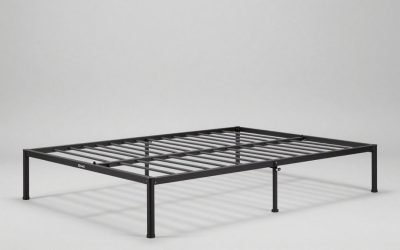
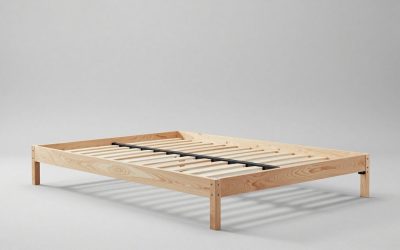
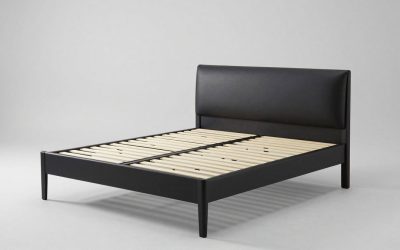
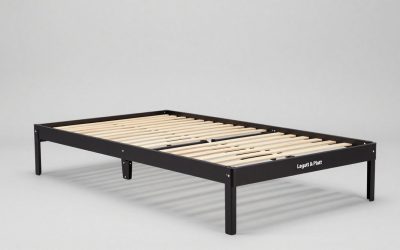
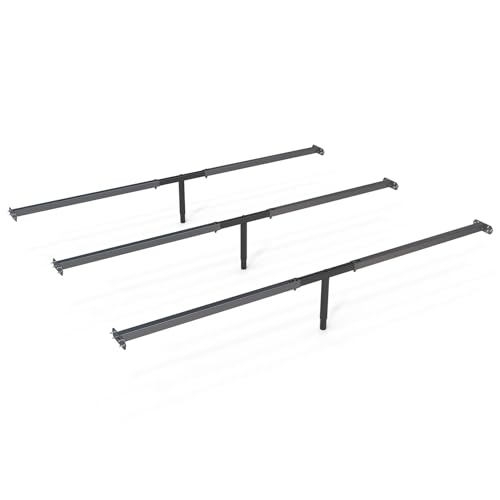
A bed frame middle support bar is a center rail, usually with one or more legs to the floor, that runs from headboard to footboard and stops slats or a box spring from sagging in the middle; queen, king and California king beds need one, full beds benefit from one, and twin beds generally don’t. If your frame lacks it, an adjustable steel center support with screw-down legs can be added in under an hour for a modest cost.
Our top picks


As an Amazon Associate we earn from qualifying purchases at no extra cost to you.
Which Bed Sizes Need Middle Support
The need comes down to span. Wood slats and box spring frames bend more as the unsupported distance grows, and sleepers concentrate weight near the center of a shared bed.
| Bed size | Frame inside width | Center support | Recommended center legs |
|---|---|---|---|
| Twin / Twin XL | About 38–39 in | Not usually needed | 0 |
| Full | About 54–55 in | Recommended, especially with slats | 1–2 |
| Queen | About 60–61 in | Required by most frame and mattress makers | At least 1, ideally 2–3 |
| King | About 76–77 in | Required | 2–3 (some kings use two center rails) |
| California king | About 72–73 in | Required | 2–3 |
Mattress warranties are a practical reason to follow this. Many mattress makers specify that queen and larger beds must have a center support with at least one leg to the floor, and some specify a minimum number of legs or a maximum slat gap, often around 3 in. Sagging caused by an unsupported foundation is a common reason warranty claims are denied, so check your mattress’s warranty terms.
What Happens Without a Middle Support
- Sag in the center: slats bow, the mattress dips, and both sleepers roll toward the middle.
- Cracked slats: a 60 in pine slat of typical 1×3 or 1×4 size is easily overstressed when someone sits or kneels in the middle.
- Box spring damage: a box spring resting only on side rails flexes and its wood frame can crack along the center.
- Noise: movement at the slat ends and side rails causes creaks as the structure flexes.
- Mattress wear: foam and hybrid mattresses develop body impressions faster on an uneven base.
Types of Middle Support
| Type | How it works | Best for | Typical price range |
|---|---|---|---|
| Integrated center rail with legs | Built into the frame; slats rest on it | Most queen/king platform and wood frames | Included |
| Adjustable steel center support | Steel beam with 2–4 screw-adjustable legs; placed under slats or box spring | Retrofitting a frame without support | $30–$80 |
| Bed rail center support with cross brackets | Bolts between head and foot, often for metal or headboard-only frames | Hollywood or headboard-footboard frames | $40–$100 |
| Individual adjustable support legs | Screw-in legs added under an existing center rail | Existing rail that sags between legs | $15–$40 for a set |
| Bunkie board or plywood deck | A solid panel over slats spreads load | Slats too far apart; supplements but doesn’t replace legs | $40–$150 |
Adjustable legs usually have a threaded post that lets you raise each foot to touch the floor firmly. That adjustment matters: a leg that hovers 1/4 in above the floor does nothing until the rail has already bent.
How to Add a Middle Support to a Queen Bed Frame
- Remove the mattress and slats or box spring. Note how the slats sit so you can replace them the same way.
- Measure the inside length from headboard rail to footboard rail. Most queens are 79–81 in inside; buy or cut a support to fit snugly.
- Check rail height. Measure from the floor to the slat ledge on the side rails. The center support’s top must match this height so slats rest level. Most adjustable supports cover roughly 7–14 in.
- Position the support down the exact center of the frame. If the frame has a center slat bracket at each end, attach the rail there; otherwise, it can sit free under the slats.
- Adjust each leg until it touches the floor with firm pressure. Use a straightedge across the side rails to make sure the center isn’t raised into a hump.
- Add floor protection. Rubber or felt pads under each foot prevent dents in hardwood and stop sliding.
- Replace slats and secure them. Screw or strap slats to the center rail if the design allows; it stops them from shifting and squeaking.
- Re-check after a week. Wood frames settle. Re-tighten legs if any has lost contact.
Slat Spacing and the Middle Bar Work Together
A center support solves span, not gaps. Slats should still be close enough for your mattress type.
| Mattress type | Max slat gap usually recommended | Center support |
|---|---|---|
| Memory foam / all-foam | About 2.75–3 in | Required for queen+ |
| Hybrid | About 3 in | Required for queen+ |
| Innerspring with box spring | Not critical (box spring spans gaps) | Required under box spring for queen+ |
| Latex | About 2–3 in | Required; latex is heavy |
If your slats are wider apart than this, add slats or lay a bunkie board on top in addition to the center support.
Diagnosing a Sagging Bed
- Dip in the middle, slats intact: center legs not touching the floor, or too few legs. Adjust or add legs.
- Dip and cracked slats: replace slats; consider thicker hardwood or metal slats.
- Center rail bent: the rail is undersized or overloaded; replace with a steel support rated for the load.
- Dip with good foundation: the mattress itself may have worn. Rotate it and check whether the impression stays.
Heavy Sleepers and Heavier Mattresses
Combined loads of 500 lb or more, two sleepers plus a heavy hybrid or latex mattress, call for at least three center legs on a queen and two center rails with multiple legs on a king. Steel frames from heavy-duty lines often state total capacities in the 1,000–3,000 lb range, but those numbers assume all legs are in solid floor contact.
FAQ
Can a full bed go without a center support?
Many full frames have none and work fine for a single sleeper with a box spring. With slats, foam mattresses or two adults, a center support helps prevent sag.
Does a box spring need a middle support bar?
For queen and larger, yes. The box spring’s internal wood frame is not meant to span the full width on its own.