Most mattresses are quietly engineered around an “average” sleeper of roughly 150 to 180 pounds. Cross the 230-pound mark and the same bed behaves like a different product entirely: comfort layers compress until you feel the hard support core beneath them, hips settle deeper than shoulders and pull the lumbar spine out of neutral, the perimeter folds away when you sit to put on shoes, and trapped body heat has nowhere to escape. Worst of all, the body impressions that a lighter sleeper might notice in year five can show up within a single season.
This guide approaches the problem the way a sleep clinician would — by looking past marketing adjectives and straight at the load-bearing engineering: support-core density, coil gauge and count, total profile height, perimeter reinforcement, thermal regulation, and the fine print on sag thresholds in the warranty. Below you’ll find the specifications that actually predict longevity for higher-weight sleepers, followed by five mattresses assessed against those criteria, spanning a lean guest-room option through full-height flagship builds.
Our top picks

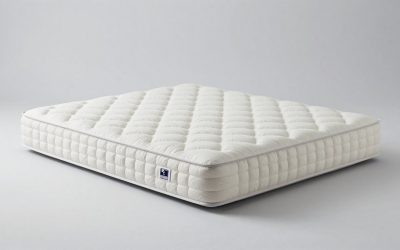
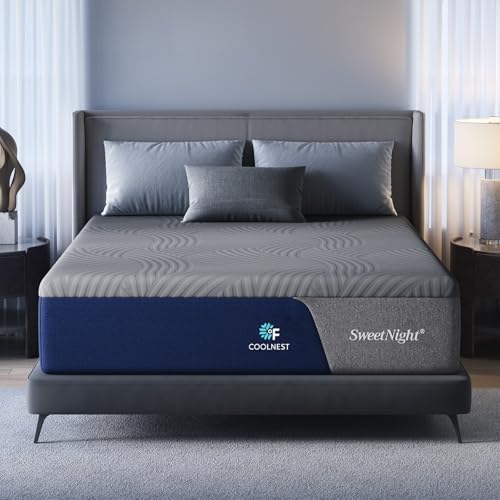 Sweetnight CoolNest 14 Inch King Size Mattress
- CoolNest System for a Cooler Night - The…
- 5-Zone Support for Pressure Relief - Engineered with…
- Motion Isolation for Undisturbed Sleep - Constructed with…


As an Amazon Associate we earn from qualifying purchases at no extra cost to you.
🛒 Best Price Today on Amazon
Prime members get fast, free shipping on everything above, plus member-only deals. New members get a 30-day free trial — cancel anytime.
How to Choose a Mattress For Overweight People (2026)
- Support core before comfort feel: The bottom layer does the structural work. Look for high-density polyfoam (1.8 lb/ft³ or greater), memory foam at 4 lb/ft³ or above, or a pocketed coil unit in the 13–14.5 gauge range. A plush top over a weak base is the single most common failure point.
- Profile height of 12 inches or more: Thicker beds distribute load across more material. Twelve inches is a practical floor for sleepers over 250 pounds; 14 inches provides genuine headroom before you reach the base and start feeling “through” the mattress.
- Reinforced perimeter: Edges take concentrated pressure during entry and exit. Higher-gauge border coils or a dense foam encasement preserve usable surface area and make getting in and out of bed considerably easier.
- Active heat management: Denser foams insulate more effectively, and a larger body generates more heat to dissipate. Prioritize coil airflow, open-cell or gel-infused foams, phase-change covers, or copper and graphene conductive layers.
- Warranty sag threshold and foundation rules: Read the impression depth that qualifies as a defect — a 0.75-inch threshold protects you far better than 1.5 inches. Also confirm slat spacing requirements, since gaps wider than three inches can void coverage and accelerate sagging.
The Best Mattresses For Overweight People (2026) Reviewed
Linenspa 8 Inch Hybrid (Twin XL)
At eight inches, this is a coil-supported budget pick best reserved for guest rooms, bunks, trundles, or sleepers at the lighter end of the plus-size range. The steel innerspring core outperforms comparably priced all-foam beds under load, but heavier primary sleepers should treat it as a stopgap rather than a long-term solution.
Sweetnight CoolNest 14 Inch
The five-zone ergonomic construction is the standout feature here, firming up beneath the pelvis while yielding at the shoulders — precisely the geometry that keeps heavier hips from sinking out of alignment. Fourteen inches of CertiPUR-US certified foam with engineered breathability channels makes this a strong medium-feel option for warm sleepers who need real depth.
Nectar Luxe 14″ Memory Foam
A generously built all-foam bed with a medium-firm surface that reads closer to true medium under greater body weight, delivering deep contouring without the hammock effect that plagues thinner foam mattresses. The year-long trial window is unusually valuable for higher-weight buyers, since durability issues typically surface after several months of use, not several weeks.
DreamCloud 12″ Hybrid
The coil-on-foam architecture strikes an intelligent balance: individually wrapped springs push back against concentrated hip pressure while quilted upper layers soften the initial contact. Twelve inches keeps it in the sweet spot for couples with mixed body types, and the 365-night trial covers a full seasonal cycle.
EGOHOME 14 Inch Memory Foam
Copper-gel infusion and a graphene-cooled cover attack the two biggest complaints heavier memory foam sleepers report — heat retention and slow recovery — while the fiberglass-free build removes a common safety concern. Its chiropractic endorsement and firm-leaning medium surface make it a considered choice for anyone managing lower back pain.
Frequently Asked Questions
What firmness should I choose if I weigh over 250 pounds?
Firmness is perceived relative to how far you compress the surface, so a mattress labeled medium will typically feel one step softer to a heavier sleeper. Most people above 250 pounds are best served by medium-firm to firm ratings, roughly 6.5 to 8 on the ten-point industry scale.
How long should a mattress realistically last?
Expect roughly five to seven years from a well-built hybrid or high-density foam bed under sustained higher load, compared with the eight to ten years manufacturers advertise. Rotating the mattress head-to-foot every three months meaningfully slows impression formation.
Is memory foam or a hybrid better for heavier bodies?
Hybrids generally win on edge support, airflow, and long-term resistance to sagging thanks to their steel cores. High-density memory foam counters with superior pressure relief and motion isolation, making it the better pick for side sleepers with sensitive shoulders and hips.
Do I need a special bed frame?
Yes — an unsupported frame will undermine even the best mattress. Use a platform or slatted base with center support legs and slat gaps no wider than three inches, and verify the frame’s stated weight capacity covers both sleepers plus the mattress itself.
Final Thoughts
For most higher-weight sleepers, the Sweetnight CoolNest 14 Inch offers the most complete package of depth, zoned support, and cooling at a sensible price point, while the DreamCloud 12″ Hybrid remains the smarter buy for couples who want coil-driven edge stability and a year-long trial. If back pain is your primary concern, the EGOHOME 14 Inch delivers the firm, conductive-cooling foam platform that keeps the spine neutral night after night.