Key takeaways
- Firmness sweet spot: Side sleepers generally do best between medium-plush and medium-firm. Too firm and your shoulder is forced up into your neck; too soft and your hips drop until your spine sags into an S-curve. If you’re under roughly 130 lb, lean plush; over 200 lb, lean firmer so you don’t bottom out.
- Comfort layer depth: Look for at least two to three inches of conforming foam above the support core. That’s the buffer that swallows your shoulder instead of resisting it — thinner comfort layers are the single most common reason side sleepers report arm tingling.
- Zoned or contoured support: Mattresses with softer shoulder zones and firmer lumbar zones do the geometric work for you, letting the widest parts of your body sink while propping up your waist. Look for terms like five-zone ergonomic support or zoned lumbar reinforcement.
- Heat management: A deep cradle means more of your skin touching foam and less air moving over it. Gel infusions, open-cell structures and breathable covers all help, but hybrids with a coil layer have a structural airflow advantage that all-foam beds have to work harder to match.
- Trial period and certifications: Your body needs two to four weeks to recalibrate to a new surface, so anything under a 100-night trial is a gamble; 365-night trials are increasingly common and worth prioritising. CertiPUR-US certification and fiberglass-free construction are baseline expectations now, not bonuses.
Side sleeping is the most popular position in the world, and also the most punishing on a mattress. Lying on your side concentrates your body weight into two narrow zones — the shoulder and the hip — while your lumbar spine hovers in between, unsupported unless the surface knows how to fill that gap. Get it wrong and you wake with a numb arm, an aching hip, or that dull low-back stiffness that no amount of stretching seems to shift. Most people blame their pillow. In my experience assessing sleep setups, the mattress is usually the culprit.
This guide focuses specifically on queen-size options that suit side sleepers in 2026, drawing on what actually matters at the shoulder-and-hip pressure points: how deeply the comfort layer lets you sink, whether the support core pushes back where your waist needs it, and how well the whole thing sheds the heat that builds up in a foam cradle. Below you’ll find my selection criteria, honest notes on each contender, and answers to the questions side sleepers ask me most often.
Our top picks


As an Amazon Associate we earn from qualifying purchases at no extra cost to you. Ratings are shown as listed on Amazon.
🛒 Best Price Today on Amazon
Prime members get fast, free shipping on everything above, plus member-only deals. New members get a 30-day free trial — cancel anytime.
How to Choose a Queen Size Mattress For Side Sleepers (2026)
- Firmness sweet spot: Side sleepers generally do best between medium-plush and medium-firm. Too firm and your shoulder is forced up into your neck; too soft and your hips drop until your spine sags into an S-curve. If you’re under roughly 130 lb, lean plush; over 200 lb, lean firmer so you don’t bottom out.
- Comfort layer depth: Look for at least two to three inches of conforming foam above the support core. That’s the buffer that swallows your shoulder instead of resisting it — thinner comfort layers are the single most common reason side sleepers report arm tingling.
- Zoned or contoured support: Mattresses with softer shoulder zones and firmer lumbar zones do the geometric work for you, letting the widest parts of your body sink while propping up your waist. Look for terms like five-zone ergonomic support or zoned lumbar reinforcement.
- Heat management: A deep cradle means more of your skin touching foam and less air moving over it. Gel infusions, open-cell structures and breathable covers all help, but hybrids with a coil layer have a structural airflow advantage that all-foam beds have to work harder to match.
- Trial period and certifications: Your body needs two to four weeks to recalibrate to a new surface, so anything under a 100-night trial is a gamble; 365-night trials are increasingly common and worth prioritising. CertiPUR-US certification and fiberglass-free construction are baseline expectations now, not bonuses.
The Best Queen Size Mattress For Side Sleepers (2026)s Reviewed
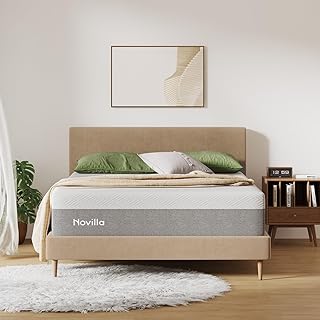
Novilla Bliss 12-Inch Gel Memory Foam
The medium-plush feel here is genuinely plush rather than nominally so, which makes it a natural fit for lighter side sleepers and anyone whose shoulder protests on firmer surfaces. Its gel foam and supportive base handle spine alignment and motion isolation well, though heavier sleepers may want more pushback from the core.
Sweetnight CoolNest 14-Inch Cooling Memory Foam
The five-zone ergonomic layout is what earns this one a place on the list: softer where your shoulder lands, firmer through the lumbar stretch, which is precisely the profile side sleepers need. At 14 inches with enhanced breathability built into the construction, it’s also one of the better all-foam answers to the classic memory-foam heat complaint.
Sleepmax 14-Inch Hybrid
Explicitly engineered for back and side sleepers, this hybrid balances a cushioning top with coil support underneath, so hips settle in without the waist losing contact. The 365-night trial removes most of the risk from buying a mattress you can’t test in person, and it’s certified fiberglass-free.
12-Inch Cooling Hybrid Queen in a Box
Gel memory foam over pocketed coils is a reliable formula, and the medium-firm calibration suits side sleepers on the heavier end of the scale or combination sleepers who roll onto their back overnight. Pocket coils also mean genuinely quiet, isolated movement for couples.
Medium Firm 14-Inch Hybrid with Zoned Lumbar Support
This is the most side-sleeper-specific pick of the group, pairing zoned lumbar reinforcement with a taller 14-inch profile for a supportive-but-forgiving surface. The combination of a year-long trial and a ten-year warranty signals real confidence in the build.
Frequently Asked Questions
What firmness should a side sleeper choose?
Aim for medium to medium-firm as your default, adjusting for body weight. The test is simple: lie on your side and have someone look at your spine from behind. It should form a straight, level line from neck to tailbone with no visible dip at the waist or hump at the hips.
Is memory foam or hybrid better for side sleeping?
Both work. Memory foam contours more precisely around the shoulder, which many side sleepers prefer, while hybrids offer stronger edge support, easier repositioning and better passive airflow. If you sleep hot or share the bed, a hybrid is usually the safer bet.
Why do my hips and shoulders still hurt on a new mattress?
Give it three to four weeks — your body adapts to a surface, and early discomfort during that window is normal. If pain persists beyond a month, the mattress is likely too firm for your weight, or your pillow height is wrong and forcing your neck out of line with your spine.
Does mattress thickness matter for side sleepers?
Indirectly, yes. Extra height usually buys a thicker comfort layer, which is what allows your shoulder and hip to sink without hitting the firm base beneath. That’s why 12- to 14-inch profiles tend to serve side sleepers better than budget 8- or 10-inch builds.
Final Thoughts
If you want zoned support engineered around exactly the pressure points that trouble side sleepers, the Medium Firm 14-Inch Hybrid with Zoned Lumbar Support and the Sweetnight CoolNest are the two most purpose-built options here. Lighter sleepers who want a softer, deeper cradle should look first at the Novilla Bliss — and whichever you choose, use the full trial period before you decide.