Most mattress marketing is calibrated to a sleeper somewhere around 150 to 180 pounds — and almost nothing on a spec sheet tells you what happens when that number climbs. Support cores compress at a different rate under greater load, comfort layers bottom out sooner, and the perimeter gives way when you sit down to put on your shoes. The failure usually isn’t dramatic. It shows up quietly in month fourteen as a shallow trench under the hips, which tilts the pelvis out of neutral and hands you the low-back ache you bought the bed to solve.
This guide approaches the problem the way I’d assess it in a sleep consultation: foam density rather than foam thickness, coil gauge and zoning rather than coil count alone, total profile, edge reinforcement, heat dissipation, and the fine print on what depth of sagging a warranty actually recognizes. Below you’ll find the models that hold up best for bigger bodies in 2026, plus a buying framework you can apply to any mattress you’re weighing.
Our top picks


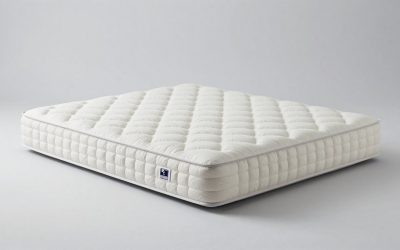
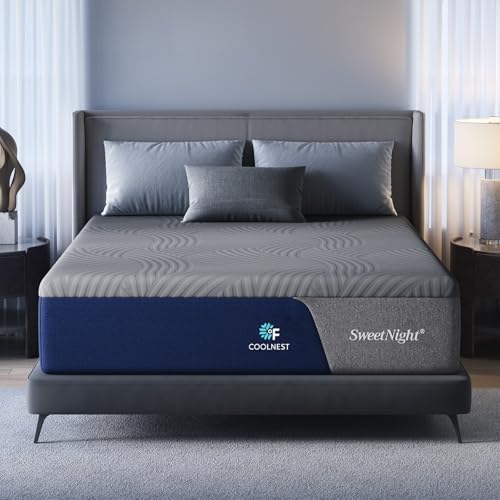 Sweetnight CoolNest 14 Inch King Size Mattress
- CoolNest System for a Cooler Night - The…
- 5-Zone Support for Pressure Relief - Engineered with…
- Motion Isolation for Undisturbed Sleep - Constructed with…
As an Amazon Associate we earn from qualifying purchases at no extra cost to you.
🛒 Best Price Today on Amazon
Prime members get fast, free shipping on everything above, plus member-only deals. New members get a 30-day free trial — cancel anytime.
How to Choose a Mattress For Large People (2026)
- Density beats depth: A 14-inch bed built from cheap 1.5 lb/ft³ polyfoam will cradle worse at year two than a 12-inch bed with a 1.8+ lb/ft³ base and 4 lb/ft³ memory foam. Ask for density in pounds per cubic foot, not just layer height.
- Look at coil gauge and zoning: In hybrids, lower gauge numbers mean thicker, stiffer wire. Pocketed coils in the 13–14.5 gauge range with a firmer lumbar zone keep the heaviest part of the torso from sinking past the shoulders and hips.
- Set a 12-inch floor, prefer 14: Extra profile buys you a thicker transition layer, which is the buffer that stops you from feeling the support core. It also makes getting in and out of bed easier on the knees. Budget for deep-pocket sheets.
- Prioritize the cooling architecture: Greater body mass means more metabolic heat and more contact area with the surface. Open-cell foams, graphene or copper infusions, and breathable pillow-top constructions all move heat outward instead of trapping it.
- Read the sag clause before the trial length: A warranty that only covers a 1.5-inch impression is far weaker than one covering 0.75 inch. Check per-side weight limits and the required foundation, since an unsupported frame is the most common reason a claim gets denied.
The Best Mattresses For Large People (2026) Reviewed
EGOHOME 14″ Copper Gel Memory Foam
The standout all-foam option here, pairing a genuinely supportive medium-firm core with copper-gel infusion and a graphene-treated cover that keeps surface temperature in check — an unusual combination in memory foam, which typically insulates. Its chiropractic endorsement and fiberglass-free, CertiPUR-US construction make it an easy recommendation for couples who want motion isolation without sacrificing spinal alignment.
BedStory 14″ Zoned Hybrid
Explicitly engineered around heavier sleepers, with independently pocketed springs and a reinforced lumbar zone that resists the mid-bed dip that plagues budget hybrids. If your primary complaint is waking with a stiff lower back, the zoned coil layout is the most direct structural fix on this list.
Sweetnight CoolNest 14″ Hybrid
A four-stage breathability system and a quilted pillow top give this hybrid the most effective thermal management of the group, which matters disproportionately if you run hot. The seven-zone coil unit stays responsive under load, so the plush surface never reads as sinking.
12″ Full XL Cooling Gel Hybrid
The right answer for tall solo sleepers who need king-length legroom without a king-sized footprint — the 80-inch length prevents heels from hanging off the edge in a smaller bedroom. Its medium-firm gel-foam-over-coil build suits single occupancy better than a shared bed.
Sweetnight CoolNest 14″ Memory Foam
A five-zone all-foam alternative for anyone who prefers contouring pressure relief to the lift of springs, with enough zoning to prevent the hips from outpacing the shoulders. Its medium feel will read firmer to lighter partners, so it’s best matched to sleepers of broadly similar builds.
Frequently Asked Questions
What firmness should heavier sleepers choose?
Perceived firmness drops as body weight rises. A mattress rated medium-firm for an average sleeper often feels closer to medium at 250 pounds and closer to soft at 350, so aim for medium-firm at minimum and consider a genuinely firm build if you sleep on your back or stomach.
How long should a mattress last for a larger person?
Plan on roughly six to eight years rather than the commonly cited eight to ten. Rotating head-to-foot every three months distributes compression across the surface and meaningfully extends usable life.
Does the foundation really matter?
Enormously. Slats should sit no more than three inches apart, and any queen or king needs center support running to the floor. An inadequate base is the single fastest way to create sagging and void a warranty simultaneously.
Memory foam or hybrid?
Hybrids generally push back more consistently under sustained load and breathe better, making them the safer default. High-density memory foam works well if the total profile reaches 14 inches and the cover is engineered for airflow.
Final Thoughts
For most larger sleepers, the BedStory zoned hybrid delivers the most durable lumbar support per dollar, while the Sweetnight CoolNest hybrid is the better call if overheating is your limiting factor. Those who prefer the contoured feel of foam should choose the EGOHOME 14-inch, which manages heat far more capably than its category usually allows.