Key takeaways
- Frame and weight rating: Reinforced steel beats hardwood-and-staple construction under daily cycling. A stated capacity of 400–500 lbs signals overbuilt joints and mechanisms, which is what you want even if you weigh half that — headroom in the rating translates directly into years of service.
- Motor count: Single-motor chairs move the back and footrest together on one fixed arc. Dual- and tri-motor designs decouple them, letting you drop the back toward flat while keeping your legs where your circulation prefers them. For sleeping or extended rest, independent control is the single most useful upgrade.
- Upholstery honesty: Genuine leather breathes, so you wake without the clammy film that faux leather leaves behind. Faux leather is easier to wipe clean and far cheaper — a reasonable trade if the chair is for occasional use rather than nightly sleep.
- Head and neck support: A power headrest is not a luxury feature. Without independent neck articulation, a reclined spine forces the head forward, which strains the cervical curve and tends to worsen snoring by narrowing the airway.
- Footprint and wall clearance: Wall-hugger mechanisms recline within a few inches of the wall; lift chairs need front clearance to tilt forward. Measure both directions, and measure your own seated hip width — oversized models start around 21–23 inches of seat, which is a real comfort difference for larger bodies.
What's inside
Recliner shopping goes wrong in a predictable way: the chair feels wonderful during a three-minute showroom sit, then reveals its flaws around week six, when the foam has flattened and your neck has nowhere to land. From a sleep-wellness perspective, that matters more than most buyers realize. A recliner is often where the first sleep pressure of the evening gets discharged — the drowsy hour before bed, the post-surgery weeks when a bed is unreachable, the afternoon nap that either restores you or leaves you stiff and groggy. A chair that can’t hold your spine neutral will interrupt that process no matter how plush it looks.
So the honest answer to “who makes the best quality recliner chairs” is: the brands that engineer for load, longevity, and true horizontal support rather than for the first sit. This guide looks at six chairs from that group — MCombo, Watson & Whitely, DYNOX, and a couple of strong value entries — with attention to frame construction, upholstery that survives years of body heat and friction, lift mechanisms that actually help people with mobility limits, and lay-flat geometry that supports genuine rest. Below, the picks, followed by the specifications worth checking before you buy.
As an Amazon Associate we earn from qualifying purchases.


🛒 Best Price Today on Amazon
Prime members get fast, free shipping on everything above, plus member-only deals. New members get a 30-day free trial — cancel anytime.
How to Choose a/an Who Makes The Best Quality Recliner Chairs (2026)
- Frame and weight rating: Reinforced steel beats hardwood-and-staple construction under daily cycling. A stated capacity of 400–500 lbs signals overbuilt joints and mechanisms, which is what you want even if you weigh half that — headroom in the rating translates directly into years of service.
- Motor count: Single-motor chairs move the back and footrest together on one fixed arc. Dual- and tri-motor designs decouple them, letting you drop the back toward flat while keeping your legs where your circulation prefers them. For sleeping or extended rest, independent control is the single most useful upgrade.
- Upholstery honesty: Genuine leather breathes, so you wake without the clammy film that faux leather leaves behind. Faux leather is easier to wipe clean and far cheaper — a reasonable trade if the chair is for occasional use rather than nightly sleep.
- Head and neck support: A power headrest is not a luxury feature. Without independent neck articulation, a reclined spine forces the head forward, which strains the cervical curve and tends to worsen snoring by narrowing the airway.
- Footprint and wall clearance: Wall-hugger mechanisms recline within a few inches of the wall; lift chairs need front clearance to tilt forward. Measure both directions, and measure your own seated hip width — oversized models start around 21–23 inches of seat, which is a real comfort difference for larger bodies.
The Best Who Makes The Best Quality Recliner Chairs (2026)s Reviewed
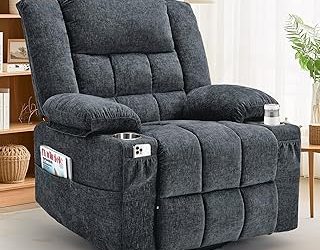
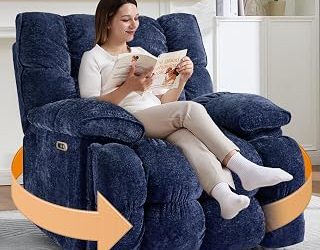
MCombo Large Power Lift Recliner with Massage and Heat
Built with tall users specifically in mind, this one gets the seat height and back length right, so knees clear the front edge and shoulders stay supported instead of hovering. The heat and massage functions are genuinely useful for pre-sleep muscle release, and the three-position lift makes standing up a controlled motion rather than a lurch.
Watson & Whitely Oversized Leather Power Recliner (Navy Blue)
A wall-hugger design in real leather is an unusual combination, and it solves the classic apartment problem of a recliner that can’t recline. The power headrest is the standout: it lets you set neck angle independently, which is the difference between dozing comfortably and waking up with a crick.
DYNOX 500LBS Heavy Duty Big and Tall Power Lift Recliner
The reinforced steel frame and 500-lb rating put this in a different structural class, and the tri-motor system means back, footrest, and lift all operate independently. The extended footrest deserves particular mention — taller users finally get ankle support instead of dangling heels, which is what makes lay-flat rest actually restful.
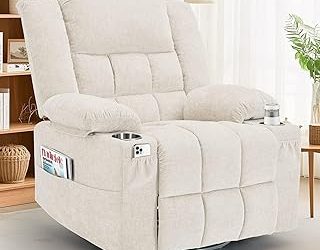
Watson & Whitely Lay Flat Leather Power Recliner (Cream)
This is the pick for people who intend to sleep in the chair rather than just rest in it, since true lay-flat geometry keeps the spine aligned instead of folded. Cream leather demands a bit more upkeep, but it keeps a large chair from visually dominating a room the way dark upholstery does.
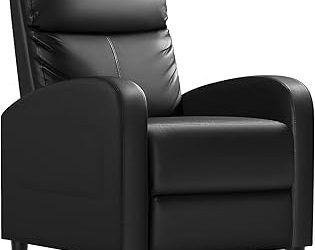
Classic Manual Leather Recliner (Nut Brown)
No motors, no cords, no eventual mechanical failure — a well-made manual recliner with generous arm and lumbar padding remains the most durable design available. Ideal for a reading corner or guest room where the lever pull is no obstacle.
Frequently Asked Questions
Is sleeping in a recliner bad for you?
Not inherently, and for people with acid reflux, sleep apnea, or post-surgical restrictions, an inclined position can be measurably better than lying flat. The risk is prolonged immobility in a seated posture, so choose a chair that reclines near horizontal and shift positions rather than settling in at a rigid 45 degrees all night.
How long should a quality recliner last?
Expect eight to fifteen years from a steel-framed chair with real leather, and three to six from budget faux-leather models. Power mechanisms typically outlast the upholstery, and replacement motors are usually available for a reasonable fee.
What’s the difference between a lift chair and a regular power recliner?
A lift chair tilts the whole seat forward to bring you to a near-standing position, which is a mobility aid rather than a comfort feature. If getting out of a low chair is currently difficult, that function is worth prioritizing over massage or heat.
Do heat and massage features actually help sleep?
Modestly, and indirectly. Warmth and vibration encourage muscle relaxation and support the drop in core temperature that precedes sleep onset — helpful for winding down, but no substitute for a supportive frame and consistent bedtime timing.
Final Thoughts
For most buyers, the DYNOX 500LBS Heavy Duty Power Lift Recliner is the strongest overall choice: steel-framed, tri-motor, and built to a weight rating that predicts a long service life. If a wall-hugging footprint or a genuine lay-flat sleep position matters more, either Watson & Whitely Oversized Leather Power Recliner delivers real leather and independent headrest control in a more room-friendly package, while the MCombo Power Lift Recliner remains the practical pick for taller users who want lift assistance without a premium price.