Key takeaways
- Dual motor over single motor: A single-motor chair links the backrest and footrest to one movement, forcing your spine into whatever angle the mechanism dictates. Dual motors let you drop the legs while keeping the back upright — the position most people with disc irritation actually need.
- Lumbar contact, not lumbar decoration: Press your hand into the lower backrest before you commit. You want firm resistance that meets the inward curve of your spine, not a decorative pillow that compresses to nothing after a month.
- Seat depth matched to your femur: Too deep and the front edge cuts behind your knees, tilting your pelvis backward and flattening the lumbar curve. Aim for two to three fingers of clearance between the seat edge and the back of your knee.
- Lay-flat or zero-gravity capability: A recline angle past roughly 160 degrees meaningfully offloads spinal compression. Zero-gravity positioning, which elevates the knees above the heart, is particularly useful for sciatic symptoms and evening swelling.
- Lift function if standing is the hard part: The transition from seated to standing is where most acute flare-ups happen. A power lift base does the eccentric work for you, sparing the erector spinae a loaded hinge movement dozens of times a day.
What's inside
Chronic back pain rarely announces itself in the chair — it shows up at 2 a.m., when you’ve shifted position for the ninth time and your lumbar spine still hasn’t found neutral. As someone who spends their days coaching people through sleep architecture and recovery posture, I can tell you that the piece of furniture doing the most damage in most homes isn’t the mattress. It’s the sagging armchair where people spend three or four hours every evening, quietly loading their discs and shortening their hip flexors before they ever get horizontal.
A well-engineered recliner does something a sofa cannot: it distributes body weight across a continuous surface while keeping the lumbar curve supported through the full range of motion. This guide walks through the recliners I’d actually recommend for a compromised back in 2026 — what to look for in motor configuration, seat depth, and recline geometry, plus honest notes on who each chair suits and who should keep scrolling.
As an Amazon Associate we earn from qualifying purchases.




🛒 Best Price Today on Amazon
Prime members get fast, free shipping on everything above, plus member-only deals. New members get a 30-day free trial — cancel anytime.
How to Choose a Recliner Chairs For Bad Backs (2026)
- Dual motor over single motor: A single-motor chair links the backrest and footrest to one movement, forcing your spine into whatever angle the mechanism dictates. Dual motors let you drop the legs while keeping the back upright — the position most people with disc irritation actually need.
- Lumbar contact, not lumbar decoration: Press your hand into the lower backrest before you commit. You want firm resistance that meets the inward curve of your spine, not a decorative pillow that compresses to nothing after a month.
- Seat depth matched to your femur: Too deep and the front edge cuts behind your knees, tilting your pelvis backward and flattening the lumbar curve. Aim for two to three fingers of clearance between the seat edge and the back of your knee.
- Lay-flat or zero-gravity capability: A recline angle past roughly 160 degrees meaningfully offloads spinal compression. Zero-gravity positioning, which elevates the knees above the heart, is particularly useful for sciatic symptoms and evening swelling.
- Lift function if standing is the hard part: The transition from seated to standing is where most acute flare-ups happen. A power lift base does the eccentric work for you, sparing the erector spinae a loaded hinge movement dozens of times a day.
The Best Recliner Chairs For Bad Backs (2026)s Reviewed
MCombo Power Lift Recliner 7040 (Medium)
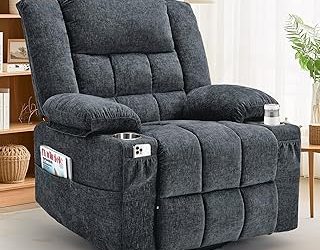
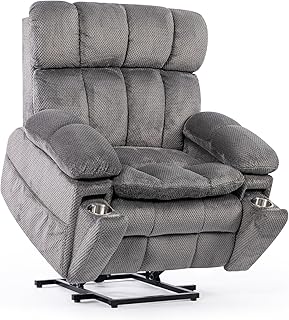
This is the chair I point most people toward first: FSC-certified frame, genuinely useful heat and massage zones through the lumbar region, and a medium footprint that suits average-height users without swallowing them. The USB and Type-C ports mean you’re not leaning and twisting to reach a wall outlet — a small detail that matters more than it sounds when rotation is your trigger movement.
Large Power Lift Recliner for Big and Tall
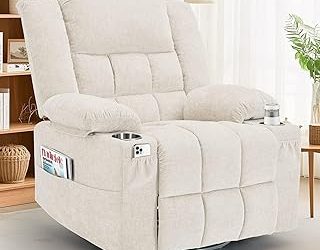
Overstuffed padding and a wider seat pan make this the sensible pick for heavier or broader users, who typically get the worst support from standard-width chairs. The heat function penetrates well through the thicker cushioning, which is not always true of oversized models.
Dual Motor 26″ Extra Wide Lift Chair with Zero Gravity
The strongest engineering on this list for anyone with disc or nerve involvement — independent back and leg control, an adjustable headrest for cervical alignment, and a true zero-gravity preset that reliably reduces lumbar load. The flip-arm storage is a genuine convenience rather than a gimmick.
FUNECORP Big Man Lay Flat Lift Recliner
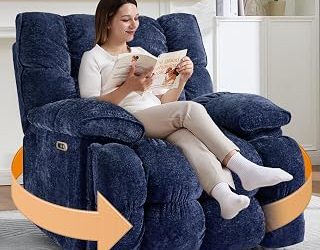
At 28 inches across with dual motors and a full lay-flat range, this is the most accommodating chair here for larger frames who want a legitimate napping surface. Vibration massage is broad rather than targeted, so treat it as general relaxation rather than therapeutic input.
Korser Swivel Rocker Recliner with Massage and Heat
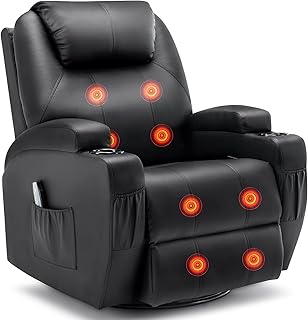
A manual, budget-conscious option that still delivers heat and massage — worthwhile for smaller rooms or as a secondary chair. Note that manual recline requires you to push back against the frame, so skip it if bracing movements aggravate your symptoms.
Frequently Asked Questions
Is sleeping in a recliner bad for my back?
Occasional recliner sleep is fine and can even be preferable during an acute flare, since a slight incline reduces disc pressure. Long-term, though, it tends to encourage shallower breathing and less positional variation, so treat it as a bridge rather than a permanent bed replacement.
Does the massage function actually help?
Vibration massage increases local blood flow and provides a mild distraction from pain signaling — real but modest benefits. It won’t resolve a structural problem, so judge these chairs primarily on support geometry and consider massage a pleasant secondary feature.
How firm should the cushioning be?
Firmer than feels luxurious in the showroom. Soft foam collapses under sustained load, letting your pelvis rotate backward; medium-firm density holds its shape across a two-hour sitting session, which is what your spine actually needs.
Should I get heat, and when should I use it?
Heat is most valuable before movement and in the evening to reduce muscular guarding. Fifteen to twenty minutes is plenty — leaving it on for hours can dull your awareness of positional discomfort, which is useful feedback you don’t want to lose.
Final Thoughts
For most people with a genuinely painful back, the Dual Motor 26″ Extra Wide lift chair is the one worth stretching your budget for — independent back and leg adjustment plus true zero-gravity positioning is the combination that changes how your evenings feel. The MCombo 7040 remains the best-balanced choice for average-sized users who want reliable support without oversized bulk, while broader or taller users will be far better served by the FUNECORP Big Man lay-flat model than by forcing a standard-width frame to do a job it wasn’t built for.