Key takeaways
- Seat depth over seat count: A chaise you can actually stretch out on needs 38 inches or more of usable depth. Anything under 34 inches becomes a perch, and perching is the enemy of a good nap — your body never fully unloads, so your nervous system never downshifts.
- Foam density and recovery rate: High-resilience or memory foam rated above 1.8 lb/ft³ will still hold its shape after two years of nightly use. Cheap polyurethane compresses into a permanent trough, and once your pelvis sits lower than your knees, lower-back complaints follow within weeks.
- Head and neck geometry: Adjustable headrests are the single most underrated feature in this category. Reclining with your neck kinked forward compresses the airway and worsens snoring; a headrest that tilts to meet your skull keeps the cervical spine neutral.
- Convertible mechanics you’ll actually use: Pull-out beds, storage chaises, and movable ottomans only earn their keep if the transition takes under thirty seconds. Test the described mechanism mentally — if it requires clearing cushions and lifting a frame, it will stay folded.
- Fabric and thermal behavior: Core body temperature must fall for sleep to begin. Velvet and dense chenille trap heat beautifully in winter and miserably in July; linen and corduroy breathe better. Choose for your climate, not your mood board.
What's inside
Ask most people where they sleep, and they’ll name a bedroom. Ask them where they actually fall asleep, and the answer is often a sofa — mid-episode, laptop still warm, one leg draped over a chaise. As someone who spends their working hours studying rest architecture, I’ve come to accept this: the living room is a secondary sleep environment whether we design it that way or not. The trouble is that most sectionals are engineered for sitting upright, not for the semi-reclined, 40-minute drift that defines modern evening downtime. Too-shallow seats force your spine into a C-curve. Springs that sag by month eight create pressure points at the hip and shoulder. And a chaise that’s two inches too short turns your calves into a hinge.
This guide looks at 2026’s best-selling chaise sectionals through a rest-quality lens: seat depth, foam recovery, headrest support, and whether the piece can honestly serve as an overnight surface when a guest stays late. I’ve grouped picks by household type — sprawling family rooms, modular renters, small-footprint apartments — and flagged where a listing’s comfort claims outrun its construction. Cards below link to current Amazon listings.
As an Amazon Associate we earn from qualifying purchases.


🛒 Best Price Today on Amazon
Prime members get fast, free shipping on everything above, plus member-only deals. New members get a 30-day free trial — cancel anytime.
How to Choose a/an Amazon Best Selling Sofa Chaise Sectional (2026)
- Seat depth over seat count: A chaise you can actually stretch out on needs 38 inches or more of usable depth. Anything under 34 inches becomes a perch, and perching is the enemy of a good nap — your body never fully unloads, so your nervous system never downshifts.
- Foam density and recovery rate: High-resilience or memory foam rated above 1.8 lb/ft³ will still hold its shape after two years of nightly use. Cheap polyurethane compresses into a permanent trough, and once your pelvis sits lower than your knees, lower-back complaints follow within weeks.
- Head and neck geometry: Adjustable headrests are the single most underrated feature in this category. Reclining with your neck kinked forward compresses the airway and worsens snoring; a headrest that tilts to meet your skull keeps the cervical spine neutral.
- Convertible mechanics you’ll actually use: Pull-out beds, storage chaises, and movable ottomans only earn their keep if the transition takes under thirty seconds. Test the described mechanism mentally — if it requires clearing cushions and lifting a frame, it will stay folded.
- Fabric and thermal behavior: Core body temperature must fall for sleep to begin. Velvet and dense chenille trap heat beautifully in winter and miserably in July; linen and corduroy breathe better. Choose for your climate, not your mood board.
The Best Amazon Best Selling Sofa Chaise Sectional (2026)s Reviewed
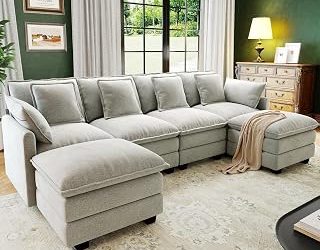
125″ U-Shaped 7-Seat Sectional with Adjustable Headrest and Storage Chaise
This is the most sleep-literate piece in the roundup: adjustable headrests solve the cervical-alignment problem that ruins most sofa naps, and the pull-out bed plus storage chaise means bedding lives where it’s used rather than in a hall closet. At 125 inches you need a genuinely large room, but for households that host overnight guests regularly, it’s the strongest value here.
ovios Modular Cloud Couch in Plush Corduroy
The fluffy memory-foam fill delivers the deep, enveloping sink that makes people fall asleep on sofas in the first place, and corduroy breathes far better than the velvets dominating this category. Just know that very soft foam offers less lumbar structure — excellent for a 30-minute reset, less ideal as a nightly bed substitute.
L-Shape Modular Sectional in Navy Chenille
Three single chairs plus a corner unit means you can reconfigure the chaise to whichever wall your room actually allows, which matters enormously for renters. Chenille is durable and forgiving, though its dense weave runs warm, so pair it with a lighter throw rather than a heavy blanket.
Velvet 7-Seat Curved Floor Sectional with Ottoman
The curved floor-level design encourages a naturally reclined posture with the legs supported — genuinely good for circulation during long evenings. The velvet is the tradeoff: gorgeous, and noticeably hot in summer months.
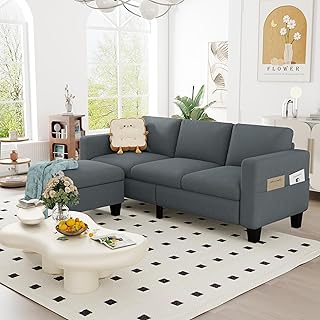
ZeeFu Convertible 3-Seat L-Shaped Sectional with Movable Ottoman
For small apartments and home offices, this is the practical answer — the movable ottoman lets you switch between an L-shaped lounge and a compact sofa in seconds, which is exactly the low-friction convertibility that gets used daily. Expect a firmer seat than the cloud-style options, which many people with back sensitivity actually prefer.
Frequently Asked Questions
Is sleeping on a sectional bad for you?
Occasionally, no. Habitually, it depends entirely on the surface. A supportive chaise with neutral spine alignment is fine; a sagging cushion that bends your torso for eight hours a night will produce stiffness and disrupted sleep cycles. Treat regular sofa sleeping as a signal to check your foam, not just your habits.
How deep should a chaise be for napping?
Aim for at least 38 inches of usable seat depth, and ideally 60 inches of total chaise length so an average adult can extend without dangling calves. Measure your own body from tailbone to heel before trusting a listing photo.
Do pull-out sectional beds sleep as well as a real mattress?
Not quite, but the gap has narrowed. The limiting factor is usually mattress thickness rather than the frame. If you host guests more than a few nights a year, a two-inch foam topper stored in the chaise compartment closes most of the difference for very little money.
Which fabric is best if I run hot at night?
Linen first, then corduroy. Both allow airflow that helps your body shed heat during the pre-sleep temperature drop. Velvet and dense chenille look richer but insulate, which works against you in warm months.
Final Thoughts
If you have the floor space and host guests, the 125″ U-Shaped Sectional with adjustable headrests and a storage chaise is the most rest-focused option available this year. For pure comfort in a reconfigurable format, the ovios Cloud Couch in corduroy is hard to beat, and small-space buyers should go straight to the ZeeFu Convertible L-Shaped Sectional — firmer, smarter, and genuinely easy to reconfigure night after night.