Key takeaways
- Back height above 42 inches: Measure from your seated hip to the top of your skull, then add two inches. Anything shorter pushes your head forward into a flexed neck position that tightens the upper trapezius and undermines any chance of restorative dozing.
- Seat depth of 21 inches or more: You want roughly two fingers of clearance between the seat edge and the back of your knee. Too shallow and your thighs carry your weight unsupported; too deep and the lumbar pad lands below your actual curve.
- Extended footrest, not standard: This is the single most overlooked dimension for tall buyers. A footrest that stops at your ankles leaves your feet hanging, which pools blood in the lower legs and produces that heavy, twitchy feeling that fragments light sleep.
- Weight capacity with headroom: Choose a frame rated at least 75 pounds above your body weight. Higher-rated frames use thicker steel and denser foam, and they resist the sag that quietly ruins spinal alignment after a year of nightly use.
- Lay-flat or infinite position if you actually sleep in it: A three-position chair reclines; an infinite-position dual-motor chair lets you set the back and legs independently, which matters enormously for reflux, sleep apnea, or edema. If the chair is a genuine sleep surface, this feature earns its cost.
What's inside
If you’re over six feet tall, you’ve likely had the same experience in a furniture showroom more than once: the chair looks generous, the seat feels fine, and then you lean back and your calves dangle off the end of the footrest while your neck folds forward against a headrest built for someone eight inches shorter. From a sleep-wellness standpoint, that’s not just a comfort complaint — it’s a postural problem. A recliner that leaves your lumbar curve unsupported and your legs unsupported below the knee interrupts the circulatory and muscular relaxation that precedes real rest, which is exactly why so many tall men doze off in a chair and wake up stiff, restless, and no less tired than before.
This guide approaches tall-friendly recliners the way I’d approach a mattress consultation: by looking at seat depth, back height, footrest extension, and weight capacity as a single system rather than a list of specs. Below you’ll find the models worth considering in 2026 for frames in the 6’0″ to 6’6″ range, along with a practical framework for measuring yourself before you buy, plus honest notes on where power lift mechanisms genuinely help and where they’re an expensive extra.
As an Amazon Associate we earn from qualifying purchases.


🛒 Best Price Today on Amazon
Prime members get fast, free shipping on everything above, plus member-only deals. New members get a 30-day free trial — cancel anytime.
How to Choose a Recliner For Tall Men (2026)
- Back height above 42 inches: Measure from your seated hip to the top of your skull, then add two inches. Anything shorter pushes your head forward into a flexed neck position that tightens the upper trapezius and undermines any chance of restorative dozing.
- Seat depth of 21 inches or more: You want roughly two fingers of clearance between the seat edge and the back of your knee. Too shallow and your thighs carry your weight unsupported; too deep and the lumbar pad lands below your actual curve.
- Extended footrest, not standard: This is the single most overlooked dimension for tall buyers. A footrest that stops at your ankles leaves your feet hanging, which pools blood in the lower legs and produces that heavy, twitchy feeling that fragments light sleep.
- Weight capacity with headroom: Choose a frame rated at least 75 pounds above your body weight. Higher-rated frames use thicker steel and denser foam, and they resist the sag that quietly ruins spinal alignment after a year of nightly use.
- Lay-flat or infinite position if you actually sleep in it: A three-position chair reclines; an infinite-position dual-motor chair lets you set the back and legs independently, which matters enormously for reflux, sleep apnea, or edema. If the chair is a genuine sleep surface, this feature earns its cost.
The Best Recliners For Tall Men (2026) Reviewed
JIKFRIMA Big Man Power Lift Recliner (500 lbs)
The strongest all-around choice for tall, heavier users who want a chair they can genuinely sleep in — the extended footrest and lay-flat range mean your heels stay supported rather than dangling. Heat, massage, USB-C charging, and flip-arm storage make it practical as a bedside command center for anyone recovering from surgery or managing mobility limitations.
DYNOX Dual Motor Lift Recliner (9198L)
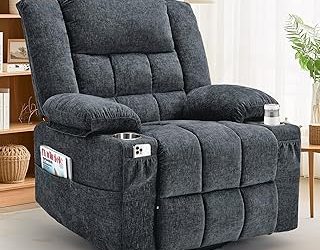
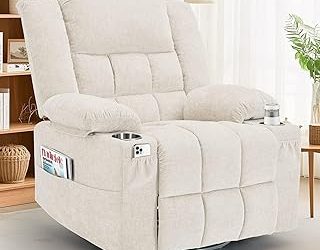
Dual motors let you fine-tune back angle and leg elevation separately, which is the feature I recommend most often to clients dealing with nighttime reflux or lower-limb swelling. The chenille upholstery breathes considerably better than faux leather, a real advantage if you run warm and sleep in the chair for extended stretches.
MCombo Large Power Lift Recliner 7516
A well-proven tall-specific frame with a taller back and higher seat-to-floor height that makes standing up far easier on the knees. The three-position mechanism won’t lie fully flat, so treat this as an excellent evening relaxation chair rather than a nightly replacement for a bed.
Euthymia Oversized Recliner (Velvet, 400 lbs)
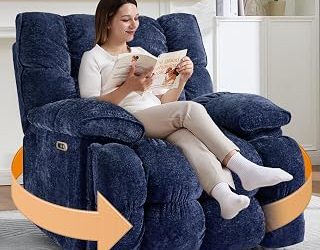
An exceptionally wide manual recliner with generous seat depth and deep cushioning — ideal for broad-shouldered tall men who find power chairs too narrow through the hips. No motor means no hum, no cord, and nothing to fail electrically.
Euthymia Oversized Chenille Recliner (400 lbs)
The same roomy footprint in a more temperature-neutral chenille, which I’d pick over velvet for anyone who overheats easily. Assembly is straightforward and the reclining action feels smooth for a manual mechanism at this size.
Frequently Asked Questions
How tall does a recliner back need to be for a 6’4″ man?
Look for roughly 44 to 47 inches of overall back height. Below that, your head clears the top of the headrest and your neck loses support at exactly the moment your muscles are trying to release.
Is sleeping in a recliner every night bad for you?
Not inherently — for reflux, sleep apnea, COPD, and post-surgical recovery, an elevated position can meaningfully improve sleep quality. The risk is prolonged immobility, so choose a chair that supports your full leg length and change position regularly.
Do I need a lift recliner if I’m not elderly?
Only if standing up is genuinely difficult, or if you’re recovering from hip, knee, or back surgery. Otherwise, spend that budget on a taller back, deeper seat, and better weight rating instead.
What weight capacity should I choose?
Add at least 75 pounds to your current body weight. Overbuilt frames sag far less over time, which preserves the spinal alignment you paid for in the first place.
Final Thoughts
For tall men who want one chair that handles both evening relaxation and full nights of sleep, the JIKFRIMA 500 lb power lift recliner is the most complete option here, with the DYNOX 9198L close behind for its independently adjustable back and legs and its cooler chenille surface. If you’d rather skip motors altogether and prioritize sheer width and cushion depth, the Euthymia Oversized Recliner remains the smartest value in the category.