Key takeaways
- Rated capacity with headroom: Treat the stated limit as a ceiling, not a target. If you weigh 320 pounds, a 400 lb rating gives the frame and mechanism margin to absorb the dynamic load of dropping into the seat — which is several times your static weight.
- Seat width and depth, measured: Aim for at least four inches of clearance on either side of your hips, and a seat deep enough that two fingers fit between the cushion edge and the back of your knee. Too deep and the front rail compresses your calves, restricting circulation during long sits.
- Back height above shoulder level: Your head needs support, not your neck alone. If the backrest ends mid-shoulder, your cervical spine cantilevers forward and you’ll wake with tension headaches. Extended or “tall man” backs solve this.
- Recline angle for genuine rest: Anything past roughly 130° starts to unload the lumbar discs meaningfully. A zero-gravity or near-flat position — knees above heart level — is the setting that helps with swelling, reflux, and sleep-onset latency.
- Mechanism and stability: Power motors with anti-tip geometry outperform manual levers for heavier users, since you’re not torquing the frame to engage the footrest. Lift mechanisms add value if standing from a low seat is difficult.
What's inside
Most recliners are engineered around a fictional average: a 5’9″, 180-pound body that sits politely in the center of the seat and never falls asleep there. If you’re 6’3″ and 300 pounds, that design gap shows up fast — the seat back tops out below your shoulder blades, the footrest ends at your ankles, and the frame begins to creak within a season. The bigger problem is what happens overnight. A recliner that fits poorly forces your neck into flexion and your lower back into a slump, which is exactly the posture that fragments sleep and leaves you stiff by morning.
I evaluate seating the way I evaluate mattresses: does it hold the spine in a neutral line, distribute pressure without hot spots, and stay quiet enough not to wake you? This guide applies that lens to heavy-duty recliners built for larger frames. Below you’ll find the models worth your money, followed by the specifications that actually predict long-term comfort — weight capacity, seat geometry, recline angle, and mechanism type — plus answers to the questions I hear most from taller and heavier clients.
As an Amazon Associate we earn from qualifying purchases.


🛒 Best Price Today on Amazon
Prime members get fast, free shipping on everything above, plus member-only deals. New members get a 30-day free trial — cancel anytime.
How to Choose a Recliner For Big Men (2026)
- Rated capacity with headroom: Treat the stated limit as a ceiling, not a target. If you weigh 320 pounds, a 400 lb rating gives the frame and mechanism margin to absorb the dynamic load of dropping into the seat — which is several times your static weight.
- Seat width and depth, measured: Aim for at least four inches of clearance on either side of your hips, and a seat deep enough that two fingers fit between the cushion edge and the back of your knee. Too deep and the front rail compresses your calves, restricting circulation during long sits.
- Back height above shoulder level: Your head needs support, not your neck alone. If the backrest ends mid-shoulder, your cervical spine cantilevers forward and you’ll wake with tension headaches. Extended or “tall man” backs solve this.
- Recline angle for genuine rest: Anything past roughly 130° starts to unload the lumbar discs meaningfully. A zero-gravity or near-flat position — knees above heart level — is the setting that helps with swelling, reflux, and sleep-onset latency.
- Mechanism and stability: Power motors with anti-tip geometry outperform manual levers for heavier users, since you’re not torquing the frame to engage the footrest. Lift mechanisms add value if standing from a low seat is difficult.
The Best Recliner For Big Men (2026)s Reviewed
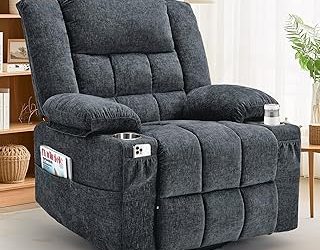
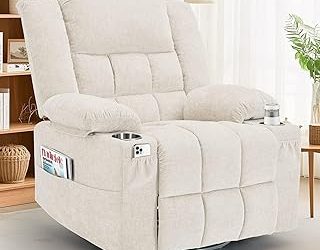
Manual Adjustable Oversized Recliner with Phone Holder
A sensible entry point: 400 lb capacity, an unusually generous seat, and a manual mechanism with fewer failure points than powered alternatives. The integrated phone holder sounds gimmicky until you realize it keeps you from twisting sideways to reach a side table — a small posture win that adds up over an evening.
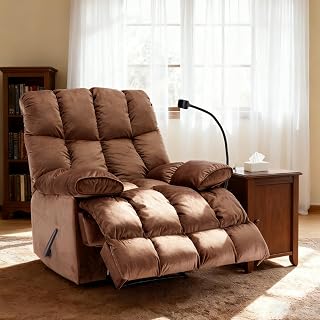
Euthymia Oversized Chenille Recliner (Dark Brown)
Chenille breathes better than most budget upholstery, which matters if you tend to run warm or nod off in the chair. The 400 lb heavy-duty frame and extra-wide seat give larger frames room to shift position without hitting an armrest, and shifting freely is one of the underrated predictors of comfortable rest.
MCombo 27″ Oversized Power Recliner PR677
My pick for restorative use. The 155° recline reaches a true zero-gravity position that elevates the legs above the heart, easing lower-limb swelling and reflux symptoms that often disrupt sleep. Anti-tip construction, USB charging, and a 27-inch seat round out a genuinely well-considered package.
JIKFRIMA Big Man Power Lift Recliner (500 lbs)
The heavy-duty specialist: a 500 lb rating, lay-flat travel, and an extended footrest that finally accommodates longer legs. Heat and massage are pleasant extras, but the lift function is the real feature — it removes the strain of standing from a deep seat, which is the main reason larger users abandon recliners.
Euthymia Oversized Velvet Recliner (Brown)
Same dependable 400 lb platform in a softer velvet finish suited to home theaters and bedrooms. Choose this over the chenille version for aesthetics and a plusher hand feel; choose chenille if heat retention is a concern.
Frequently Asked Questions
Is sleeping in a recliner bad for you?
Not inherently. For people with reflux, sleep apnea, congestive symptoms, or post-surgical restrictions, an inclined position is often better tolerated than lying flat. The caveat is fit — a chair that leaves your neck unsupported or your legs dangling causes more problems than it solves.
How much weight capacity do I actually need?
Add roughly 25 percent to your body weight as a minimum. Frames fail at the mechanism and the seat rail, and both experience impact loads well beyond your standing weight every time you sit down.
Power or manual for a heavier user?
Power, generally. Manual levers require you to brace and pull against the frame, which accelerates wear and can be genuinely awkward at higher body weights. Manual models remain a fine value pick if you have no mobility limitations.
What seat width counts as oversized?
Anything from about 23 inches up, with 26 to 28 inches being the sweet spot for broader frames. Measure your hips while seated, not standing — the difference is often three inches or more.
Final Thoughts
If your priority is genuine rest, the MCombo PR677 delivers the most therapeutically useful recline of the group, with a zero-gravity position that supports circulation and easier breathing. For the heaviest frames or anyone who struggles to stand unassisted, the JIKFRIMA 500 lb power lift recliner is the more capable machine. And if you want dependable oversized comfort without a motor, the Euthymia chenille recliner remains the smartest value on this list.