Key takeaways
- Seat depth over 38 inches: Anything shallower forces side-sleepers to curl their knees inward, which twists the pelvis and tightens the lower back overnight. Measure your shoulder-to-knee length and add four inches of clearance before you commit.
- Foam that pushes back: A cushion that swallows you feels luxurious for ten minutes and terrible by morning. Look for high-density or layered foam that returns to shape when you stand up, rather than single-block soft fill that develops a permanent hip trough.
- Removable, washable covers: We each lose a meaningful amount of moisture per night, and upholstery holds it. Zip-off covers you can launder every few weeks keep the surface hygienic and dramatically reduce dust-mite load for allergy-prone sleepers.
- Modularity that matches your room: U-shaped and L-shaped configurations create different sleeping bays. Reversible chaise placement matters if you want the long side away from a window, a radiator, or a hallway light that will interrupt melatonin production.
- Honest conversion mechanics: If a piece claims to sleep guests, check how it flattens. A futon that folds in seconds gets used; a modular set that needs rearranging every night quietly stops functioning as a bed by week two.
What's inside
Shopping for a sectional has quietly become a sleep decision. Deep-seat “cloud” couches are now marketed as places to nap, stream, and drift off — and plenty of people do exactly that, whether by choice or because the guest room is already occupied. The trouble is that most product pages talk about square footage and fabric swatches, not about whether the surface will support a spine for six hours or leave someone stiff-necked at 3 a.m. Buyers end up guessing, and the guess is expensive.
I evaluate sleep surfaces for a living, so this guide looks at the 2026 sectional field through that lens: seat depth versus shoulder width, foam resilience over a full night, washable covers for anyone who sweats in their sleep, and how quickly each piece converts from lounging to lying flat. Below you’ll find the models worth considering, a short checklist for narrowing the field, and answers to the questions I get asked most.
As an Amazon Associate we earn from qualifying purchases.


🛒 Best Price Today on Amazon
Prime members get fast, free shipping on everything above, plus member-only deals. New members get a 30-day free trial — cancel anytime.
How to Choose a/an Brand Sectional Sofa (2026)
- Seat depth over 38 inches: Anything shallower forces side-sleepers to curl their knees inward, which twists the pelvis and tightens the lower back overnight. Measure your shoulder-to-knee length and add four inches of clearance before you commit.
- Foam that pushes back: A cushion that swallows you feels luxurious for ten minutes and terrible by morning. Look for high-density or layered foam that returns to shape when you stand up, rather than single-block soft fill that develops a permanent hip trough.
- Removable, washable covers: We each lose a meaningful amount of moisture per night, and upholstery holds it. Zip-off covers you can launder every few weeks keep the surface hygienic and dramatically reduce dust-mite load for allergy-prone sleepers.
- Modularity that matches your room: U-shaped and L-shaped configurations create different sleeping bays. Reversible chaise placement matters if you want the long side away from a window, a radiator, or a hallway light that will interrupt melatonin production.
- Honest conversion mechanics: If a piece claims to sleep guests, check how it flattens. A futon that folds in seconds gets used; a modular set that needs rearranging every night quietly stops functioning as a bed by week two.
The Best Brand Sectional Sofa (2026)s Reviewed
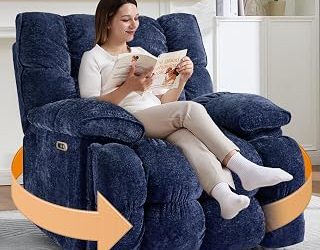
107″ Cloud Couch U-Shaped Modular Sectional
The strongest all-rounder here for households that nap: six removable washable pillows plus two ottomans mean you can build a genuinely flat, wide sleeping bay without dragging in a mattress. The light grey chenille-style finish stays cool to the touch, which helps if you run warm at night.
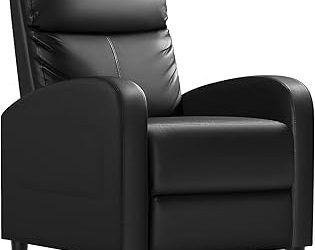
Signature Design by Ashley Modmax 6-Piece Modular Sectional
The most structurally serious option on this list, with stain-resistant performance fabric that shrugs off spills and body oils better than most budget upholstery. Its firmer support is the right call for anyone with existing back complaints who still wants a couch big enough to stretch out on.
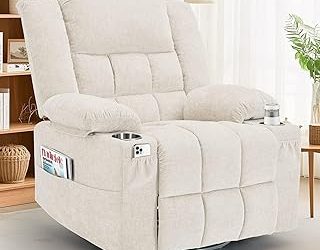
133″ U-Shaped Corduroy Boneless Couch
An unusually generous footprint with storage and cupholders built in, so a water glass and a book stay within reach instead of on the floor. Corduroy is warmer and grippier than chenille — excellent in a cool room, less ideal if you’re a hot sleeper.
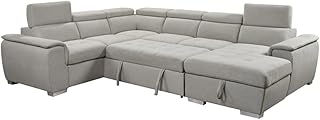
Ihanherry 111.4″ L-Shaped Chenille Sectional
A smart choice for apartments, where the L configuration tucks into a corner and the ottoman extends the lounging surface only when you need it. Deep seats and soft chenille make it comfortable for long evenings, though I’d add a firm pillow for overnight neck support.
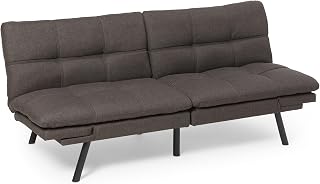
MoonSpeak 78.8″ Convertible Futon Sofa Bed
The best pure sleep performer for small spaces: it folds flat in a single motion, arrives without assembly, and takes a standard fitted sheet so you can treat it like an actual bed. Compact enough for a home office that doubles as a guest room.
Frequently Asked Questions
Is sleeping on a sectional bad for you?
Occasionally, no. Habitually, it depends entirely on the surface. A deep, supportive seat with a flat backrest can be perfectly serviceable, but a sagging cushion that forces sustained spinal rotation will produce morning stiffness and disrupted sleep architecture.
How firm should a sleep-friendly sectional be?
Medium-firm. You want the surface to compress under your hips and shoulders while keeping your spine roughly neutral. If you can feel the frame, it’s too firm; if your hips sit noticeably lower than your ribs, it’s too soft.
Do washable covers really matter?
Yes, more than most buyers expect. Anything you sleep on accumulates skin cells, moisture, and allergens. Removable covers let you wash on a normal cycle instead of relying on surface sprays that don’t reach the fill.
L-shaped or U-shaped for overnight use?
U-shaped configurations give you two long sides and better width for a taller sleeper. L-shaped models suit smaller rooms and are easier to place away from drafts and light sources.
Final Thoughts
If you want one piece that handles evenings and the occasional overnight equally well, the 107″ Cloud Couch U-Shaped Sectional is the pick — washable covers and two ottomans make it genuinely adaptable. Choose the Ashley Modmax if support and durability outrank plushness, and the MoonSpeak Futon Sofa Bed if your priority is a real bed that disappears into a small room by day.