Key takeaways
- Measure the diagonal, not just the wall: A 72″ to 77″ sectional fits most apartments on paper, but assembly happens inside the room. Confirm your hallway turns, doorway width, and elevator depth before ordering, and leave 30″ of clear walking path in front of the seat.
- Match seat depth to your body: Deep chenille “cloud” seats around 24″–26″ reward taller frames and full-body lounging; shorter users often find their feet dangling, which strains the lower back. If you’re under 5’5″, a shallower ribbed or linen seat keeps your knees supported.
- Prioritise a reversible chaise: Small rooms rarely allow one fixed orientation forever. A movable ottoman or reversible corner lets you flip the L when you rearrange, and doubles as a leg-elevation platform — genuinely useful for anyone with evening swelling or restless legs.
- Test the cushion recovery, not the softness: High-resilience foam or a foam-and-fibre blend springs back and holds its shape; cheap shredded fill compresses into a hammock within a season. Removable, zippered covers extend the life of both.
- Think about temperature and texture: Velvet feels plush but traps heat, which matters if you nap or sleep on it. Linen-look weaves and chenille breathe more readily and shed pet hair with less effort.
What's inside
As a sleep-wellness practitioner, I spend a surprising amount of my consulting hours talking about sofas. The reason is simple: in a studio or one-bedroom, the couch is where the nervous system winds down before bed — and it’s often where a guest, a roommate, or you yourself will actually sleep. When a sectional is too deep, too firm, or too sprawling for the room, it quietly sabotages the pre-sleep hour. People perch instead of reclining, scroll instead of drifting, and carry that low-grade alertness straight into the bedroom.
This guide approaches small-space sectionals through that lens. I’ve evaluated compact L-shaped models on the things that matter for genuine rest and daily comfort: seat depth relative to your leg length, cushion resilience over months rather than minutes, chaise height for elevating the legs, footprint honesty, and how easily the configuration adapts to an awkward corner. Below you’ll find current picks, a practical selection framework, and answers to the questions I hear most from clients redesigning a room that has to do the work of three.
As an Amazon Associate we earn from qualifying purchases.


🛒 Best Price Today on Amazon
Prime members get fast, free shipping on everything above, plus member-only deals. New members get a 30-day free trial — cancel anytime.
How to Choose a Sectional Sofa For Small Spaces (2026)
- Measure the diagonal, not just the wall: A 72″ to 77″ sectional fits most apartments on paper, but assembly happens inside the room. Confirm your hallway turns, doorway width, and elevator depth before ordering, and leave 30″ of clear walking path in front of the seat.
- Match seat depth to your body: Deep chenille “cloud” seats around 24″–26″ reward taller frames and full-body lounging; shorter users often find their feet dangling, which strains the lower back. If you’re under 5’5″, a shallower ribbed or linen seat keeps your knees supported.
- Prioritise a reversible chaise: Small rooms rarely allow one fixed orientation forever. A movable ottoman or reversible corner lets you flip the L when you rearrange, and doubles as a leg-elevation platform — genuinely useful for anyone with evening swelling or restless legs.
- Test the cushion recovery, not the softness: High-resilience foam or a foam-and-fibre blend springs back and holds its shape; cheap shredded fill compresses into a hammock within a season. Removable, zippered covers extend the life of both.
- Think about temperature and texture: Velvet feels plush but traps heat, which matters if you nap or sleep on it. Linen-look weaves and chenille breathe more readily and shed pet hair with less effort.
The Best Sectional Sofa For Small Spaces (2026)s Reviewed
73.6″ Convertible Sectional with Reversible Ottoman
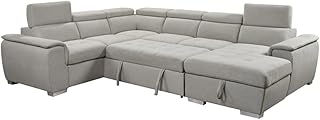
The most sensibly proportioned pick here — under 74″ wide with a detachable ottoman that reconfigures in seconds, making it ideal for narrow living rooms that change layout. Assembly is tool-light and the firmer seat is a smart choice if you want a sofa that supports upright reading rather than encouraging a 9pm doze.
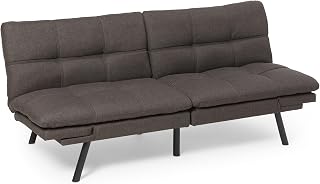
Flamaker 72″ L-Shaped Convertible Sectional
At 72″, this is the smallest true sectional worth considering, and the linen-look upholstery in dark grey hides everyday wear convincingly. The removable ottoman is light enough to shift one-handed, which matters more than buyers expect in a room where furniture moves weekly.
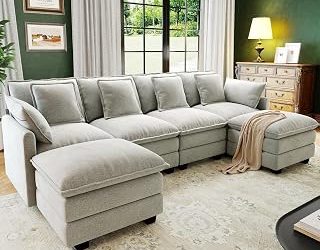
76.7″ Small Modular Cloud Couch in Beige
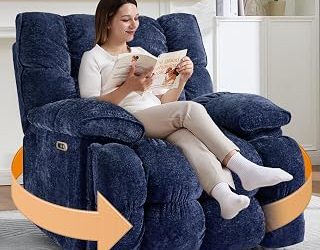
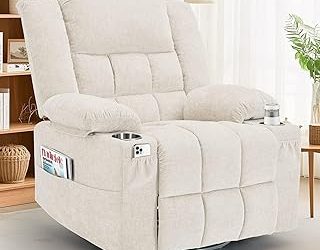
A deep-seat chenille build that delivers the enveloping, low-slung feel most people actually want at the end of a long day, without the sprawling footprint of a full cloud sofa. Best suited to taller users and to rooms where the sofa doubles as an occasional bed.
76.7″ Camel L-Shaped Cloud Loveseat with Ottoman
Structurally the same clever modular platform as the beige version, in a warmer camel tone that reads softer under lamplight — a small but real advantage in a wind-down space. The chenille breathes well, so it stays comfortable for long evening stretches.
3-Seat Reversible Sectional with Convertible Ottoman
The ribbed fabric gives this one a more tailored, contemporary line than most budget sectionals, and the tool-free assembly is a genuine relief in a walk-up. Seat depth is moderate, making it the safest choice for shorter users or anyone who prefers a supportive, upright sit.
Frequently Asked Questions
Can I actually sleep on a compact sectional?
Occasionally, yes — for a night or two. Look for a level chaise, resilient foam, and a width of at least 72″ so an adult can stretch out diagonally. For regular use, a purpose-built sleeper with a proper support deck is kinder to the spine.
Are deep “cloud” seats a mistake in a small room?
Not necessarily. A 76″ cloud-style sectional occupies less floor area than a standard sofa plus armchair, and the depth buys real comfort. The trade-off is that it visually fills the room, so pair it with slim side tables and keep sightlines open.
How long should a sectional in this price bracket last?
Expect three to five years of daily use. Rotate cushions monthly, vacuum the seams, and avoid placing the piece against a radiator or in harsh direct sun, all of which accelerate foam breakdown and fabric fade.
Velvet or chenille for a room where I unwind?
Chenille, in most cases. It regulates temperature better across seasons and resists the crushed, patchy look velvet develops in high-traffic seats — though velvet remains the more dramatic choice visually.
Final Thoughts
For most apartments, the 73.6″ Convertible Sectional with Reversible Ottoman is the smartest all-round buy: compact, adaptable, and easy to install without help. Choose the Flamaker 72″ L-Shaped Sectional if every inch counts, or the 76.7″ Cloud Sectional in beige or camel if you want a deeper, more restorative seat that can double as an occasional bed.