Key takeaways
- Measure the open footprint, not the closed one: A convertible’s folded dimensions tell you almost nothing. Map the fully extended or reclined footprint on your floor with painter’s tape, and leave clearance on at least one long side so nobody has to climb over a sleeping partner.
- Prioritise support over plushness: Low-density foam feels wonderful in a showroom and collapses under sustained load. For anything that will host overnight sleep, look for high-resilience foam, pocketed springs, or a solid hardwood frame that keeps the deck from sagging into a hammock.
- Check the surface for interruptions: Support bars, rigid hinges, and deep seat-to-back seams are the most common reasons guests wake up sore. Boneless and futon-style builds usually deliver a flatter, more continuous plane than mechanisms that fold a mattress over a metal frame.
- Treat fabric as thermal equipment: Core body temperature has to drop for sleep to consolidate. Corduroy, chenille, and teddy fabrics hold warmth well in cool rooms, while faux leather traps heat and needs a breathable topper or cotton sheet in anything above about 20°C.
- Minimise nightly friction: If converting the sofa takes more than about thirty seconds, people stop doing it properly. Tool-free setup, lightweight backs, and removable armrests all reduce the small resistances that quietly degrade a sleep routine.
What's inside
Small-space furniture shopping tends to get framed as a math problem — inches versus doorways, seat depth versus walking clearance. But in a studio, a converted attic, or a one-bedroom where the living room doubles as the guest room, a sofa is rarely just seating. It is a nap surface, a recovery spot after a night shift, and often a genuine bed for someone you care about. Choosing it purely on dimensions is how people end up with a compact couch that photographs beautifully and sleeps terribly.
This guide approaches small-space sofas the way I approach mattresses: as sleep surfaces first. We look at support structure, cushion density, how seams and hardware sit under a sleeping body, fabric breathability, and how much effort a conversion mechanism demands at midnight. Below you’ll find the models worth shortlisting for 2026, plus a buying framework you can apply to anything else you’re considering.
As an Amazon Associate we earn from qualifying purchases.


🛒 Best Price Today on Amazon
Prime members get fast, free shipping on everything above, plus member-only deals. New members get a 30-day free trial — cancel anytime.
How to Choose a Sofa For Small Spaces (2026)
- Measure the open footprint, not the closed one: A convertible’s folded dimensions tell you almost nothing. Map the fully extended or reclined footprint on your floor with painter’s tape, and leave clearance on at least one long side so nobody has to climb over a sleeping partner.
- Prioritise support over plushness: Low-density foam feels wonderful in a showroom and collapses under sustained load. For anything that will host overnight sleep, look for high-resilience foam, pocketed springs, or a solid hardwood frame that keeps the deck from sagging into a hammock.
- Check the surface for interruptions: Support bars, rigid hinges, and deep seat-to-back seams are the most common reasons guests wake up sore. Boneless and futon-style builds usually deliver a flatter, more continuous plane than mechanisms that fold a mattress over a metal frame.
- Treat fabric as thermal equipment: Core body temperature has to drop for sleep to consolidate. Corduroy, chenille, and teddy fabrics hold warmth well in cool rooms, while faux leather traps heat and needs a breathable topper or cotton sheet in anything above about 20°C.
- Minimise nightly friction: If converting the sofa takes more than about thirty seconds, people stop doing it properly. Tool-free setup, lightweight backs, and removable armrests all reduce the small resistances that quietly degrade a sleep routine.
The Best Sofas For Small Spaces (2026) Reviewed
55″ 3-in-1 Boneless Sleeper Sofa
The boneless construction is its real advantage — with no internal frame, the sleep surface stays continuous instead of breaking across a hinge, which is exactly what you want for side sleepers. At 55 inches with no assembly and four included pillows, it’s the most practical pick for a tight room that occasionally becomes a bedroom.
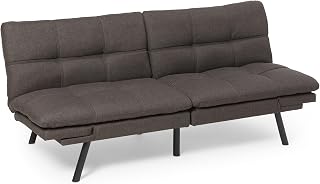
Flamaker Futon Sofa Bed
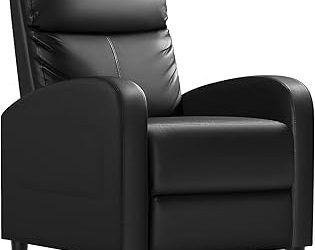
The multi-position back and removable armrests give you a genuinely flat plane, and the folding mechanism is simple enough to operate half-asleep. The faux leather sleeps warm, so I’d pair it with a cotton fitted sheet or a thin latex topper rather than sleeping directly on the surface.
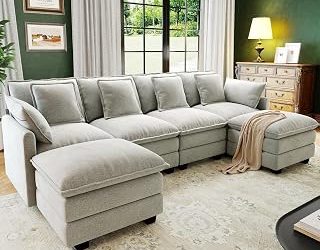
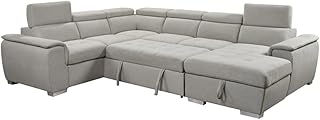
73.6″ Convertible Sectional Sofa
A reversible ottoman means you can reconfigure the chaise to whichever side of the room works, which matters more in awkward apartment layouts than raw seat count. It’s the best option here for someone who wants a proper L-shaped lounging surface for long naps without committing to a full sectional footprint.
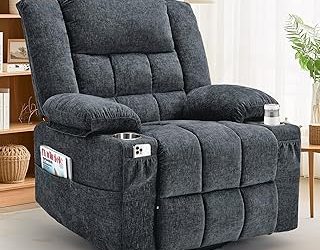
DOPEDIO Chenille Loveseat Recliner
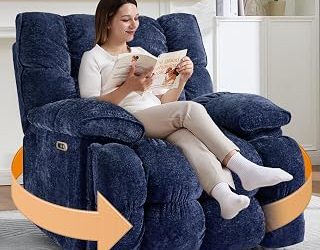
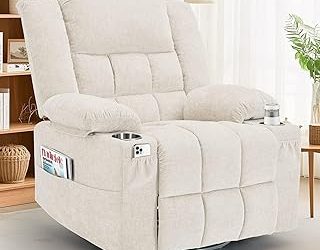
Spring cushions over a solid wood frame give this one noticeably better long-term support than foam-only loveseats, and the recline function makes it a strong choice for reading or winding down before bed. The removable cover is a meaningful hygiene advantage if the sofa sees regular head contact.
Welzona 51″ Teddy Loveseat
At 51 inches this is a seating-first piece rather than a sleeper, but the all-wood frame and washable covers make it the most durable compact option for bedrooms and reading corners. The teddy fabric is warm and tactile — excellent in a cool room, less ideal in a south-facing one.
Frequently Asked Questions
Can you sleep on a small sofa bed every night?
For a few weeks, yes, provided the surface is flat and the foam is dense enough not to bottom out. For genuinely long-term use, add a 5–8cm topper to restore the pressure relief that thin sleeper foam can’t provide on its own.
What size sofa actually fits a small living room?
As a rough guide, keep the sofa under two-thirds of its wall length and preserve 75–90cm of walking clearance in front. A 48–55 inch loveseat suits most studios; anything over 70 inches needs a dedicated wall.
Is a futon or a convertible sectional better for guests?
Futons win on sleep quality because they lie flat with fewer seams. Sectionals win on daytime versatility and seating capacity — choose based on which function happens more often in your home.
How do I stop a sofa bed feeling lumpy?
Rotate and flip the cushions monthly, vacuum the deck to clear grit that accelerates foam breakdown, and add a wool or latex topper. Most “lumpy” complaints are compressed foam, not manufacturing faults.
Final Thoughts
If the sofa will regularly be slept on, the 55″ 3-in-1 Boneless Sleeper is the soundest choice here — a continuous, frameless surface solves the problem most convertibles create. For flexible lounging in an awkward layout, the 73.6″ Convertible Sectional earns its footprint, while the DOPEDIO Chenille Loveseat is the pick for anyone prioritising supportive daily seating over occasional overnight duty. Smaller rooms still have good options: the Vesgantti 48″ Loveseat remains a tidy solution where every inch counts.