Key takeaways
- Head and neck support: An adjustable headrest is the single most important feature for restful reclining. Without one, your chin either drops toward your chest (compressing the airway and encouraging snoring) or your head tips back unsupported. Prioritize models that let you dial the top section forward independently.
- Seat width versus your hips: Measure your seated hip width and add four to six inches. A 24-inch extra-wide seat is a genuine upgrade if you shift positions or sleep curled; if you’re smaller-framed, an oversized seat removes the lateral support that keeps your spine stacked.
- Recline angle, not just “reclines”: Anything shallower than roughly 135 degrees keeps you in a working posture. Deeper recline plus a supported lower leg reduces the venous pooling that makes ankles puffy after long evenings — useful in late pregnancy and post-surgical recovery.
- Mechanism noise and motion: Manual levers are silent once you’re settled, which matters enormously in a nursery. Power bases are easier on shoulders and healing abdomens but hum; triple-motor designs move headrest, lumbar, and footrest separately, which is worth the sound for most people.
- Heat, massage, and charging: Treat gentle lumbar heat as a legitimate wind-down tool — warmth encourages muscle release before bed. Vibration massage is stimulating, so use it earlier in the evening. USB and Type-C ports keep phones off the floor and out of your sleep space.
What's inside
Recliners get judged by how they look in a showroom, but they get lived in at 2 a.m. — during a newborn feed, a rough night with a head cold, or the long stretch when lying flat makes reflux or back pain worse. That mismatch is why so many swivel rockers disappoint: a chair can photograph beautifully and still leave your neck unsupported, your calves dangling, or your whole body listing sideways every time you shift. From a sleep-wellness standpoint, the question isn’t “is this comfortable?” but “can this hold a neutral spine and an unforced breathing position for two hours without me waking up stiff?”
This guide looks at the swivel rocker recliner category through that lens. I’ve weighted the things that actually govern rest quality — headrest geometry, recline depth, seat width relative to hip span, how quietly the mechanism moves, and whether extras like heat or massage genuinely aid downregulation or just add motor noise. Below you’ll find the current standouts, a practical selection framework, and answers to the questions buyers ask after the chair is already in the room.
As an Amazon Associate we earn from qualifying purchases.


🛒 Best Price Today on Amazon
Prime members get fast, free shipping on everything above, plus member-only deals. New members get a 30-day free trial — cancel anytime.
How to Choose a/an Who Makes The Best Swivel Rocker Recliner (2026)
- Head and neck support: An adjustable headrest is the single most important feature for restful reclining. Without one, your chin either drops toward your chest (compressing the airway and encouraging snoring) or your head tips back unsupported. Prioritize models that let you dial the top section forward independently.
- Seat width versus your hips: Measure your seated hip width and add four to six inches. A 24-inch extra-wide seat is a genuine upgrade if you shift positions or sleep curled; if you’re smaller-framed, an oversized seat removes the lateral support that keeps your spine stacked.
- Recline angle, not just “reclines”: Anything shallower than roughly 135 degrees keeps you in a working posture. Deeper recline plus a supported lower leg reduces the venous pooling that makes ankles puffy after long evenings — useful in late pregnancy and post-surgical recovery.
- Mechanism noise and motion: Manual levers are silent once you’re settled, which matters enormously in a nursery. Power bases are easier on shoulders and healing abdomens but hum; triple-motor designs move headrest, lumbar, and footrest separately, which is worth the sound for most people.
- Heat, massage, and charging: Treat gentle lumbar heat as a legitimate wind-down tool — warmth encourages muscle release before bed. Vibration massage is stimulating, so use it earlier in the evening. USB and Type-C ports keep phones off the floor and out of your sleep space.
The Best Who Makes The Best Swivel Rocker Recliner (2026)s Reviewed
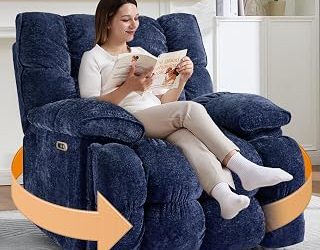
Korser 360° Swivel Rocker Recliner with Massage and Heating
A well-judged all-rounder that combines a full 360-degree swivel, smooth rocking, and lumbar heat in a footprint that suits smaller living rooms and nurseries alike. The manual mechanism is the quiet hero here — no motor whir when you’re easing a sleeping baby back into the crib.
Oversized Swivel Rocker Recliner with Adjustable Headrest and Two Pillows
The high barrel back and adjustable headrest do the real postural work, keeping the cervical spine neutral through long feeds or reading sessions. The two removable pillows are genuinely useful rather than decorative: one behind the lumbar curve, one under a nursing arm.
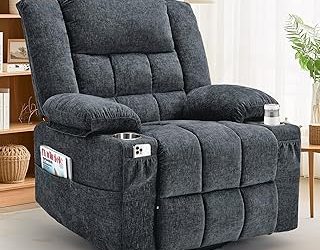
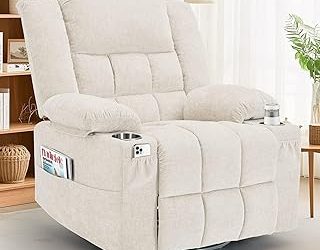
Oversized 24″ Extra Wide Chenille Swivel Rocker Recliner
At 24 inches across, this is the pick for anyone who changes position frequently or wants room to tuck their legs up sideways. Overstuffed armrests and built-in lumbar support make it forgiving over multi-hour stretches, and chenille stays comfortable against skin in warm rooms.
COOSLEEP Oversized Manual Swivel Rocker Recliner for Big and Tall
Built for taller and heavier frames, with a high back that actually reaches above the shoulders instead of stopping mid-scapula. The manual action feels substantial rather than flimsy, and the extra-wide glider base tracks straight without the wobble that plagues cheaper oversized chairs.
Oversized Power Recliner with USB Ports
The power version of the extra-wide chenille design, and the better choice if reaching for a side lever is painful — post-surgical, arthritic, or late-pregnancy users especially. Integrated USB ports let you charge overnight without a cable trailing across the floor.
Frequently Asked Questions
Is it healthy to sleep in a swivel rocker recliner overnight?
Occasionally, yes — and for reflux, congestion, sleep apnea flare-ups, or recovery from shoulder and abdominal surgery, an inclined position can be more restful than lying flat. Long-term nightly use is less ideal because hip and knee flexion stays fixed for hours, so aim to return to a bed once the underlying issue resolves.
Does the massage function actually help me relax?
Vibration massage helps some people release tension but is mildly arousing to the nervous system, so it works better an hour before bed than as you drift off. Heat is the more reliable wind-down feature — a warm lumbar pad lowers muscle guarding and pairs well with dimmed lights.
Should I choose manual or power?
Choose manual for silence and simplicity, especially in a nursery where a motor could wake a light sleeper. Choose power if you have limited upper-body strength, are recovering from surgery, or want independent headrest and lumbar adjustment.
How much clearance do I need behind the chair?
Most swivel rockers need several inches of wall clearance to rock and swivel freely, and more if the back reclines rearward. Check the manufacturer’s stated requirement before committing to a tight corner — a chair that can’t complete its arc loses the motion you paid for.
Final Thoughts
If you want one chair that handles nursery duty, evening reading, and the occasional upright night, the Korser 360° Swivel Rocker is the most balanced choice — quiet, compact, and thoughtfully equipped. Larger bodies and side-sleepers will be better served by the COOSLEEP Oversized Manual Rocker or the 24-inch extra-wide chenille model, while the CHITA Genuine Leather Power Recliner is the pick for anyone who wants independent headrest and lumbar control in a chair built to last a decade.