Key takeaways
- Recline geometry: Look for a chair that opens past roughly 130 degrees and lifts the knees above hip level. That torso-to-thigh relationship — often marketed as zero gravity — reduces axial load on the lumbar discs and is the single most useful feature for overnight relief.
- Lumbar contact, not lumbar decoration: Run your hand behind your low back once reclined. If daylight fits there, the chair is transferring load into your spine’s soft tissue. Adjustable pneumatic or powered lumbar support beats a sewn-in bolster that only suits one body.
- Seat dimensions: Measure before you buy. Seat depth should let you sit fully back with two fingers behind the knee; seat height should let both feet rest flat. Broader frames in the 26-inch class prevent hip crowding, which is a common source of sleep-fragmenting numbness.
- Motor configuration: Single-motor chairs move the back and footrest together, so you get a preset shape. Dual-motor chairs separate them, letting you drop the back for sleep while keeping the legs elevated — the flexibility matters most for disc and SI joint pain.
- Heat and massage discipline: Lumbar heat is genuinely useful for pre-sleep muscle relaxation, but core temperature needs to fall for sleep onset. Choose units with automatic shut-off timers and treat heat as a 20-minute wind-down tool, not an all-night setting.
What's inside
Back pain rarely respects bedtime. Lie flat with a cranky lumbar spine, an inflamed disc, or a compressed sciatic nerve, and the small hours become a cycle of shifting, bracing, and waking — which is why so many people with chronic back trouble end up sleeping in a chair. That migration to the living room isn’t a failure of willpower. Supine positions load the lumbar spine differently than a supported recline does, and short of a hospital bed, a well-built recliner is the most accessible way to hold the torso and thighs at an angle that takes pressure off irritated tissue. The catch is that most recliners are engineered for television, not for restorative sleep, and a chair with a hollow lumbar zone or a footrest that stops at the calves will quietly undo any benefit by morning.
This guide looks at recliners the way a sleep clinician would: recline geometry first, then support quality, transfer safety, thermal comfort, and how the chair behaves over six or seven consecutive hours rather than six or seven minutes. Below are the models worth shortlisting in 2026, along with the specifications that actually predict whether you’ll wake up looser or stiffer.
As an Amazon Associate we earn from qualifying purchases.



🛒 Best Price Today on Amazon
Prime members get fast, free shipping on everything above, plus member-only deals. New members get a 30-day free trial — cancel anytime.
How to Choose a Recliner for Back Problems (2026)
- Recline geometry: Look for a chair that opens past roughly 130 degrees and lifts the knees above hip level. That torso-to-thigh relationship — often marketed as zero gravity — reduces axial load on the lumbar discs and is the single most useful feature for overnight relief.
- Lumbar contact, not lumbar decoration: Run your hand behind your low back once reclined. If daylight fits there, the chair is transferring load into your spine’s soft tissue. Adjustable pneumatic or powered lumbar support beats a sewn-in bolster that only suits one body.
- Seat dimensions: Measure before you buy. Seat depth should let you sit fully back with two fingers behind the knee; seat height should let both feet rest flat. Broader frames in the 26-inch class prevent hip crowding, which is a common source of sleep-fragmenting numbness.
- Motor configuration: Single-motor chairs move the back and footrest together, so you get a preset shape. Dual-motor chairs separate them, letting you drop the back for sleep while keeping the legs elevated — the flexibility matters most for disc and SI joint pain.
- Heat and massage discipline: Lumbar heat is genuinely useful for pre-sleep muscle relaxation, but core temperature needs to fall for sleep onset. Choose units with automatic shut-off timers and treat heat as a 20-minute wind-down tool, not an all-night setting.
The Best Recliners for Back Problems (2026), Reviewed
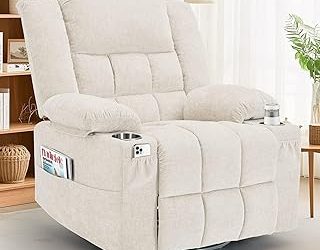
MAHOMICO Power Lift Recliner
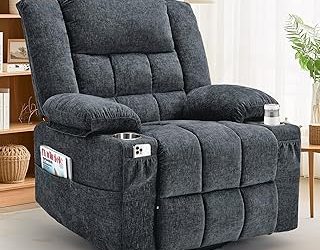
A well-balanced entry point that pairs a genuine lift mechanism with targeted lumbar heating and vibration, which makes it easy to build a consistent pre-sleep routine in the chair itself. The side pocket, dual cup holders, and USB port also mean fewer painful reaches to a side table during the night.
Dual Motor 26-Inch Extra Wide Lift Recliner
The strongest all-round choice for overnight use: independent back and footrest motors let you dial in a true zero-gravity posture and then flatten further without losing knee elevation. The extra-wide seat and headrest reduce shoulder and hip pressure, which is where most chair-sleepers develop secondary aches.
MCombo Power Lift Recliner (Fabric 7287)
Recline to 140 degrees plus a 4.7-inch footrest extension makes this a sensible pick for taller users who normally dangle their heels. It’s a restrained, well-finished chair with reliable stand-assist and FSC-certified construction, best suited to people prioritizing daily transfers over gadgetry.
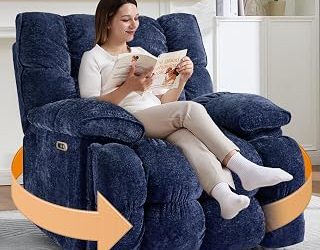
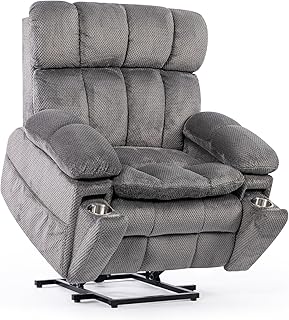
Large Power Lift Recliner with Massage and Heat (Big and Tall)
Built for higher weight capacities and broader frames, with overstuffed padding that holds its shape rather than collapsing into the hollow that provokes morning stiffness. The heat and massage zones are a practical addition for anyone using the chair as a primary sleep surface during a flare-up.
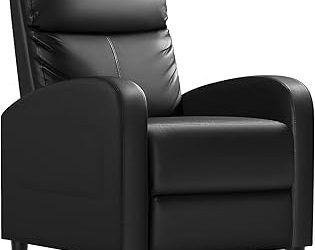
Faux Leather Manual Recliner
A straightforward, budget-conscious option for mild or intermittent back pain where powered assistance isn’t necessary. Wipeable upholstery and a firmer backrest suit daytime rest and short naps, though the manual lever demands core engagement that acute-pain sufferers should avoid.
Frequently Asked Questions
Is sleeping in a recliner bad for your back?
Not inherently. Sleep quality is what matters most for pain modulation, and an inclined, well-supported position often produces fewer awakenings than a flat mattress during a flare. The risk is prolonged immobility, so vary your position and keep moving during the day.
What angle helps with sciatica or a herniated disc?
Most people settle between 120 and 135 degrees with the knees raised above the hips. Flatter is not automatically better; the goal is to unload the lumbar spine, not to imitate a bed.
Should I choose a single or dual motor chair?
Dual motor, if sleep is the primary purpose. The ability to adjust back and legs independently lets you find a neutral pelvis position that single-motor presets simply can’t reach.
Can I use heat and massage all night?
No. Use heat for 15 to 20 minutes before sleep and let it time out. Continuous warmth interferes with the natural drop in core temperature that triggers sleep onset, and can dehydrate skin over long sessions.
Final Thoughts
For sustained nightly use, the dual-motor 26-inch model offers the postural control that back pain genuinely requires, while the MAHOMICO lift recliner delivers most of that benefit in a more compact, better-equipped package. Larger users, or anyone recovering from surgery, will get more longevity from the big-and-tall lift recliner with heat and massage.