Key takeaways
- Motor count determines posture control: Single-motor chairs move the back and footrest as one fixed unit, which forces your spine into whatever angle the linkage dictates. Dual-motor designs separate the two, and three-motor chairs add independent headrest articulation — the difference between tolerating a position and dialing one in.
- Targeted lumbar support, not general padding: Look for a dedicated lumbar pillow or a heat panel positioned at the low back rather than diffuse cushioning. The goal is filling the natural inward curve of the lumbar spine so the erector muscles can finally stand down.
- Zero-gravity and lay-flat capability: Positions that raise the knees above the heart reduce axial load on the lower vertebrae. If you nap in your chair — and most people with chronic back pain eventually do — this feature moves from luxury to necessity.
- Footrest length versus your inseam: A footrest that stops mid-calf leaves your legs unsupported and drags your pelvis forward, undoing the recline. Extended footrests matter enormously for anyone over roughly 5’10”.
- Weight capacity as a durability signal: A 400 lb rating rarely means the manufacturer expects a 400 lb occupant. It signals reinforced framing and a lift mechanism with headroom, which translates to years of consistent support rather than a slow slump into asymmetry.
What's inside
Back pain rarely respects the boundary between day and night. If your lumbar spine spends the evening compressed into a sagging cushion, you inherit that tension at 2 a.m. — restless turning, a stiff wake-up, and the sense that sleep never quite finished its job. In my work assessing rest environments, the living-room chair is the most consistently overlooked variable. People invest in mattresses and pillows, then spend four hours a night in seating that undoes the benefit.
A well-engineered recliner does something a sofa cannot: it distributes load across your whole posterior surface, unloads the discs, and lets you settle into positions where the hip-to-torso angle opens rather than folds. This guide covers what actually matters when back trouble is the reason you’re shopping — motor architecture, lumbar support strategy, weight capacity, and the recline geometry that makes overnight dozing tolerable — plus the models currently worth your attention.
As an Amazon Associate we earn from qualifying purchases.



🛒 Best Price Today on Amazon
Prime members get fast, free shipping on everything above, plus member-only deals. New members get a 30-day free trial — cancel anytime.
How to Choose a Recliner Chair For Back Problems (2026)
- Motor count determines posture control: Single-motor chairs move the back and footrest as one fixed unit, which forces your spine into whatever angle the linkage dictates. Dual-motor designs separate the two, and three-motor chairs add independent headrest articulation — the difference between tolerating a position and dialing one in.
- Targeted lumbar support, not general padding: Look for a dedicated lumbar pillow or a heat panel positioned at the low back rather than diffuse cushioning. The goal is filling the natural inward curve of the lumbar spine so the erector muscles can finally stand down.
- Zero-gravity and lay-flat capability: Positions that raise the knees above the heart reduce axial load on the lower vertebrae. If you nap in your chair — and most people with chronic back pain eventually do — this feature moves from luxury to necessity.
- Footrest length versus your inseam: A footrest that stops mid-calf leaves your legs unsupported and drags your pelvis forward, undoing the recline. Extended footrests matter enormously for anyone over roughly 5’10”.
- Weight capacity as a durability signal: A 400 lb rating rarely means the manufacturer expects a 400 lb occupant. It signals reinforced framing and a lift mechanism with headroom, which translates to years of consistent support rather than a slow slump into asymmetry.
The Best Recliner Chair For Back Problems (2026)s Reviewed
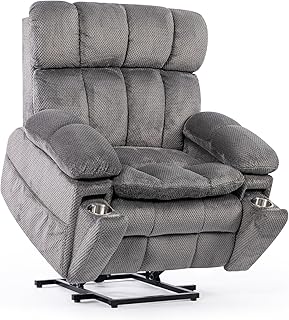
EONIX 3-Motor Power Lift Recliner with Adjustable Headrest
The independent backrest, footrest, and headrest controls make this the most posture-adaptable option here — you can flatten the recline while keeping cervical support upright, which is exactly what someone with combined neck and lumbar involvement needs. The 400 lb frame rating and extended footrest round out a chair built for genuine long-session use.
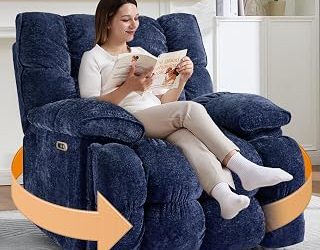
Dual Motor 26″ Extra Wide Lift Recliner with Zero Gravity
The 26-inch seat width solves a problem narrower chairs create: when you can’t shift your hips freely, you settle into one loaded position and stay there. Combined with true lay-flat and zero-gravity presets, this is my pick for anyone who regularly falls asleep in the chair rather than merely resting.
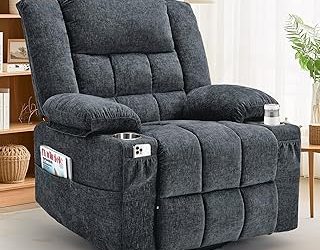
MCombo Power Lift Recliner 7040 with Heat and Massage
MCombo’s FSC-certified build and multiple size options mean you can match seat depth to your actual leg length instead of compromising — an underrated factor in whether a chair supports or subtly strains your back. The heat and massage functions are well-placed rather than gimmicky, and the size range makes this the smart choice for shorter or petite users.
MAHOMICO Power Lift Recliner with Lumbar Heating
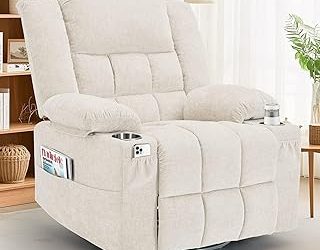
The lumbar heating element sits where it should — low and central, warming the muscles that guard around a stiff lower back rather than just heating the seat. It’s a straightforward, well-executed chair that prioritizes the fundamentals over feature count, with thoughtful conveniences like dual cup holders and USB charging.
Dual Motor Infinite Position Recliner with Extended Footrest
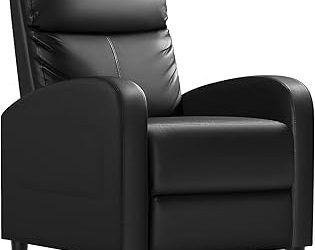
Infinite positioning plus a genuinely quiet motor is the combination that matters if you adjust often during the night and share your home with light sleepers. The breathable leather and included lumbar pillow make it comfortable through longer sits, where cheaper upholstery starts to trap heat.
Frequently Asked Questions
Can sleeping in a recliner make back pain worse?
Not inherently — many people with disc or facet joint pain sleep better reclined than flat, because the slight flexion reduces nerve root pressure. The risk comes from unsupported positions: no lumbar fill, a short footrest, or a head tilted forward all night.
Do I need a lift function if I’m not elderly?
Often yes. The lift mechanism eliminates the loaded twist-and-push motion of standing from a low seat, which is precisely the movement that triggers acute episodes in people with lumbar instability.
Is massage or heat more useful for back pain?
Heat generally does more measurable good, increasing local blood flow and reducing protective muscle tension. Vibration massage is pleasant and can aid relaxation before sleep, but treat it as a bonus rather than the deciding feature.
How long should I stay in one recliner position?
Change position every 45 to 60 minutes while awake. Static loading — even in an excellent chair — is what stiffens tissue, which is the strongest argument for buying infinite or multi-motor adjustability.
Final Thoughts
If your back pain involves multiple regions or you want maximum control over your resting posture, the EONIX 3-Motor recliner is the most capable chair on this list. For overnight sleeping and larger frames, the 26″ Extra Wide Dual Motor model with zero gravity is the stronger choice, while the MCombo 7040 remains the best-fitting option for petite users who need proper seat geometry rather than a scaled-down compromise.