Key takeaways
- Cushioning depth: For meaningful softening, aim for 3–4 inches of foam or a genuinely overstuffed pillow-top. Anything under 2 inches smooths out surface texture but won’t rescue a hard mattress — you’ll compress straight through it to the firm layer beneath.
- Fill type: Memory foam contours closely and relieves hip and shoulder pressure best, making it the strongest choice for side sleepers. Cotton and bamboo-rayon pillow-tops feel plush and springy rather than sinking, which suits back sleepers and anyone who dislikes the “hugged” sensation.
- Heat management: Foam traps body warmth by nature. Look for gel infusion, charcoal, open-cell structures, or a breathable natural-fiber cover if you run warm; a cotton or bamboo-derived pillow-top will almost always sleep cooler than solid foam.
- Firmness direction: Read labels carefully. Several popular “toppers” are engineered to be firm or extra firm — excellent for heavier sleepers on a sagging bed, but the wrong tool if softening is your goal. Two-sided models with a soft and a firm face are the safest bet when you’re unsure.
- Fit and anchoring: Measure your mattress height including any existing pad. Deep-pocket skirts rated to 20–21 inches keep thick toppers from shifting; foam slabs without a fitted cover need a snug sheet or non-slip base to stay square through the night.
A mattress that felt reassuringly supportive in the showroom can feel like a plank at 3 a.m. This is one of the most common complaints I hear from sleepers: shoulders and hips that ache within twenty minutes of lying down, restless side-to-side flipping, and a morning stiffness that never quite resolves. The mattress itself usually isn’t defective — it simply lacks the shallow “give” layer that lets your body’s bony landmarks sink slightly while the deeper springs or foam keep your spine aligned. That surface layer is exactly what a topper replaces.
This guide focuses on toppers that genuinely soften a too-firm bed, plus a few firm-side options for readers whose problem runs the opposite direction (or who share a bed with someone who needs more push-back). I’ve organized the picks by what they actually do to your sleep surface — cushioning depth, heat behavior, and how well they stay put on a deep mattress — so you can match a topper to your body weight, sleep position, and bedroom climate rather than guessing from a product photo.
Our top picks


As an Amazon Associate we earn from qualifying purchases at no extra cost to you. Ratings are shown as listed on Amazon.
🛒 Best Price Today on Amazon
Prime members get fast, free shipping on everything above, plus member-only deals. New members get a 30-day free trial — cancel anytime.
How to Choose a Mattress Topper To Soften A Firm Mattress (2026)
- Cushioning depth: For meaningful softening, aim for 3–4 inches of foam or a genuinely overstuffed pillow-top. Anything under 2 inches smooths out surface texture but won’t rescue a hard mattress — you’ll compress straight through it to the firm layer beneath.
- Fill type: Memory foam contours closely and relieves hip and shoulder pressure best, making it the strongest choice for side sleepers. Cotton and bamboo-rayon pillow-tops feel plush and springy rather than sinking, which suits back sleepers and anyone who dislikes the “hugged” sensation.
- Heat management: Foam traps body warmth by nature. Look for gel infusion, charcoal, open-cell structures, or a breathable natural-fiber cover if you run warm; a cotton or bamboo-derived pillow-top will almost always sleep cooler than solid foam.
- Firmness direction: Read labels carefully. Several popular “toppers” are engineered to be firm or extra firm — excellent for heavier sleepers on a sagging bed, but the wrong tool if softening is your goal. Two-sided models with a soft and a firm face are the safest bet when you’re unsure.
- Fit and anchoring: Measure your mattress height including any existing pad. Deep-pocket skirts rated to 20–21 inches keep thick toppers from shifting; foam slabs without a fitted cover need a snug sheet or non-slip base to stay square through the night.
The Best Mattress Topper To Soften A Firm Mattress (2026)s Reviewed
OLANLY 4 Inch Dual-Layer Gel Memory Foam Topper
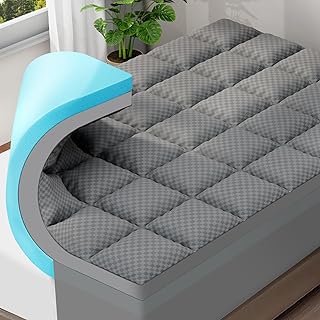
This is the most complete softening solution here: a 2-inch gel foam base for contouring paired with a 2-inch quilted pillow-top that keeps you from feeling the foam directly. The 21-inch deep pocket is a genuine advantage if your mattress is already tall, and the layered build sleeps noticeably cooler than a single foam slab of the same thickness.
Niagara Ultra Soft & Cooling Bamboo-Rayon Topper
A plush, breathable pillow-top for sleepers who want cushioning without sinking into foam. The rayon-from-bamboo cover wicks well for hot sleepers, and the 20-inch skirt grips deep mattresses securely — my usual recommendation for back sleepers who find memory foam too enveloping.
Cotton Extra Thick Pillow Top Mattress Pad
All-natural-fiber comfort with a generous fill that takes the hard edge off a firm bed while adding a washable protective layer. It’s the most temperature-neutral pick in this lineup, though lighter sleepers will get more softening from it than heavier ones.
3 Inch Firm Topper with 2-Sided Cover (5-Zone)
The flippable design makes this unusually forgiving: choose the softer face to cushion a firm mattress, or the firm face if you need more support. The 5-zone construction gives extra room at the shoulders and reinforcement at the hips, which helps side sleepers maintain neutral alignment.
PERLECARE 3 Inch Firm Gel & Bamboo Charcoal Topper
A dense, high-resilience option built for pressure relief rather than plushness — best suited to heavier sleepers, stomach sleepers, or anyone rehabilitating a bed that’s gone soft in the middle. The gel and charcoal infusion keeps the surface temperature respectable for firm foam.
Frequently Asked Questions
How thick should a topper be to soften a firm mattress?
Three inches is the practical minimum for most adults, and four inches is better if you weigh over roughly 200 pounds or sleep on your side. Thinner pads change the feel of the fabric surface without altering the mattress’s underlying firmness.
Will a topper fix back pain from a hard mattress?
Often, yes — pain from a too-firm bed usually comes from pressure concentration and loss of lumbar contact, both of which a contouring layer addresses. If discomfort persists after two to three weeks of adjustment, the issue is more likely the mattress core or a clinical cause worth discussing with a professional.
Do memory foam toppers make you sleep hotter?
Solid foam does retain heat, but gel infusion, charcoal, and a quilted breathable cover reduce the effect substantially. If you routinely wake up sweating, choose a cotton or bamboo-derived pillow-top instead of dense foam.
Do I still need a mattress protector?
Yes. Foam toppers can’t be machine washed, so a thin protector above the topper is worth the small loss in plushness. Quilted cotton and bamboo pads are typically washable themselves, which simplifies things.
Final Thoughts
For most people trying to soften an unforgiving mattress, the OLANLY 4-inch dual-layer topper delivers the biggest change in comfort thanks to its combination of contouring foam and a quilted pillow-top. Hot sleepers and anyone who dislikes the sinking feel of memory foam should look first at the Niagara bamboo-rayon topper, while the two-sided 5-zone model is the smartest hedge if you’re sharing a bed with someone whose firmness preferences don’t match yours.