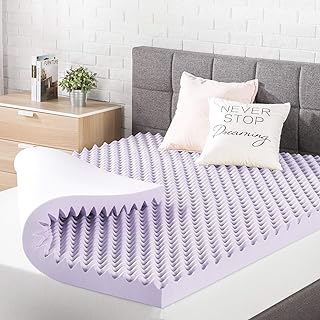
Convoluted foam — the bumpy, egg-carton surface you’ve probably seen in hospital supply catalogs and college dorm hauls — solves a narrow problem unusually well. When a mattress has gone stiff underneath you, or when your hips and shoulders bear too much load through the night, those peaks and valleys redistribute pressure and let warm air escape sideways instead of pooling under your torso. The label tells you almost nothing about how a topper will actually feel at 3 a.m.
I evaluate toppers the way I evaluate any sleep intervention: does it change your pressure profile enough to reduce nighttime arousals, and does it do so without trapping heat or collapsing within a season? This guide sorts current egg crate options by who they’re built for — dorm sleepers, back-pain sufferers, hot sleepers, and people recovering in a hospital bed at home — and explains the specifications that predict comfort so you can read a listing critically instead of trusting the marketing copy.
Our top picks
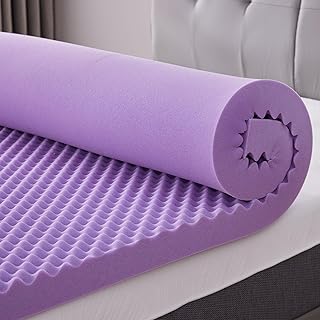
 SINWEEK 2 Inch Egg Crate Memory Foam
- Egg Crate Memory Foam
- Product Note: Due to compressed packaging, the memory…
- Improved Comfort: The egg-shaped design provides more comprehensive…


As an Amazon Associate we earn from qualifying purchases at no extra cost to you.
🛒 Best Price Today on Amazon
Prime members get fast, free shipping on everything above, plus member-only deals. New members get a 30-day free trial — cancel anytime.
How to Choose a Egg Crate Mattress Topper (2026)
- Thickness versus body weight: A 2-inch pad softens a firm surface without changing its geometry, which suits lighter sleepers and stomach sleepers. Choose 3 inches if you’re a side sleeper or over roughly 200 pounds, since heavier loading compresses convoluted peaks quickly and you’ll otherwise feel the mattress beneath.
- Foam certification: Look for CertiPUR-US at minimum, which limits formaldehyde, heavy metals, and certain flame retardants in the foam itself. Oeko-Tex certification on the cover adds a second layer of chemical screening for anything touching your skin nightly.
- Heat management: Convoluted foam already ventilates better than a flat slab because the channels move air laterally. Gel infusion helps at the surface, but a breathable cover and a mattress protector that isn’t vinyl matter just as much — most heat complaints trace back to an impermeable layer above the foam.
- Zoning: Seven-zone designs vary peak height and density along the length of the pad, softening at the shoulders and firming under the lumbar region. This is genuinely useful for side sleepers and anyone with lower back complaints; it’s largely irrelevant if you sleep flat on your back.
- Sensitivity and clinical use: Lavender infusion is pleasant for some people and a migraine trigger for others. If you’re buying for pressure-sore prevention, post-surgical recovery, or a chemically sensitive sleeper, choose a fragrance-free, dye-free pad and confirm the dimensions match a hospital bed rather than a standard twin.
The Best Egg Crate Mattress Toppers of 2026, Reviewed
Best Price Mattress 3 Inch Lavender-Infused Topper (Twin)
Three inches of CertiPUR-US foam at a dorm-friendly price, with a lavender infusion that reads as a faint herbal note rather than a perfume. It’s the most sensible fix for the notoriously thin institutional mattress, though skip it if anyone in the bed is scent-sensitive.
SINWEEK 2 Inch Egg Crate Topper (Twin)
A restrained 2-inch profile that takes the edge off an overly firm mattress without swallowing you or raising sheet-fitting headaches. It’s my default recommendation for lighter back sleepers and for guest beds that need a modest comfort upgrade.
Vaunn Medical Egg Crate Topper (Hospital Twin)
Fragrance-free, dye-free, and sized at 78″ x 34″ for hospital bed frames, this is the pick for home care and post-surgical recovery where pressure redistribution is a clinical concern rather than a comfort preference. The convolution is deliberately open for airflow, which matters for anyone spending long daytime hours in bed.
SOOSLEEPY 3 Inch 7-Zone Gel Topper (Full)
The zoning here does real work: softer peaks under the shoulders, denser support through the lumbar band, with gel infusion to blunt surface heat. It’s the strongest all-around choice for side sleepers with morning back stiffness.
3 Inch 7-Zone Gel Lavender Topper (Full)
Dual CertiPUR-US and Oeko-Tex certification is the standout feature, meaning both the foam and the fabric touching you have been screened. Zoned support plus gel infusion make it a close alternative to the SOOSLEEPY, with the lavender note as a deciding factor either way.
What to Look For in an Egg Crate Topper
Thickness: 2 Inches or 3 Inches
Thickness sets how much pressure relief you get. A 2-inch topper adds a modest layer and suits lighter sleepers or beds that only need a small softening. A 3-inch topper gives the foam more depth to compress, which suits side sleepers whose shoulders and hips sink in. Heavier sleepers can press through thin foam, so extra thickness matters for them most.
Size and the Hospital Twin Exception
| Bed size | Standard width x length |
|---|---|
| Twin | 38 x 75 inches |
| Twin XL | 38 x 80 inches |
| Full | 54 x 75 inches |
Hospital and adjustable bed frames are often narrower and longer than a standard twin, so a hospital-twin topper such as the Vaunn Medical Egg Crate Topper is sized for that frame. Compare the listed dimensions against your mattress instead of relying on the size name alone.
Zoned and Infused Foam
Seven-zone designs change the foam pattern across the body, usually softer at the shoulders and firmer under the hips. Gel-infused foam is marketed for cooling, though the effect is usually small and the open egg crate surface does most of the airflow work. Lavender-infused foam adds scent, which some find calming and others find overpowering, and any new foam smell fades with airing.
Matching Thickness to Your Sleep Position
| Sleep style | Thickness that usually fits |
|---|---|
| Side sleeper with sore hips or shoulders | 3 inches, for more pressure relief |
| Back sleeper on a slightly firm bed | 2 to 3 inches, depending on how soft you want it |
| Stomach sleeper | 2 inches, to avoid sinking and bending the spine |
| Bed used for care or recovery | Whatever the frame and sheets allow, with a medical-style cover |
Setting Up a New Topper
- Unroll the foam on the mattress and let it expand with the bumps facing up.
- Give it time to reach full height before judging comfort.
- Air it in a ventilated room if there is a smell from packaging.
- Cover it with a fitted sheet, and consider a protector to keep it clean.
Which Egg Crate Topper Should You Buy?
| If you… | Choose… |
|---|---|
| Want a thicker layer with a lavender scent on a twin bed | Best Price Mattress 3 Inch Lavender-Infused Topper (Twin) |
| Need a thin, light layer on a twin bed | SINWEEK 2 Inch Egg Crate Topper (Twin) |
| Use a hospital or adjustable bed | Vaunn Medical Egg Crate Topper (Hospital Twin) |
| Want zoned support with gel on a full bed | SOOSLEEPY 3 Inch 7-Zone Gel Topper (Full) |
| Want zoned gel foam with lavender on a full bed | 3 Inch 7-Zone Gel Lavender Topper (Full) |
Worked Example: Will the Sheets Still Fit?
Assume a 10-inch mattress and a 3-inch topper. The combined height is 13 inches. Standard fitted sheets are commonly labeled for mattresses up to around 14 inches, so this sits near the limit, and a snug sheet may pop off the corners when you move. If you add a mattress pad as well, you will likely need a deep-pocket sheet. Always add the topper height to the mattress height before buying bedding.
Trade-Offs Worth Knowing
Egg crate foam is a light, low-effort fix, and it has limits. The thin ridges flatten with use, so relief fades faster than with denser slabs. The open surface also catches dust and skin oils, which makes a cover important. On a mattress that is badly broken down, a topper only masks the problem for a while, and a heavier sleeper may feel the base mattress through a 2-inch layer. Treat it as a comfort upgrade for a bed that is still structurally sound.
Common Mistakes When Buying an Egg Crate Topper
- Buying the wrong size. Twin, Twin XL, and hospital twin are different widths and lengths.
- Skipping the expansion time. Compressed foam usually needs a day or more to reach full thickness, so avoid judging it on night one.
- Choosing by scent or label. Zones, gel, and fragrance are secondary to thickness and fit.
- Forgetting the bedding. Taller stacks need deeper sheets.
- Leaving it uncovered. A mattress protector or fitted sheet keeps sweat and skin oils off the foam and slows breakdown.
Frequently Asked Questions
Will an egg crate topper fix a sagging mattress?
No. Foam toppers add cushioning above a surface but cannot restore support that has failed underneath. If you can see a visible dip or feel a ridge in the middle, the mattress needs replacing — a topper will only disguise the problem for a few weeks.
Which side faces up?
Bumps up, always. The peaks are what create alternating pressure points and the channels between them are what move air. Flipping the pad smooth-side-up eliminates both functions and leaves you with an ordinary foam slab.
How long should one last?
Expect eighteen months to three years of nightly use, with 2-inch pads and heavier sleepers at the shorter end. Persistent body impressions that don’t recover within an hour of getting up mean the foam has lost its resilience.
Can I wash it?
Never machine wash or soak the foam itself — it tears and retains moisture, which invites mold. Spot clean with a barely damp cloth, air dry fully away from direct sun, and use a washable protector as your actual laundry layer.
Final Thoughts
For most sleepers dealing with pressure discomfort or morning stiffness, the SOOSLEEPY 3 Inch 7-Zone Gel Topper offers the best combination of zoned support and heat control. Dorm and guest-room buyers get the most value from the Best Price Mattress 3 Inch Lavender-Infused Topper, while anyone shopping for home recovery care should go straight to the fragrance-free Vaunn Medical Egg Crate Topper.