Key takeaways
- Foam density over foam thickness: A 4-inch topper made from low-density foam will bottom out faster than a well-built 3-inch one. Density determines how long the surface resists compression, so treat “high density” as the more meaningful spec and thickness as secondary.
- Match firmness to your sleep position: Back and stomach sleepers generally benefit most from a genuinely firm surface that keeps the hips level with the shoulders. Side sleepers with back pain often do better with medium-firm, since the shoulder and hip still need somewhere to go.
- Flippable dual-firmness is a hedge: If you’re uncertain where you land, a topper with two different firmness levels on either side lets you test both without a return shipment. This is especially useful for couples with different builds.
- Heat management matters more on firm foam: Because you sit on top of a firm surface rather than inside it, airflow is usually better by default — but gel infusions, bamboo covers, and mesh side panels all add margin if your bedroom is warm.
- Check certifications and cover practicality: CertiPUR-US and Oeko-Tex marks indicate the foam has been tested for emissions and restricted substances. A removable, washable cover with anti-slip straps saves real frustration later, particularly on deeper mattresses.
Waking up with a low back that feels compressed, stiff, or vaguely bruised is rarely a mystery. In most cases, the mattress underneath has lost the structural integrity it once had, and the sleeper’s pelvis is drifting out of neutral alignment for six or seven hours a night. Sagging in the middle third of a bed is the usual culprit, and it’s the reason so many people shopping for pain relief end up searching for firmness rather than softness. A surface that yields too readily lets the heaviest part of the body sink, which pulls the lumbar curve into a shape it was never meant to hold for that long.
An extra firm topper is one of the few genuinely inexpensive interventions that addresses this directly, by restoring a flat, supportive plane on top of a tired mattress. This guide looks at the toppers worth considering in 2026, explains what actually separates a supportive slab of foam from a marketing claim, and answers the questions that come up most often once the box arrives. Options below span dual-firmness flippable designs, high-density support foam, and cooling constructions for people who run warm.
Our top picks


As an Amazon Associate we earn from qualifying purchases at no extra cost to you. Ratings are shown as listed on Amazon.
🛒 Best Price Today on Amazon
Prime members get fast, free shipping on everything above, plus member-only deals. New members get a 30-day free trial — cancel anytime.
How to Choose a/an Extra Firm Mattress Topper For Back Pain (2026)
- Foam density over foam thickness: A 4-inch topper made from low-density foam will bottom out faster than a well-built 3-inch one. Density determines how long the surface resists compression, so treat “high density” as the more meaningful spec and thickness as secondary.
- Match firmness to your sleep position: Back and stomach sleepers generally benefit most from a genuinely firm surface that keeps the hips level with the shoulders. Side sleepers with back pain often do better with medium-firm, since the shoulder and hip still need somewhere to go.
- Flippable dual-firmness is a hedge: If you’re uncertain where you land, a topper with two different firmness levels on either side lets you test both without a return shipment. This is especially useful for couples with different builds.
- Heat management matters more on firm foam: Because you sit on top of a firm surface rather than inside it, airflow is usually better by default — but gel infusions, bamboo covers, and mesh side panels all add margin if your bedroom is warm.
- Check certifications and cover practicality: CertiPUR-US and Oeko-Tex marks indicate the foam has been tested for emissions and restricted substances. A removable, washable cover with anti-slip straps saves real frustration later, particularly on deeper mattresses.
The Best Extra Firm Mattress Topper For Back Pain (2026)s Reviewed
Extra Firm Dual Firmness Flippable Topper (4 Inch, Full)
The most sensible starting point for anyone unsure how firm they actually want, since one side reads medium firm and the other genuinely extra firm. At 4 inches of high-density foam with a breathable bamboo cover, it also has enough mass to mask moderate sagging rather than simply following it.
BedStory Firm Mattress Topper (Queen, 3 Inch)
A straightforward, honestly firm slab of high-density memory foam with no attempt to split the difference — closer to sleeping on a firm hotel bed than on plush foam. Best suited to back and stomach sleepers who already know that softness is what aggravates their symptoms.
Sleepmax Extra Firm Topper (3 Inch, Queen)
Sleepmax’s fusion foam holds its shape well under concentrated pressure at the hips, which is precisely where cheaper toppers fail first. The washable cover and notably low off-gassing make it one of the easier options to live with in the first week.
Extra Firm High Density Foam Topper with Anti-Slip Straps (3 Inch, Full)
A well-considered budget pick: firm support foam, a bamboo washable cover, and corner straps that keep it from creeping toward the footboard on a smooth mattress. The 3-inch profile is a good compromise if you don’t want to raise your bed height dramatically.
JSELF Gel Memory Foam Topper (3 Inch, Queen)
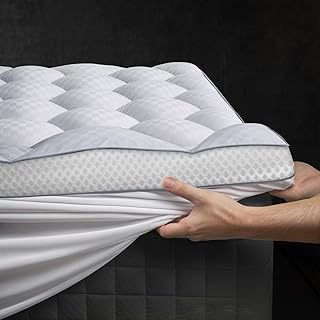
The dual-layer construction pairs a gel-infused comfort surface with a firmer support base, and the wave-textured profile distributes pressure across the lumbar region rather than concentrating it. Choose this one if heat retention has soured you on memory foam before.
Frequently Asked Questions
Can a topper fix a mattress that already sags?
It can compensate, not cure. A firm 3- to 4-inch topper will bridge a shallow depression and restore a level sleeping plane, but if you can see a visible valley or feel coils, the mattress itself needs replacing.
How long before my back feels better?
Expect an adjustment window of roughly two to three weeks. Muscles and connective tissue that have adapted to a sagging surface often feel worse for the first few nights on a firmer one, which is normal and not a sign the topper is wrong for you.
Is firmer always better for back pain?
No. Current sleep research generally points to medium-firm as optimal for the broadest range of sleepers, with extra firm being most useful for heavier bodies, stomach sleepers, and anyone correcting a badly worn mattress.
Will my fitted sheets still fit?
A 3-inch topper pushes most beds to around 15 to 17 inches total, which standard sheets handle poorly. Look for deep-pocket sheets rated to at least 18 inches, and consider a topper with side mesh or straps to keep everything anchored.
Final Thoughts
For most people arriving here with lumbar pain and a tired mattress, the 4-inch dual firmness flippable topper is the smartest first purchase, because it lets you calibrate firmness at home instead of guessing. Committed firm sleepers will be well served by the BedStory 3-inch queen, and anyone who sleeps hot should go straight to the JSELF gel topper for its cooling layer and pressure-relieving surface profile.