
Key takeaways
- Item Dimensions L x W x H: 6.5"L x 12"W x 6.5"H
- Maximum Weight Recommendation: 440 Pounds
- Material: Plastic, Rubber, Stainless Steel
Here is the math that reframed how I buy fitness gear: a mid-tier gym membership at roughly $52 a month, used twice a week, works out to about $6 every time you walk through the door. Cancel in March and the number gets ugly. Home equipment inverts that arithmetic. You pay once, then the per-use cost falls every single time you pick the thing up. A $130 bench that gets used three times a week for five years costs about seventeen cents a session — less than the parking meter outside most gyms.
So that is the lens I used for these six picks. Every price below is divided across 780 sessions, which is what three workouts a week for five years actually looks like. That number is deliberately conservative: durable steel and cast iron routinely outlive it, while a flimsy plastic gadget will not. I have weighted the picks toward gear that survives being dropped, stacks into a closet, and covers more than one movement pattern. Street prices drift, so treat the figures as a ranking tool rather than a quote.
Our top picks
 VINSGUIR Ab Roller Wheel
- Item Dimensions L x W x H: 6.5"L x 12"W x 6.5"H
- Maximum Weight Recommendation: 440 Pounds
- Material: Plastic, Rubber, Stainless Steel
 NICEPEOPLE Adjustable Weight Bench for Home Gym
- Item Dimensions D x W x H: 46"D x 16.7"W x 17.2"H
- Material: Superior Alloy Steel
| Product | Key specs | |
|---|---|---|
 Push Up Bars Strength Training Push Up Bars Strength Training | Check price | |
| VINSGUIR Ab Roller Wheel | Item Dimensions L x W x H: 6.5"L x 12"W x 6.5"H Maximum Weight Recommendation: 440 Pounds Material: Plastic, Rubber, Stainless Steel | Check price |
| NICEPEOPLE Adjustable Weight Bench for Home Gym | Item Dimensions D x W x H: 46"D x 16.7"W x 17.2"H Material: Superior Alloy Steel | Check price |
 HOXWC Ankle Resistance Bands with Cuffs HOXWC Ankle Resistance Bands with Cuffs | Tension Supported: 10LB, 20LB, 30LB Number of Resistance Levels: 3 Material Type: Neoprene | Check price |
 YOTTOY Skipping Ropes for Adults -Cordless Counter YOTTOY Skipping Ropes for Adults -Cordless Counter | Check price | |
 WIKDAY Resistance Bands for Working Out Exercise WIKDAY Resistance Bands for Working Out Exercise | Check price | |
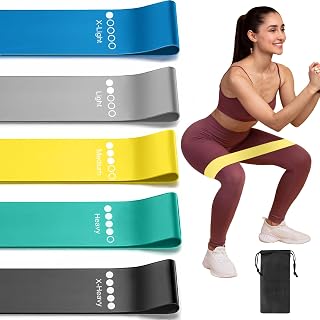 Resistance Loop Exercise Bands for Working Out Resistance Loop Exercise Bands for Working Out | Check price | |
 Hip Thrust Belt Hip Thrust Belt | Material: Neoprene Closure Type: Hook and Loop | Check price |
As an Amazon Associate we earn from qualifying purchases at no extra cost to you.
As an Amazon Associate we earn from qualifying purchases.
Quick Comparison
| Product | Best For | Approx. Price | Cost Per Session | Footprint |
|---|---|---|---|---|
| Bowflex SelectTech 552 Adjustable Dumbbells | Full-body strength in one pair | $430 | ~$0.55 | Two floor tiles |
| Bodylastics Stackable Resistance Bands | Travel, rehab, pulling movements | $60 | ~$0.08 | Drawer |
| Bowflex SelectTech 840 Kettlebell | Swings, carries, conditioning | $200 | ~$0.26 | Shoebox |
| FLYBIRD Adjustable Weight Bench | Pressing angles and rows | $130 | ~$0.17 | Folds flat |
| Perfect Fitness Multi-Gym Pull-Up Bar | Vertical pulling on a budget | $40 | ~$0.05 | Doorframe |
| Concept2 RowErg | Serious cardio with data | $990 | ~$1.27 | 8 ft, splits in two |
How to Choose
- Count the movements, not the pounds. A purchase that unlocks pressing, hinging, squatting and rowing beats one that only does curls, regardless of how much weight it holds.
- Check the ceiling, not the starting weight. Adjustable gear is only a bargain if you can still progress on it in year three. If the top setting is close to what you lift today, you are buying a replacement early.
- Measure the space you will actually leave it in. Equipment stored in a garage across the yard gets used half as often, which quietly doubles its cost per session.
- Ask what happens when it fails. Replaceable bands, a published warranty, and available spare parts turn a five-year item into a ten-year one.
- Buy for the workout you have done twice this month. Not the aspirational program. Honest assessment here is the difference between $0.17 a session and a very expensive clothes rack.
Top Picks Reviewed
Bowflex SelectTech 552 Adjustable Dumbbells
One pair replaces fifteen, spanning 5 to 52.5 pounds in 2.5-pound steps at the low end — which is exactly where progression stalls on cheaper sets that jump by fives. The dial mechanism takes a couple of seconds and is genuinely faster than swapping plates. Two honest caveats: the plastic housing does not enjoy being dropped, so these are not for snatches or overhead work you might bail on, and the 15-inch length feels bulky for close-grip pressing. If you own nothing else, own these. At 55 cents a session they are the highest-value strength purchase on the list.
Bodylastics Stackable Resistance Bands
Tube bands with an inner safety cord are the detail that matters here — when the rubber eventually gives out, the sleeve contains it instead of snapping toward your face. The set stacks to meaningful resistance and the door anchor turns any hallway into a cable station for face pulls, rows and pallof presses, the accessory work most home setups skip entirely. Resistance is not linear like iron, so treat the numbers as rough. For eight cents a session and the weight of a paperback, this is the pick I would refuse to give up.
Bowflex SelectTech 840 Kettlebell
Adjusts from 8 to 40 pounds by rotating the base, covering the range where most people actually swing, clean and press. That span is the whole argument: buying four fixed bells to match it costs more and eats four times the floor space. The handle is comfortable enough for two-hand work, though the wide body is less pleasant in the rack position than a competition bell, and the adjustment collar rules out heavy dropping. For circuits, conditioning finishers and loaded carries, 26 cents a session is a bargain.
FLYBIRD Adjustable Weight Bench
Unglamorous and quietly essential. Six back positions from decline to full upright let one pair of dumbbells cover incline press, shoulder press, supported rows and chest-supported flyes. The frame is rated well past what adjustable dumbbells can load, the pad is firm rather than squishy, and it folds to lean behind a door in seconds. Assembly is about fifteen minutes. Skip the bench and roughly a third of your dumbbell exercises quietly disappear from the program, which makes this the best seventeen cents in the lineup.
Perfect Fitness Multi-Gym Pull-Up Bar
Vertical pulling is hard to replicate with dumbbells, and this doorway bar solves it for the price of two protein tubs. It uses leverage against the frame rather than screws, mounts and dismounts in under a minute, and the padded arms double as dip and push-up handles at floor level. Requirements are real: a standard-width frame and trim that can take the pressure — check both before ordering, and put a towel under the pads. Five cents a session for the movement most home gyms are missing.
Concept2 RowErg
The most expensive pick and, over a long enough horizon, one of the cheapest. Air resistance scales with your own effort, the PM5 monitor logs split, stroke rate and watts, and the machine has a decade-plus reputation in boathouses and garages for needing little more than an occasional chain oil. It separates into two pieces to stand vertically, but you still need eight feet of clear floor to use it. At $1.27 a session it costs a fifth of a gym visit, and the resale market is famously forgiving.
Frequently Asked Questions
Do I need all six to train seriously?
No. Dumbbells, a bench and a pull-up bar cover nearly every strength pattern for about $600 total, or roughly 77 cents a session combined. Add bands for travel and accessory work, then buy the rower only when you know you will use cardio equipment rather than hoping you will.
Are adjustable dumbbells worth it over fixed ones?
For a home space, yes. Fixed dumbbells feel better and take more abuse, but matching a 5-to-52-pound range costs substantially more and needs a rack plus several feet of wall. Choose fixed only if you plan to drop weights or train explosively.
What flooring do I actually need?
Interlocking foam tiles, around three-quarters of an inch, under wherever you set weights down. They protect the subfloor, stop the bench from sliding, and dampen the noise that irritates downstairs neighbours. Budget about $50 for a 24-square-foot area and consider it part of the equipment cost.
How do I keep the cost per session low?
Use it. Cost per session is driven far more by frequency than by price — a $990 rower used four times a week is cheaper per use than a $200 kettlebell used monthly. Keep gear visible in the room you spend time in, and follow a written program.
Final Thoughts
Ranked by cost per session, the cheap items win outright: a doorway bar and a band set deliver enormous return for under $100 combined. But the honest recommendation is the trio of adjustable dumbbells, a folding bench and that pull-up bar, because breadth of movement is what keeps a home gym in use past the first eight weeks. Add the adjustable kettlebell when your conditioning work needs variety, and the rower when you are certain the habit has stuck. Every one of these gets cheaper the day after you use it.
8 Best Gym Mats for Home: Rubber vs Foam Picks for Any Floor
Best gym mat for home choices come down to material density and...
8 Best Rowers for Home Gym: Air, Magnetic and Water Compared
Best rowers for home gym shortlists usually collapse once someone measures the...
8 Best Weight Home Gyms: 6 All-in-One Machines for Small Rooms
Best weight home gym decisions come down to two numbers before brand...
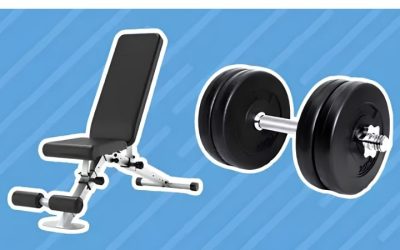
8 Best Home Gym Equipment for Beginners: The Starter Setup
Best home gym equipment for beginners is not a machine – it...
Best Treadmills for Home Gym: 5 Picks by Deck and Motor
Best treadmills for home gym decisions come down to two specifications and...
8 Best Home Gym Compact Setups: 6 Space-Saving Picks Ranked
Best home gym compact claims usually quote a stored footprint and stay...
Best Adjustable Bench for Home Gym: 5 Picks Ranked by Use
Best adjustable bench for home gym decisions turn on three numbers most...
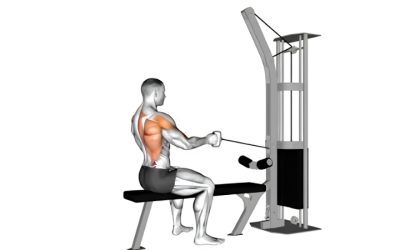
Best Cable Machine for Home Gym: 5 Picks and Pulley Ratios
Best cable machine for home gym shortlists collapse quickly once you convert...
8 Best Cable Machines for Home Gym: 5 Types and Their Limits
Best cable machines for home gym use are not one product category...
8 Best Home Gym Setups: Floors, Ceilings, Noise and Layout
Best home gym setup guides talk about equipment and skip the room,...
Write Your Review
No reviews yet. Be the first to share your experience!