
Key takeaways
- Warranty Description: 2 Year Manufacturer
- Tension Supported: 1000 pounds
- Handle Type: Fixed Handle
Two numbers decide whether a power cage works in your house: the wall thickness of the steel and the outside footprint once the plates are loaded. Everything else — the finish color, the number of pull-up bar grips, the branded stickers on the uprights — is decoration. A 2×3″ upright rolled from 11-gauge steel will hold a heavy squat without flinching, but the same rack in 14-gauge starts to feel springy under a loaded bar and rattles on every rep. Meanwhile a 30″ deep cage with 20″ of plate storage hanging off the back needs closer to 60″ of floor depth, plus room to walk in and out. Garages with a sectional door track running overhead often leave only 88–92″ of usable height, which quietly disqualifies the taller 100″ models most catalogs list first.
I sorted the racks below by those two constraints and then looked at the details that determine whether a cage stays useful three years in: hole spacing through the bench press range, hardware diameter (5/8″ versus 1″ pins and bolts), whether the uprights are laser-numbered so you can reset J-cups without counting holes, and how large the attachment catalog is. Bolt-together construction gets unfairly maligned — it ships cheaply and, once torqued properly, holds fine — but welded or heavily gusseted bases stay tighter over years of dropped deadlifts. Where a rack needs anchoring into concrete or lag bolts into studs, I’ve said so, because that is a permanent decision in a rented garage.
Our top picks
 ULTRA FUEGO Power Cage
- Warranty Description: 2 Year Manufacturer
- Tension Supported: 1000 pounds
- Handle Type: Fixed Handle
 SPORTSROYALS Power Rack
- 【Build with gym Quality】- Sportsroyals power cages are…
- 【Precision & Durable Pulley System】- Sportsroyals home gym…
- 【Train all your muscles with one machine】- Sportsroyals…
 DP01 Power Cage
- Warranty Description: 2 year
- Tension Supported: 2000 pounds
- Grip Size: Standard
| Product | Key specs | |
|---|---|---|
| ULTRA FUEGO Power Cage | Warranty Description: 2 Year Manufacturer Tension Supported: 1000 pounds Handle Type: Fixed Handle | Check price |
| SPORTSROYALS Power Rack | 【Build with gym Quality】- Sportsroyals power cages are… 【Precision & Durable Pulley System】- Sportsroyals home gym… 【Train all your muscles with one machine】- Sportsroyals… | Check price |
| DP01 Power Cage | Warranty Description: 2 year Tension Supported: 2000 pounds Grip Size: Standard | Check price |
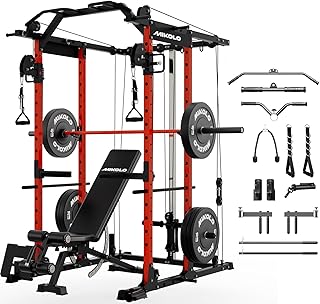 Mikolo Power Cage Mikolo Power Cage | Check price | |
 JEEKEE Power Rack with LAT Pulldown JEEKEE Power Rack with LAT Pulldown | Transform your home workouts with the P43 Multifunctional… Maximize your training with our workout cage, which… Achieve full-body workouts at home with our versatile… | Check price |
 pooboo Power Cage Smith Machine with 2000LB pooboo Power Cage Smith Machine with 2000LB | Check price | |
 MAJOR FITNESS Drone1 Power Cage MAJOR FITNESS Drone1 Power Cage | Check price |
As an Amazon Associate we earn from qualifying purchases at no extra cost to you.
As an Amazon Associate we earn from qualifying purchases.

Quick Comparison
| Rack | Uprights & Gauge | Hardware | Approx. Footprint | Best For |
|---|---|---|---|---|
| Rogue R-3 Power Rack | 2×3″, 11-gauge | 5/8″ | ~48″ W x 53″ D | Low ceilings, long-term durability |
| REP PR-4000 | 3×3″, 11-gauge | 1″ | ~48″ W x 30–53″ D | Configurable depth, heavy loads |
| Titan T-3 Series | 2×3″, 11-gauge | 5/8″ | ~48″ W x 30–42″ D | Budget builds with real steel |
| Titan X-3 Flat Foot | 3×3″, 11-gauge | 1″ | ~50″ W x 60″ D | Renters who can’t drill concrete |
| PRx Profile Folding Rack | 3×3″, 11-gauge | 1″ | Folds to ~5″ from wall | Shared garages and tandem parking |
| Force USA MyRack Modular | 2.4×2.4″, 11-gauge | 5/8″ | ~55″ W x 50″ D | All-in-one with cables and lat pull |
How to Choose
- Measure height first, then subtract. Pull a tape from floor to the lowest obstruction — door track, light fixture, joist — and leave 4″ of clearance above the pull-up bar. Under 8′ ceilings, a 90–93″ rack is the ceiling, not a compromise.
- Match upright size to your training, not your ego. 2×3″ 11-gauge handles anything a home lifter will squat or rack-pull. 3×3″ with 1″ hardware buys you a broader attachment ecosystem and stiffer feel, at the cost of price and about 3″ of interior width.
- Check hole spacing in the pressing zone. Standard 2″ spacing is fine for squats but frustrating for bench, where 1″ spacing lets you set J-cups and safeties at the exact height that clears your chest.
- Budget the walk-in space. Plate horns, band pegs, and dip bars all add depth. A rack that fits your slab on paper can still block a car door or a laundry sink.
- Decide on anchoring before you order. Flat-foot and wide-base designs stay put unbolted; narrow-base cages want anchors into concrete once you start pulling heavy or benching with a bar catch.
Top Picks Reviewed
Rogue R-3 Power Rack
The R-3 is the reference point everyone else gets measured against. At 2×3″ 11-gauge with 5/8″ hardware and Westside spacing (1″ holes) through the bench range, it does the two things that matter — hold weight and let you dial in bar height — without wasting an inch. The 30″ depth keeps the total floor footprint modest, and the 90″-class height clears most garage door tracks. Powder coat quality is genuinely better than budget rivals, which matters in an unheated garage where condensation eats cheap finishes.
REP PR-4000
If you want 3×3″ steel and 1″ hardware without a commercial-gym price, this is the sensible landing spot. Laser-cut, numbered uprights make resetting J-cups and safeties a two-second job, and the depth options let you buy a shallow 24″ version for a tight bay or a 41″ cage for full walk-in movement. The attachment lineup is deep enough that you can add a lat tower, dip bars, or a landmine later instead of committing up front.
Titan T-3 Series
The T-3 delivers 11-gauge 2×3″ tubing at a price that undercuts nearly everyone, and that steel spec is not marketing — it feels solid at heavy squat weights. The tradeoffs are cosmetic and tolerance-related: hole alignment can be slightly fussy during assembly, and the powder coat scratches more easily. For a first serious rack, those are acceptable annoyances given the money saved for a bar and plates.
Titan X-3 Flat Foot
This is the answer for anyone who cannot or will not drill into their floor. The extended flat-foot base spreads load forward and back, so the rack stays planted for squats, presses, and rack pulls without a single anchor. It eats roughly 60″ of depth, which is the honest cost of stability, and 3×3″ uprights with 1″ hardware give it a genuinely sturdy feel.
PRx Profile Folding Rack
A folding rack solves a problem no amount of steel can: the car has to come back inside. Lag-bolted into wall studs, the Profile collapses to about the thickness of a bookshelf, then swings out into a functional squat and bench station in under a minute. You give up a true four-post cage and the ability to move it — the studs are a permanent commitment — but in a shared garage it’s the only design that lets a real barbell setup coexist with a vehicle.
Force USA MyRack Modular
Pick this when the rack has to be the whole gym. The modular design accepts a lat pulldown and low row, a functional trainer column, chin bars, and storage, so one 55″ x 50″ footprint absorbs what would otherwise be three machines. The steel is a hair lighter than the 3×3″ specialists and the attachment stack pushes the price up quickly, but for a single-room setup the space math wins.
Frequently Asked Questions
Do I need to bolt my power cage to the floor?
Not always. Wide-base and flat-foot designs are stable unbolted for squats, presses, and controlled deadlifts. Narrow four-post cages with a small footprint benefit from anchoring, particularly if you do kipping pull-ups or catch a failed bench on the safeties. If you’re on a concrete slab and plan to stay, anchoring costs about an hour and eliminates all wobble.
Is 14-gauge steel ever acceptable?
For light-to-moderate loads, yes — a 14-gauge cage will safely hold a few hundred pounds. But the flex is noticeable, the rack rings on every rerack, and attachment options are usually limited. If your squat is heading past bodyweight, the price gap to 11-gauge is small enough to skip the intermediate step.
What ceiling height do I need to pull up inside the rack?
Add your standing reach plus roughly 8″ for a full chin over the bar, then check that against the rack’s bar height. Practically, most people need about 7’6″ of clear ceiling for comfortable in-rack pull-ups on a 90″ cage. With less, mount the bar on the outside face or use the shorter 82″-class models and do pull-ups from a slight tuck.
Can I use a bench and cage in the same space as plate storage?
Yes, and it’s the best way to keep the floor clear. Weight horns on the rear uprights hold plates within arm’s reach and add rearward stability, but they extend the footprint by 8–12″. Measure that before you order, because plate storage is the dimension people forget until the rack is assembled and the car door won’t open.
Final Thoughts
Choose the rack that fits the room you actually have, then buy the heaviest steel that fits that envelope. The R-3 and PR-4000 are the safest long-horizon purchases, the T-3 gets you training for the least money without cheating on gauge, the X-3 Flat Foot solves the no-drilling problem, the PRx solves the shared-garage problem, and the MyRack solves the one-room-gym problem. Take the tape measure to your space before you take out the credit card — nearly every regret in home gym equipment traces back to a dimension nobody checked.
8 Best Gym Mats for Home: Rubber vs Foam Picks for Any Floor
Best gym mat for home choices come down to material density and...
8 Best Rowers for Home Gym: Air, Magnetic and Water Compared
Best rowers for home gym shortlists usually collapse once someone measures the...
8 Best Weight Home Gyms: 6 All-in-One Machines for Small Rooms
Best weight home gym decisions come down to two numbers before brand...
8 Best Home Gym Equipment for Beginners: The Starter Setup
Best home gym equipment for beginners is not a machine – it...
Best Treadmills for Home Gym: 5 Picks by Deck and Motor
Best treadmills for home gym decisions come down to two specifications and...
8 Best Home Gym Compact Setups: 6 Space-Saving Picks Ranked
Best home gym compact claims usually quote a stored footprint and stay...
Best Adjustable Bench for Home Gym: 5 Picks Ranked by Use
Best adjustable bench for home gym decisions turn on three numbers most...
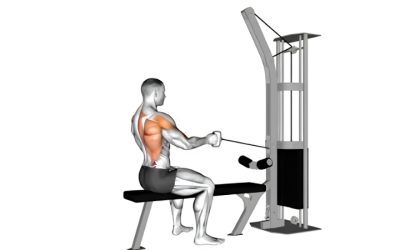
Best Cable Machine for Home Gym: 5 Picks and Pulley Ratios
Best cable machine for home gym shortlists collapse quickly once you convert...
8 Best Cable Machines for Home Gym: 5 Types and Their Limits
Best cable machines for home gym use are not one product category...
8 Best Home Gym Setups: Floors, Ceilings, Noise and Layout
Best home gym setup guides talk about equipment and skip the room,...
Write Your Review
No reviews yet. Be the first to share your experience!